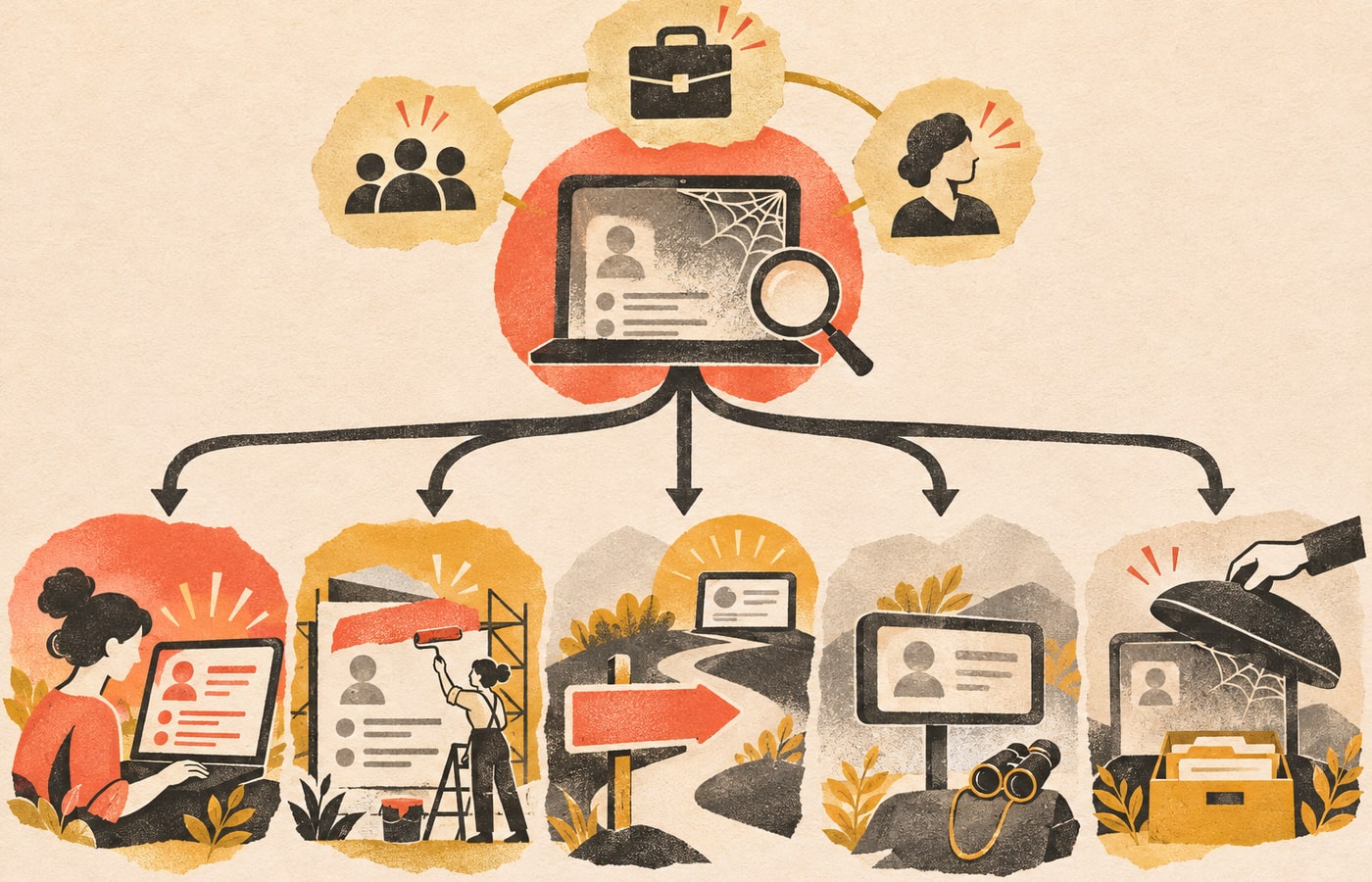
Category: Marketing & Advertising

  • Local Email Marketing: Be Useful Nearby, Not Creepy Everywhere

    Local Email Marketing: Be Useful Nearby, Not Creepy Everywhere

    Direct answer: Local email marketing works when a business sends useful, permission-based messages tied to a real local relationship, service area, location, event, appointment, inventory condition, or customer need. Collect permission clearly, segment only where geography changes the message, coordinate every location and automation, and measure booked appointments, visits, calls, redemptions, repeat business, and revenue—not merely opens. Adding a town name to generic promotional sludge does not make it local. It makes the sludge geographically specific.

    TL;DR

    • Local email marketing uses genuine place and relationship context to make email more useful for customers of a location-based or service-area business.
    • Start with permission and provenance. A receipt, appointment, contest entry, event signup, or business card does not automatically authorize every future promotion.
    • Segment by location only when location changes availability, service, timing, content, responsibility, or the next step.
    • Local relevance can include appointments, weather, service routes, store inventory, closures, seasonal needs, neighborhood events, and community partnerships.
    • Do not fake intimacy with invasive tracking or pointless first-name tokens. Use the least customer data needed to improve the message.
    • Multi-location businesses need central rules and local ownership so customers do not receive conflicting offers or five versions of the same email.
    • Connect email to offline outcomes with location-specific links, booking sources, call tracking, offer codes, CRM status, point-of-sale records, and staff feedback.
    • The goal is a better local relationship and useful business action—not the biggest list or the prettiest open-rate chart.

    What is local email marketing?

    Local email marketing is permission-based email communication designed around the customer relationships, geography, operations, and real-world moments of a local business. It may support one storefront, several locations, a defined service area, appointment-based services, regional events, or a business whose sale begins online and finishes by phone or in person.

    It is not a separate species of email software. It is a more disciplined use of context.

    A national retailer might send one promotion to the entire country. A local HVAC company may need to distinguish customers inside its emergency-service radius from people outside it. A veterinary practice may send location-specific closure information. A restaurant may communicate a reservation change or neighborhood event. A contractor may send seasonal preparation advice only where that condition is relevant.

    The message becomes local because place changes its usefulness—not because the subject line contains [CITY_NAME].

    This article is narrower than Scope Design’s complete small-business email marketing system. That guide owns permission, customer records, lifecycle stages, deliverability, handoffs, and outcomes across the whole program. This page owns the local layer: when geography matters, how to use it without getting creepy, and how to connect email to business that often happens offline.

    Why local email deserves its own strategy

    Local businesses operate with constraints generic email advice tends to ignore:

    • customers may belong to a specific branch or service territory;
    • staff capacity can vary by day, route, or location;
    • weather and local events can change demand or fulfillment;
    • calls, walk-ins, estimates, appointments, and point-of-sale purchases may happen outside the website;
    • community reputation travels quickly;
    • and the person receiving the message may see the sender at the grocery store on Saturday.

    That last point is useful discipline. A manipulative campaign is harder to rationalize when the recipient is not an abstract “lead.” They are a neighbor, customer, referral partner, employee’s parent, or the person who will ask why your “exclusive local offer” was sent to half the county.

    Local businesses have a powerful advantage: they can know the place, understand the actual customer journey, and respond like humans. They also have a powerful opportunity to screw it up by mistaking familiarity for permission.

    The Scope Design Local Relevance Test

    Before using local context in an email, test six parts of the message:

    1. Relationship: Why does this person reasonably expect to hear from this business?
    2. Radius: Which location, territory, route, or market actually serves them?
    3. Reason: What has changed or become useful enough to justify this message now?
    4. Reality: Can the local operation fulfill the promise at the advertised time and place?
    5. Response: Where do replies, calls, bookings, and problems go—and who owns them?
    6. Result: What customer or business outcome should happen, and how will it be recognized?

    An overhead neighborhood route connects permission, service area, local reason, operating reality, customer response, and an offline outcome
    Use place only when it makes the message more useful and the local promise more real.

    If the radius does not change the message, do not manufacture a local segment. If the business cannot fulfill the offer, do not send it. If nobody owns the reply, automation has merely delivered the customer to a beautifully branded dead end.

    1. Build permission where the relationship begins

    Local businesses collect addresses through many doors:

    • website forms;
    • online or telephone bookings;
    • checkout and point-of-sale systems;
    • estimates and service inquiries;
    • events and community programs;
    • contests;
    • loyalty programs;
    • paper forms;
    • and old customer databases that predate everyone’s memory of why they exist.

    Those sources do not create the same expectation. A customer who provides an address for a receipt may expect the receipt. A person who requests an estimate may expect communication about the estimate. A subscriber who chooses a monthly local guide may expect that guide. None of those facts automatically means “send every promotion forever.”

    At each collection point, explain:

    • which business or location will send;
    • what kind of email the person will receive;
    • how often it is likely to arrive;
    • whether information will be shared across locations or related brands;
    • and how to change preferences or stop marketing.

    Record the source, date, location, stated promise, and preference. If an employee collects permission in person, the process should not depend on that employee remembering the details three years later.

    In the United States, the FTC’s CAN-SPAM guidance establishes requirements for commercial messages, including accurate headers and subjects, a postal address, clear marketing opt-out, and honoring opt-out requests within 10 business days. Other jurisdictions and provider policies can be stricter. Legal minimums also do not answer the strategic question: will this person recognize and want the message?

    Do not swap or “cross-promote” customer lists

    Two local businesses can collaborate without handing each other customer email addresses. Build a joint resource, event, or offer and let each business communicate with its own permissioned audience. If people want communication from the partner, give them a clear separate choice.

    Passing a spreadsheet between the bookstore and coffee shop is not community marketing. It is two businesses jointly creating the “How did you get my email?” experience.

    2. Define the actual local radius

    “Local” is not always a city boundary. It may be:

    • a drive-time area;
    • postal codes served by a technician route;
    • school districts;
    • delivery zones;
    • counties with different regulations;
    • neighborhoods around a storefront;
    • several branches with overlapping catchments;
    • or a regional market where customers travel for a specialized service.

    Define the smallest geography that changes the offer or customer experience. Then store only the location information necessary to make that distinction.

    Business modelUseful local segmentWhy it matters
    Home serviceService zone, route, job typeAvailability, travel, emergency coverage, seasonal need
    Multi-location practicePreferred or nearest locationStaff, hours, appointment inventory, local notices
    Restaurant or retailerStore, delivery zone, customer preferenceEvents, inventory, pickup, hours, local offers
    Regional professional serviceState, county, or regulated marketEligibility, rules, office responsibility
    Community organizationProgram area or event relationshipRelevant programs, dates, volunteer or attendee needs

    Do not collect precise location because the software can. A postal code or preferred branch may be enough. Exact movement data rarely makes an ordinary local newsletter better and can make the recipient wonder whether you have confused marketing with surveillance.

    3. Give the email a genuinely local reason

    The message should exist because something useful is true for this audience now. Good local reasons include:

    • an appointment, estimate, reservation, or service milestone;
    • weather that changes preparation, safety, or availability;
    • a location opening, closure, delay, or schedule change;
    • relevant inventory or capacity at a specific location;
    • a seasonal deadline customers actually face;
    • a local event the business is hosting, supporting, or affected by;
    • a community partnership with a clear customer benefit;
    • a neighborhood-specific resource;
    • or a customer question appearing repeatedly in local calls and sales conversations.

    The useful distinction is consequence. If a storm changes the technician schedule, customers need to know. If it is merely raining and the marketing calendar wants a personality, “Rainy day savings!” may be the best evidence yet that nobody had anything useful to say.

    For recurring editorial mail, use Scope Design’s email newsletter strategy to define a reader promise and repeatable format. Local news should be included because it helps the reader—not because copying a community calendar fills empty space.

    Local content should connect to local evidence

    Email and website content should reinforce each other. A useful local message can lead to a page containing original photographs, staff expertise, project examples, location-specific instructions, interviews, or verified local data. The local content marketing guide explains how to avoid city-name Mad Libs and build pages around evidence that could only come from genuine work in the place.

    That gives email somewhere credible to send the reader and gives the website evidence search engines and answer systems can understand.

    4. Check operational reality before promoting it

    Local email sits close to fulfillment. That is a strength only if marketing and operations speak to each other.

    Before sending, confirm:

    • every location has approved the offer and timing;
    • pricing, inventory, appointment slots, staffing, and service boundaries are accurate;
    • weather or event triggers have a human override;
    • booking pages and telephone routing reach the correct location;
    • promotions work in the point-of-sale system;
    • exclusions are clear without becoming legal-text confetti;
    • and staff know what customers were told.

    A campaign can generate excellent clicks and still be a business failure if the advertised appointment calendar is full, the store did not receive the coupon code, or the service desk learns about the promotion from an annoyed customer.

    This is the local version of Scope Design’s broader doctrine: do not optimize a proxy while handing the actual operation a flaming bag of “engagement.”

    5. Organize multi-location email without creating inbox pileups

    Multi-location businesses need a shared operating contract. Central marketing protects the brand, data, authentication, suppression, and reporting. Local teams contribute the facts only they know: schedules, staff, inventory, events, community relationships, and service conditions.

    A practical model defines:

    DecisionCentral ownerLocal owner
    Permission language and data fieldsYesFollow the standard and report exceptions
    Domain authentication and sending platformYesNo independent shadow systems
    Brand, accessibility, legal, and unsubscribe rulesYesApply them
    Location hours, capacity, events, and inventoryValidate structureSupply and approve current facts
    Audience overlap and send pressureMonitor across locationsFlag local conflicts
    Replies and service recoveryRoute correctlyRespond within the defined time
    Business-result reportingCombine and compareExplain local operational context

    Use a shared campaign calendar and a contact-level pressure view. A customer connected to three branches should not receive three copies of the same announcement because each manager exported a separate list.

    Local autonomy without shared suppression and identity creates chaos. Central control without local facts creates polished nonsense. The answer is governed collaboration, not choosing one flavor of dysfunction.

    6. Personalize for usefulness, not theatrical intimacy

    Useful personalization changes the value of the message:

    • the correct branch and telephone number;
    • service availability in the recipient’s area;
    • instructions tied to an existing appointment;
    • a reminder based on a requested service;
    • a relevant seasonal need;
    • or content preferences the subscriber deliberately chose.

    Creepy personalization announces how much the system knows without helping:

    • exact movement or location history unrelated to the request;
    • guessed personal circumstances;
    • aggressive retargeting after a sensitive inquiry;
    • a subject line pretending an automated database is a close friend;
    • or using public information as though the recipient volunteered it.

    Apply a simple test: Would the recipient understand why the business has this information, and does using it materially improve the message? If either answer is no, leave it alone.

    The Scope Design subject-line guide treats the subject as an honest inbox promise. “A service update for your Corning appointment” is useful specificity. “Greg, we noticed you were near Market Street…” is the beginning of a restraining-order aesthetic.

    7. Connect email to the local customer journey

    The email is rarely the final transaction. A recipient may:

    • call;
    • reply;
    • book online;
    • request directions;
    • visit a store;
    • show a code;
    • mention the campaign to an employee;
    • schedule an estimate;
    • or return weeks later through another channel.

    Map the handoff before sending. Every primary call to action needs an owner, destination, and response expectation. Location-specific landing pages should show the same offer, hours, staff, service boundary, and next step as the email.

    For high-intent actions, keep the chain short and observable:

    Email → correct local page or contact → completed action → customer record → staff follow-up → business outcome

    If the email platform reports a click but the telephone queue drops the call, the campaign did not create a qualified conversation. It created a measurable prelude to failure.

    8. Measure offline outcomes without inventing certainty

    Opens are not the business result, and privacy features can make them unreliable as an individual-level signal. Use them cautiously for broad diagnostics, not as proof that a local campaign generated customers.

    Choose mechanisms suited to the business:

    • tagged links and location-specific landing pages;
    • booking-source fields;
    • trackable telephone numbers where appropriate and clearly governed;
    • offer or event codes;
    • point-of-sale campaign fields;
    • CRM campaign membership and outcome stages;
    • post-purchase “How did you hear about us?” data used as directional evidence;
    • staff notes for calls and walk-ins;
    • and matched revenue or margin after the transaction is complete.

    Measure one primary result closest to money or customer success, then supporting health metrics:

    Primary local resultSupporting signals
    Booked and held appointmentDelivery, useful clicks, booking completion, no-show rate
    Qualified estimate requestReply/call completion, qualification, proposal progression
    Store or event visitCode use, registration, point-of-sale match, staff feedback
    Repeat purchase or renewalCustomer-state change, attributed margin, retention
    Operational update completedDelivery, acknowledgment, reduced support confusion

    Do not claim precise attribution when the evidence is partial. A customer can see the email, search the brand later, ask a spouse, and walk into the store. Report what the system can observe, state the limits, and look for consistent patterns across campaigns.

    9. Protect deliverability and the local reputation

    Local scale does not exempt a sender from technical requirements. Authenticate the sending domain, use a platform built for marketing email, process bounces, suppress opt-outs, monitor complaints, and separate promotional mail from critical transactional messages.

    Current Gmail sender guidelines require SPF or DKIM for all senders to personal Gmail accounts and stronger controls for senders exceeding 5,000 daily Gmail messages. Smaller senders should still use SPF, DKIM, and DMARC because domain identity and diagnostic visibility matter before the list becomes large.

    The Scope Design bulk-email guide covers provider choice, authentication, volume ramping, stream separation, list preparation, suppression, and monitoring. A local list is not permission to run recurring promotions from a staff member’s Outlook address.

    Local reputation is especially unforgiving. A recipient who cannot unsubscribe may not merely click Spam. They may leave a review, tell a neighbor, call the front desk, or bring the message into the store. Make the exit obvious and use the unsubscribe-rate diagnostic when departures reveal a broken promise or excessive send pressure.

    10. Build a local email calendar around customer states

    Do not begin with “What should we send every Tuesday?” Begin with customer and operational states that deserve communication.

    Examples:

    • New local subscriber: deliver the promised resource and explain which location will communicate.
    • New inquiry: confirm the request, route it, and set a realistic response expectation.
    • Booked customer: prepare them, reduce no-shows, and make changes easy.
    • Recent customer: confirm completion, provide care information, and request feedback at an appropriate time.
    • Seasonal customer: communicate before the need becomes urgent.
    • Affected location: explain a closure, delay, inventory issue, or service change.
    • Relevant community: invite participation in a real local event or partnership.
    • At-risk relationship: address a service problem or changed need before pushing another offer.

    That calendar may include fewer sends than a generic marketing template recommends. Good. The point is not to occupy the inbox on schedule. It is to communicate when the business has a useful job to do.

    A practical local-email pre-send checklist

    Before sending, confirm:

    Relationship and radius

    • The recipient source and expectation are documented.
    • The selected location or service area changes the message meaningfully.
    • Suppressions and preferences are current across every connected system.
    • The business can explain why each recipient belongs in the audience.

    Reason and reality

    • The message solves a current customer or operational need.
    • Local facts, dates, hours, pricing, inventory, routes, and capacity are verified.
    • The website, booking system, telephone routing, and staff instructions match the email.
    • Weather and event triggers have sensible human review.

    Response and result

    • Replies go to a monitored inbox.
    • Calls and bookings reach the correct team or location.
    • Staff know the message and how to honor it.
    • The intended business outcome and measurement method are defined.
    • A stop or correction plan exists if the local facts change.

    If the campaign cannot pass the checklist, adding a neighborhood photo will not save it.

    Frequently asked questions about local email marketing

    How do I start email marketing for a local business?

    Define one useful customer relationship and outcome first. Choose a reputable email platform, authenticate the domain, document how permission is collected, create a clear signup promise, and build one segment only where location changes the message. Start with a welcome or service-related flow before inventing a giant promotional calendar.

    What should a local business email its customers?

    Send useful information tied to appointments, services, seasonal needs, location changes, inventory, local events, customer questions, or community relationships. Promotions can belong, but the program should not become a coupon dispenser with a logo.

    How can I collect email addresses in person?

    Use a point-of-sale, booking, tablet, QR, or paper process with clear marketing language and an affirmative choice. Record the collection source, date, location, and promise. Do not hide marketing consent inside a receipt or assume a business card authorizes a permanent newsletter.

    Should I segment subscribers by ZIP code?

    Only when ZIP code changes service eligibility, route, location, content, timing, availability, or the next step. If every segment receives the same message, the field is administrative decoration and may be unnecessary data collection.

    How often should a local business send marketing email?

    There is no universal cadence. Send often enough to fulfill the stated promise and customer need, but not more often than the business can produce useful, relevant communication. Track total pressure across newsletters, promotions, reminders, and location-specific automations.

    What is the 80/20 rule for local email marketing?

    It is a planning heuristic, not a law: provide substantially more usefulness than promotion. The correct mix depends on why people subscribed and what the email program is supposed to accomplish. A transactional service notice and a retail promotion should not be forced into the same formula.

    What is the 3-3-3 rule in email marketing?

    Different marketers use that label for different formulas involving seconds, lines, sections, or follow-up timing. Treat it as a prompt for clarity, not an industry standard. A useful local email should quickly identify the sender, local relevance, and next step.

    Can I email everyone who has purchased from my local business?

    Purchase history can create a customer relationship, but marketing rules and expectations vary by jurisdiction, message type, and collection process. Document the basis, provide required identification and opt-out, honor suppressions, and distinguish necessary transactional communication from promotion. Get legal guidance for the markets where you operate.

    Can multiple locations share one email list?

    They can share a governed customer system when permission, brand identity, location relationships, preferences, suppression, ownership, and access are clear. They should not independently export and blast overlapping spreadsheets. The customer should understand which business and locations will communicate.

    How do I track whether email caused store visits or telephone calls?

    Use a combination of tagged local links, booking-source fields, governed call tracking, offer codes, point-of-sale campaign fields, CRM stages, and staff feedback. Treat self-reported and cross-channel attribution as directional when the chain is incomplete rather than claiming precision the system cannot prove.

    Is weather-based email marketing a good idea?

    It can be useful when weather materially changes safety, demand, scheduling, inventory, or preparation. Use reliable data, geographic boundaries, operational approval, and a human override. Weather is context, not an excuse to automate every drizzle into a sale.

    How can local email avoid feeling creepy?

    Use information the customer knowingly provided or would reasonably expect the business to have, collect the minimum needed, and use it only when it improves the message. Avoid exact-location behavior, sensitive inferences, fake familiarity, and personalization that announces surveillance without providing value.

    Local relevance is earned, not inserted

    A local business does not win email because it knows the recipient’s town. It wins because it understands the relationship, serves the place, communicates at the right moment, keeps promises, routes responses to a real person, and learns which messages produce useful outcomes.

    That requires less gimmickry and more operational truth. It is not as exciting as an AI subject-line generator that knows it might rain. It is considerably more likely to protect the reputation customers actually discuss in public.

    Scope Design helps local and service-area businesses connect websites, email, customer records, bookings, calls, staff workflows, and measurement into one accountable system. If your “local strategy” is currently three spreadsheets and whoever remembers to send something, start with a Scope Design diagnostic.

  • Advanced Product Marketing Strategies: 12 Critical Success Factors for Modern Businesses

    Advanced Product Marketing Strategies: 12 Critical Success Factors for Modern Businesses

    Advanced product marketing strategies are not a bigger list of tactics. They are a repeatable way to turn market evidence into decisions, coordinated execution, and learning. When the fundamentals are already in place, the hard part is diagnosing which handoff is failing before you spend more money, add another channel, or rebuild the campaign.

    That is the job of the 12 success factors in this guide. We organize them into the Scope Product Marketing Loop: Signal → Decision → Motion → Learning. The operating rule is simple: diagnose the broken handoff, then scale proof—not activity.

    TL;DR: advanced product marketing in 60 seconds

    • Signal: verify demand, buyer/use-case clarity, and the competitive context.
    • Decision: turn that evidence into positioning, a value/pricing hypothesis, and credible proof.
    • Motion: coordinate launch, sales enablement, and channel/content execution so the decision reaches the market intact.
    • Learning: measure adoption and outcomes, run controlled experiments, and feed what you learn back into the next decision.

    If your customer research, positioning, pricing, or go-to-market fundamentals are still unsettled, start with Scope Design’s complete product marketing strategy guide. This article assumes those basics exist and focuses on the advanced execution choices that come next.

    What makes product marketing “advanced”?

    Advanced product marketing is less about sophisticated software and more about decision quality. A team can have a CRM, automation platform, AI tools, attribution dashboards, and a dozen channels and still have weak product marketing if the evidence does not change the decisions.

    For a small or mid-sized business, advanced usually means four things are true at the same time:

    1. You can distinguish a market signal from a convenient assumption.
    2. You can explain why the product should win for a specific buyer and use case.
    3. Marketing, sales, delivery, and customer feedback reinforce the same promise.
    4. You know which outcome should move next and what you will change if it does not.

    The U.S. Small Business Administration’s market-research guidance is useful here because it separates broad market evidence—demand, market size, saturation, pricing, and competition—from direct customer research such as interviews and surveys. Advanced work needs both: outside context and evidence from the people actually buying, using, rejecting, or leaving the product.

    It also needs to fit the rest of the company. Product marketing is one operating layer inside a broader small-business marketing strategy. If the offer, conversion path, follow-up, capacity, or measurement system is broken, no amount of launch choreography fixes the whole system.

    The Scope Product Marketing Loop: Signal → Decision → Motion → Learning

    Most product-marketing plans read like a checklist: research, personas, content, launch, influencers, analytics. That format hides the part that matters most—the handoffs. Evidence has to become a decision. The decision has to survive execution. Execution has to produce learning. Learning has to change the next signal.

    That is why the Scope Product Marketing Loop groups the 12 critical success factors into four stages instead of treating them as independent tactics.

    Four connected product-marketing scenes show signal, decision, coordinated motion, and customer learning returning to fresh evidence

    Stage 1 — Signal: know what changed and for whom

    1. Demand evidence

    Diagnostic question: What evidence says this problem is important enough for a buyer to act on now?

    A market can be large while your specific offer still solves a low-priority problem. Start with evidence of behavior, not enthusiasm: what buyers search for, ask sales about, compare, abandon, complain about, renew, or pay to solve. Combine broad market research with direct customer evidence.

    Failure signal: campaigns generate attention, but qualified demand, demos, purchases, or serious conversations do not follow. Action: narrow the use case and test the problem before increasing distribution. Watch: qualified response rate, sales-qualified opportunities, product-page-to-action rate, or another metric tied to real buyer intent.

    2. Buyer and use-case clarity

    Diagnostic question: Can everyone on the team name the buyer, situation, desired progress, and trigger for this product without reading a persona deck?

    Personas are only useful when they change a decision. Replace generic descriptors with a use-case statement: When [situation] happens, [buyer] needs to [make progress] without [cost/risk/friction]. That makes targeting, messaging, proof, onboarding, and sales qualification easier to align.

    Buyer knowledge also changes by awareness state. Someone who is merely problem-aware needs different evidence than someone already comparing your product with an alternative. Scope’s guide to the five stages of awareness explains how to match the message to what the buyer already knows.

    Failure signal: copy speaks to everyone, sales hears inconsistent reasons for buying, or traffic is broad but conversion is weak. Action: choose the highest-value use case and write the message for that context first. Watch: conversion by segment/use case, sales qualification rate, and recurring reasons for loss.

    3. Category and competitive context

    Diagnostic question: What will the buyer compare you with—even if it is not a direct competitor?

    Your real competition can be another product, an internal workaround, a spreadsheet, a service provider, or doing nothing. Map the buyer’s alternatives around the decision criteria that matter to them, not a feature grid designed to make your product look good.

    Failure signal: prospects understand the product but cannot explain why it is meaningfully different. Action: define the category, alternative, and tradeoff you are willing to own. Watch: competitor mentions, no-decision losses, win/loss reasons, and how often buyers repeat your differentiation back in their own words.

    Stage 2 — Decision: turn evidence into a choice

    4. Positioning and message hierarchy

    Diagnostic question: If a prospect remembers one idea about the product, is it the idea you most need them to remember?

    Strong positioning makes a choice. It says who the product is for, what problem or job matters, what category or frame helps the buyer understand it, why it is different, and why that difference is credible. A message hierarchy then decides what comes first, what supports it, and what belongs deeper in the buying journey.

    Failure signal: every channel leads with a different benefit or the website lists features without a clear buying reason. Action: force a primary promise, supporting reasons, proof, and objections into one hierarchy. Watch: message recall in customer interviews, page-to-action conversion, and the objections sales hears after prospects consume the core message.

    5. Value and pricing hypothesis

    Diagnostic question: What outcome, avoided cost, saved time, reduced risk, or increased capability makes the price make sense?

    Pricing is not just a finance decision. It changes positioning, qualification, sales motion, packaging, perceived risk, and the proof a buyer needs. Treat value and pricing as a hypothesis that should survive real sales conversations—not as a number selected once and defended forever.

    Failure signal: interest is healthy but deals stall at price, discounting becomes routine, or the cheapest package attracts the wrong customers. Action: test packaging and value framing before changing price alone. Watch: close rate by package, discount frequency, sales-cycle length, margin, and reasons prospects say the price does or does not fit.

    6. Proof and objection architecture

    Diagnostic question: What must a skeptical buyer believe before the next step feels safe?

    Proof should be designed around risk. Build a proof library that connects claims with the best available evidence: demonstrations, customer stories, before/after evidence, process transparency, reviews, guarantees, samples, calculations, or third-party validation. Then map common objections to the proof that actually answers them.

    Failure signal: prospects repeatedly ask questions the website or sales materials should already answer. Action: turn recurring objections into reusable evidence assets. Watch: objection frequency, sales-cycle friction, demo-to-close rate, and which proof assets appear in won deals.

    Stage 3 — Motion: make the choice executable

    7. Launch and go-to-market coordination

    Diagnostic question: Do product, marketing, sales, service, and leadership agree on the audience, promise, timing, next action, and definition of success?

    A launch is a coordination problem before it is a promotion problem. Define the release objective, target segment, message, offer, channel jobs, sales readiness, service capacity, measurement window, and owner for each handoff. A launch that creates demand the business cannot qualify, fulfill, or learn from is not successful coordination.

    Failure signal: channels launch on time but tell different stories, sales is surprised by the campaign, or operations cannot absorb the response. Action: use one launch brief with explicit owners and dependencies. Watch: readiness completion, qualified pipeline or purchases, handoff delays, and capacity constraints.

    8. Sales enablement

    Diagnostic question: Can sales diagnose fit, explain the differentiation, handle the top objections, and prove the promise without inventing its own version of the message?

    Enablement is where product marketing meets live buyer resistance. Give sales concise tools it will actually use: qualification cues, a problem/use-case map, message hierarchy, competitive notes, proof assets, objection responses, demo guidance, and a feedback path back to marketing.

    Failure signal: marketing reports strong engagement while sales says leads “do not get it.” Action: review real calls and lost deals together instead of debating dashboards. Watch: lead-to-opportunity rate, opportunity-to-close rate, sales-cycle length, objection patterns, and content used in successful deals.

    9. Channel and content fit

    Diagnostic question: What specific job does each channel perform in this buying decision?

    Do not ask every channel to create awareness, educate, convert, retain, and prove ROI at the same time. Assign channel jobs. Search may capture existing demand. Email may move known prospects through objections. Social may distribute proof or create familiarity. Paid media may test an offer quickly. Sales may provide high-context diagnosis.

    Failure signal: the team produces a lot of content but cannot explain what decision it is supposed to change. Action: connect each asset to an awareness state, buyer question, next action, and channel job. Watch: assisted conversions, qualified response by channel, next-step rate, and whether content shortens or improves the buying process.

    Stage 4 — Learning: convert outcomes into the next signal

    10. Adoption and customer feedback loop

    Diagnostic question: Did customers receive and use the value you promised—not just complete the purchase?

    Product marketing should not stop at acquisition. Look at onboarding, activation, usage, repeat behavior, support questions, renewals, reviews, and reasons for churn. Customer feedback becomes useful when it is categorized and routed back into product, message, proof, or experience decisions.

    Failure signal: sales look healthy while adoption, repeat use, or retention stays weak. Action: compare the promise that won the customer with the experience they received. Watch: activation, time-to-value, repeat usage, support themes, retention/renewal, and qualitative feedback from new customers.

    11. KPI chain and experiments

    Diagnostic question: Can you connect the leading signal you are optimizing to a business outcome that matters?

    Clicks and impressions can be useful diagnostics, but they are not the objective by default. Build a KPI chain from activity to buyer behavior to business outcome. Then choose the smallest experiment that can reduce uncertainty: message A vs. B, a different proof asset, a narrower audience, a revised package, a new onboarding step, or a different sales handoff.

    Failure signal: reports improve while revenue quality, margin, adoption, or retention does not. Action: identify the missing link between the metric and the outcome. Watch: one leading indicator, one conversion/quality measure, and one lagging business outcome for each major initiative.

    12. Governance and operating cadence

    Diagnostic question: Who owns the evidence, decision, approval, risk, and next review?

    Advanced product marketing creates more data, claims, customer touchpoints, tools, partners, and experiments. That makes governance part of the operating system. Set rules for source quality, customer-data use, claim substantiation, brand consistency, approval, accessibility, and when an experiment should stop.

    The NIST Privacy Framework treats privacy as enterprise risk management rather than a bolt-on compliance task. That is a useful operating principle for product marketers: collect and use only the customer data you can govern responsibly. If the channel mix includes creators or endorsers, the FTC’s endorsement guidance says material brand relationships should be disclosed clearly and conspicuously.

    Failure signal: nobody knows why a claim was approved, where a metric came from, or who should respond when an experiment creates risk. Action: establish a short recurring product-marketing review with explicit owners, evidence, decisions, and next tests. Watch: unresolved decisions, stale claims, data-quality problems, compliance issues, and how quickly customer learning becomes an action.

    Diagnose the bottleneck before adding tactics

    The fastest way to waste product-marketing budget is to fix the wrong stage. Use the symptom to decide what to inspect next.

    What you seeLikely broken handoffCheck next
    Traffic or attention is healthy, but few qualified buyers actSignal → DecisionUse-case clarity, positioning, offer relevance, proof
    Demos or calls happen, but deals stall or discounting risesDecision → MotionValue/pricing hypothesis, objections, sales enablement
    Marketing engagement looks good, but sales rejects the leadsDecision → MotionQualification, message consistency, channel job, handoff definition
    Customers buy, but activation or retention is weakMotion → LearningPromise-to-experience gap, onboarding, adoption evidence
    Dashboards improve, but business outcomes do notLearning → SignalKPI chain, attribution assumptions, experiment design
    Every team has a different explanation for performanceAll stagesOperating cadence, source quality, ownership, shared definitions

    This is also why “do more content” or “run more ads” is often a bad first prescription. More activity increases the volume flowing through the same broken handoff.

    A practical 30-day implementation order

    Week 1: rebuild the signal

    • Review current buyer interviews, sales notes, support questions, search/query evidence, win/loss reasons, and competitor alternatives.
    • Choose one priority buyer/use case.
    • Write the problem, trigger, desired progress, alternatives, and evidence that the problem is urgent enough to act on.

    Week 2: force the decision

    • Write one positioning statement and message hierarchy.
    • State the value/pricing hypothesis explicitly.
    • Build a claim-to-proof and objection-to-proof map.

    Week 3: align the motion

    • Give every channel one primary job.
    • Align the website, launch assets, sales story, proof, and next action.
    • Confirm fulfillment/service capacity before increasing demand.

    Week 4: create the learning loop

    • Choose a leading indicator, quality/conversion measure, and business outcome.
    • Run one bounded experiment against the biggest uncertainty.
    • Schedule the review: what changed, what did we learn, and which decision changes next?

    The goal after 30 days is not a “finished” strategy. It is a product-marketing system that can learn without reinventing itself every month.

    Five advanced product marketing mistakes to avoid

    1. Trend stacking. AI, creators, short-form video, AR, communities, and automation are not strategies by themselves. Use a tactic only when it has a clear job in the loop.
    2. Persona theater. A detailed persona that never changes targeting, message, proof, channel choice, qualification, or product decisions is documentation, not insight.
    3. Dashboard substitution. More reporting does not improve decisions if the metrics are disconnected from buyer behavior and business outcomes.
    4. Launch amnesia. Treating launch day as the finish line discards adoption, sales feedback, objections, support questions, and retention—the evidence that should improve the next cycle.
    5. Consistency without relevance. A consistent message can still be the wrong message. If you need a separate audit of whether Product, Price, Place, Promotion, People, Process, and Physical Evidence reinforce one another, use Scope’s 7 Ps product-strategy audit.

    What auditing this exact article changed

    We applied the same evidence rule to this revision instead of preserving the old list because it already existed. For the exact URL during the 12 complete months ending August 20, 2026, Scope Design’s GA4 property returned no Organic Search landing-page rows. Across all channels it recorded only four Direct sessions, no engaged sessions, and no configured key events. Search Console returned no exact-page query rows in either the current or prior 12-month period and reported the URL as unknown to Google at inspection time. Bing’s exact-URL tools returned no current traffic or URL record; the prior inventory baseline was one impression and zero clicks.

    That is not enough evidence to say the topic is worthless, the old article “did not convert,” or this rewrite will rank. It is enough to avoid pretending unsupported percentages deserve protection. We kept the healthy established URL, removed tidy statistics we could not trace to strong original evidence, clarified what this page owns beside Scope’s other product-marketing content, and replaced the trend list with a diagnostic framework.

    Frequently asked questions about advanced product marketing strategies

    What is a product marketing framework?

    A product marketing framework is a repeatable structure for connecting market and customer evidence to positioning, launch, sales, adoption, and measurement decisions. The useful test is not whether the framework has the “right” number of steps. It is whether the framework makes handoffs, ownership, evidence, and learning explicit.

    What are the most important product marketing success factors?

    The most important factors are the ones protecting the weakest handoff in your current system. In the Scope Product Marketing Loop, those factors are demand evidence; buyer/use-case clarity; competitive context; positioning; value/pricing; proof; GTM coordination; sales enablement; channel fit; adoption feedback; outcome-linked measurement; and governance. Do not optimize all 12 equally at the same time—diagnose the bottleneck first.

    How do you measure product marketing effectiveness?

    Use a KPI chain rather than one universal metric. Pair a leading signal with a buyer-quality/conversion measure and a lagging business outcome. Depending on the job, that could mean qualified response → opportunity rate → revenue quality, or activation → repeat use → retention. The metric should match the stage you are trying to improve.

    How should product marketing and sales work together?

    Product marketing should give sales a usable diagnosis of fit, a shared message hierarchy, proof, competitive context, objection handling, and a feedback path. Sales should return real buyer language, objections, no-decision reasons, win/loss patterns, and proof gaps. The goal is not perfect message compliance; it is a learning loop where live conversations improve the market decision.

    Are the 5 Ps or 7 Ps the same as a product marketing strategy framework?

    No. The Ps are useful lenses for auditing parts of a marketing mix. An operating framework also needs to explain how evidence becomes a decision, how the decision is executed across teams, and how outcomes become learning. Use the 7 Ps when you need a marketing-mix audit; use the Scope Product Marketing Loop when the fundamentals are aligned and you need to diagnose advanced execution.

    Make product marketing easier to run—and easier to learn from

    The best advanced product marketing strategy is not the one with the most channels, tools, dashboards, or launch activities. It is the one that makes the next decision clearer.

    Start with the weakest handoff. Fix the evidence before the positioning. Fix the positioning before scaling the motion. Fix the customer experience before celebrating acquisition. Then feed what you learn back into the next cycle.

    If your team has plenty of activity but cannot tell which part of the system is actually limiting growth, Scope Design can help diagnose the marketing path, sharpen the message, and build a practical execution plan around the constraint that matters most.

  • Product Marketing Strategy: The Complete Guide to Positioning, GTM, and Growth

    Product Marketing Strategy: The Complete Guide to Positioning, GTM, and Growth

    A product marketing strategy is the operating plan that connects what you sell to the people most likely to buy, use, and keep buying it. It turns customer and market evidence into positioning, pricing and packaging decisions, a go-to-market plan, sales enablement, adoption work, and measurable feedback. The important part is the order: diagnose the real constraint before you start throwing tactics at it.

    TL;DR: Build the strategy before you buy more attention

    • Start with the business outcome and the bottleneck. More promotion does not fix weak positioning, the wrong audience, confusing pricing, or poor adoption.
    • Research the market, customer, alternatives, buying triggers, and objections before writing the campaign.
    • Turn that evidence into a clear position, offer, message, route to market, and enablement plan.
    • Treat launch as a milestone, not the finish line. Product marketing continues through onboarding, adoption, retention, expansion, and feedback.
    • Measure the behavior closest to the suspected constraint. Hope is not an analytics strategy.

    What is a product marketing strategy?

    Product marketing sits between the market, the product, sales, and the rest of marketing. Product Marketing Alliance describes the discipline as bringing a product to market and supporting its ongoing success, including market intelligence, positioning and messaging, sales enablement, and launches. That definition matters because it prevents a common mistake: reducing product marketing to “make some launch content and run ads.”

    A strategy answers a more useful set of questions:

    • Who has the problem we are best equipped to solve?
    • What are they doing instead today?
    • Why should they choose this product rather than another option, a workaround, or doing nothing?
    • What value is important enough to justify the price, switching cost, and perceived risk?
    • How will the right buyers discover, understand, evaluate, buy, adopt, and keep using the product?
    • What evidence will tell us where that system is breaking?

    That sequence is why product marketing is not the same thing as promotion. Promotion is one downstream lever. Product marketing decides whether promotion is even the next lever worth pulling.

    For small businesses and lean teams, the job may not belong to somebody with “Product Marketing Manager” on a business card. The founder, marketing lead, sales lead, product owner, or agency partner may share the work. The discipline still exists whether or not the org chart gives it a dedicated box.

    Product marketing also sits inside a broader business-marketing system. If the bigger problem is deciding what marketing should accomplish across channels, offers, and customer stages, start with our small business marketing strategy guide and use this page for the product-specific layer.

    The Scope Design Product Marketing Constraint Loop

    Most weak product marketing plans start with channels: “We need LinkedIn.” “We should run Google Ads.” “Let’s hire an influencer.” That is backwards.

    Scope Design uses a constraint-first approach: find the bottleneck that is limiting growth, then choose the work that addresses that bottleneck. Otherwise you can execute more efficiently and still get nowhere faster.

    The Product Marketing Constraint Loop has five connected stages:

    1. Market evidence: Understand the customer, category, alternatives, buying context, demand, objections, and actual behavior.
    2. Positioning and offer: Decide who the product is for, the problem it owns, the value it creates, how it differs, and how price/package support that story.
    3. Go-to-market: Choose the route, channels, sales motion, launch sequence, enablement, and message distribution that fit the buyer.
    4. Adoption: Make sure customers reach value, keep using the product, and have reasons to remain or expand.
    5. Feedback: Compare expected behavior with what actually happened, identify the next constraint, and repeat the loop.

    This is intentionally a loop rather than a funnel carved into stone. The market changes. Competitors move. Customers find new workarounds. The product evolves. A message that worked at launch can become generic six months later.

    Eight connected scenes show the product marketing strategy from business constraint and market evidence through positioning, offer, go-to-market, enablement, and learning
    Product marketing strategy constraint loop from market evidence through positioning, go-to-market, adoption, and feedback

    An eight-step product marketing framework that works for lean teams

    Frameworks are useful when they improve decisions. They become theater when the team fills in boxes and then does whatever it was already planning to do.

    Use these eight steps as an operating sequence, not a ceremonial worksheet.

    1. Define the business outcome and suspected constraint

    Start with the outcome the business needs: qualified pipeline, first purchases, activation, repeat use, expansion, retention, or entry into a new segment.

    Then ask what is currently limiting that outcome.

    A few examples:

    • Plenty of traffic but weak conversion can point to audience, offer, trust, pricing, or message problems.
    • Strong demos but weak closes can point to positioning, perceived risk, competitive differentiation, or enablement.
    • Healthy sales but poor retention can point to expectation setting, onboarding, product fit, or adoption.
    • Almost no qualified traffic may mean the offer is fine but distribution is genuinely the constraint.

    You do not need perfect certainty before acting. You do need a hypothesis better than “marketing needs more marketing.”

    2. Build market and customer evidence

    Talk to customers. Review sales calls, support tickets, reviews, lost deals, search behavior, product usage, competitor claims, and the workarounds people use when they do not buy anything.

    Our guide to market research for small business goes deeper on practical ways to collect useful evidence without pretending a giant research department is required.

    Look for language and patterns around:

    • the triggering problem;
    • the outcome people actually want;
    • what they tried before;
    • what creates urgency;
    • what causes hesitation;
    • who influences the decision;
    • what “success” means after purchase.

    Do not ask only whether people “like” the idea. Polite approval is cheap. Behavior, tradeoffs, money, time, and switching friction tell you much more.

    Qualtrics’ product marketing guidance likewise treats customer and market research as an input to positioning and go-to-market planning. The useful implication is simple: channel selection comes after you understand the decision you are trying to influence.

    3. Choose the segment you can serve and win

    A product can technically be useful to many people and still need a narrow go-to-market focus.

    Choose the segment where the problem is meaningful, the product is credible, the economics work, and you can realistically reach the buyer. The first target does not have to be the forever target.

    Segmentation is not merely demographic. For many products, behavior, job-to-be-done, sophistication, use case, buying trigger, team size, workflow, urgency, or required integration matters more than age or zip code.

    4. Build positioning around the customer’s decision

    Positioning is not your slogan. It is the strategic context that helps a buyer understand what the product is, who it is for, when it is useful, what it replaces, and why the difference matters.

    The customer is the hero of that story. Your product is the guide or tool that helps them move from the current problem to the desired state.

    This is where buyer psychology becomes practical rather than manipulative: understand what the buyer needs to believe, what risk they perceive, and what proof reduces uncertainty.

    A usable positioning statement should give the team enough clarity to write a landing page, sales deck, demo, onboarding message, and campaign without reinventing the product every time.

    5. Align the offer, pricing, and packaging

    Messaging cannot permanently rescue a bad offer.

    Check whether the package makes the value easy to buy. That includes price, tiers, terms, trial or demo structure, guarantees where appropriate, implementation burden, required add-ons, and the cost of switching.

    The goal is not always “charge less.” Lower price can increase doubt or attract customers who are a worse fit. The job is to make the value, risk, and tradeoff understandable.

    If buyers consistently understand the product but reject the economics, that is not automatically a copywriting problem.

    6. Build the go-to-market plan

    A go-to-market plan turns strategy into coordinated execution. Current Product Marketing Alliance guidance treats GTM as a cross-functional plan involving positioning, pricing, promotion/distribution, and execution across product, marketing, sales, and customer-facing teams.

    Your plan should specify:

    • target segment and use case;
    • positioning and core message;
    • offer, price, and package;
    • buyer journey and sales motion;
    • primary distribution channels;
    • launch or campaign milestones;
    • sales and partner enablement;
    • onboarding and adoption responsibilities;
    • metrics and decision points.

    Do not confuse “omnichannel” with “every channel we can create an account on.” The right mix depends on where the buyer pays attention and how much explanation, trust, and sales assistance the decision requires.

    7. Enable the people who carry the message

    A great campaign can still fail if sales, support, customer success, partners, or front-line staff explain the product differently.

    Enablement can include:

    • message and positioning guides;
    • competitive battlecards;
    • objection handling;
    • discovery questions;
    • demo narratives;
    • case studies and proof;
    • launch FAQs;
    • onboarding scripts;
    • partner materials.

    The point is not to hand everyone a giant PDF nobody opens. Give each team the minimum useful material needed to make the next customer decision easier.

    8. Measure, learn, and find the next constraint

    Choose metrics that reveal whether your hypothesis was right.

    If positioning is the suspected problem, watch qualified conversion, message comprehension, sales objections, competitive loss reasons, and response by segment. If onboarding is the problem, activation and time-to-value matter more than ad impressions. If distribution is the problem, qualified reach and pipeline creation become more useful.

    Then return to the loop. Product marketing is ongoing because the market keeps grading your assumptions.

    Where the 4 Ps, 5 Cs, 5 Ps, and 7 Ps still help

    People keep searching for the “right” number of Ps because tidy frameworks feel reassuring. There is no single magic version that replaces judgment.

    The classic 4 Ps are still useful commercialization prompts:

    • Product: What are we selling and what job does it perform?
    • Price: What does it cost, how is it packaged, and what does that signal?
    • Place: Where and how can the buyer evaluate and purchase it?
    • Promotion: How will the market learn, understand, and remember it?

    The 5 Cs are useful for context:

    • Company
    • Customers
    • Competitors
    • Collaborators
    • Climate or context

    Some models add People to create 5 Ps, while service-marketing models often expand to 7 Ps with People, Process, and Physical Evidence. Those can be useful prompts, especially for services or experience-heavy products.

    The mistake is assuming that completing the framework equals having a strategy. A framework organizes questions. Strategy makes choices.

    If you want to pressure-test the mix itself, use our 7 Ps of marketing audit. That narrower guide checks whether product, price, place, promotion, people, process, and proof are reinforcing one another; this article owns the broader research, positioning, GTM, enablement, and adoption system.

    How to build a go-to-market strategy without creating a channel pile

    A good GTM plan answers three things clearly: who are we pursuing, why should they care, and how will we move them from unaware to successful customer?

    Pick a beachhead segment

    Start where pain, fit, reachability, and economics overlap. A narrowly defined first segment often creates better learning than launching vague messaging at “everyone.”

    Match the message to the buying context

    A buyer replacing an entrenched system needs a different argument than somebody solving a brand-new problem. A high-consideration B2B purchase needs more proof and enablement than a low-risk self-serve product.

    Choose channels after the buyer journey is clear

    Channel selection comes after you understand discovery, evaluation, purchase, and adoption. Search may capture existing demand. Social can create awareness or demonstrate expertise. Email can educate and nurture. Partnerships can borrow trust. Sales outreach can work when the account value justifies the labor.

    Once the upstream strategy is solid, our digital marketing strategy guide covers how downstream channels can work as a system instead of a tool pile.

    Design the launch around learning, not theater

    Not every release needs a confetti cannon and a 47-step launch calendar.

    A small launch to a defined segment may be smarter when you still need to validate positioning, onboarding, or willingness to pay. A larger coordinated launch makes more sense when the product, message, operations, and demand are sufficiently proven.

    Set learning milestones before the launch so the team knows what evidence would cause it to continue, adjust, or stop.

    Product marketing tactics by lifecycle stage

    Tactics become much easier to choose once the constraint and lifecycle stage are clear.

    Discovery and validation tactics

    • customer interviews and observation;
    • win/loss analysis;
    • review mining;
    • competitor demos and message analysis;
    • search and community research;
    • sales/support call review;
    • prototype or landing-page tests;
    • pricing conversations and package tests.

    Positioning and pre-launch tactics

    • message testing;
    • category and competitor comparisons;
    • landing-page development;
    • sales narrative and demo refinement;
    • proof and case-study collection;
    • partner preparation;
    • beta or early-access programs;
    • internal launch training.

    Launch tactics

    • segmented email;
    • search and paid campaigns when demand supports them;
    • webinars or demos for complex products;
    • partner and affiliate activation;
    • customer advocacy;
    • sales outreach;
    • PR where there is a legitimate story;
    • launch content that answers evaluation questions.

    Adoption and growth tactics

    • onboarding sequences;
    • activation nudges;
    • lifecycle email;
    • in-product education;
    • customer education and webinars;
    • use-case content;
    • expansion messaging;
    • retention and win-back programs;
    • referral and advocacy programs.

    Notice what is missing: a rule that every company must do all of them. Channel sprawl is not sophistication.

    What should product marketing measure?

    There is no universal dashboard that fits every product. Measure the parts of the system closest to your business outcome and current constraint.

    Useful measures can include:

    Market and message signals

    • qualitative message comprehension;
    • share of qualified responses by segment;
    • common objections;
    • competitive loss reasons;
    • branded and category demand trends;
    • landing-page conversion by audience or use case.

    Revenue and sales signals

    • qualified pipeline;
    • opportunity-to-win rate;
    • sales-cycle length;
    • average selling price;
    • expansion revenue;
    • reasons for no-decision.

    Product and customer signals

    • activation rate;
    • time to first value;
    • feature or workflow adoption;
    • repeat usage;
    • retention or churn;
    • expansion behavior;
    • support friction tied to expectation gaps.

    Vanity metrics are not useless by definition. Reach and impressions can tell you whether distribution is happening. They become useless when the team treats them as proof that the business problem is solved.

    A practical 90-day product marketing plan

    A lean team does not need to solve the entire market in one quarter. It needs a disciplined learning cycle.

    Days 1–30: Diagnose and learn

    • define the business outcome and suspected constraint;
    • review existing analytics, sales conversations, support issues, reviews, and product behavior;
    • interview customers, prospects, lost deals, or front-line staff where appropriate;
    • map alternatives and competitor positioning;
    • document buying triggers, objections, desired outcomes, and evidence gaps.

    Deliverable: a short evidence brief and a prioritized list of assumptions that need to be true.

    Days 31–60: Position and prepare

    • choose the priority segment and use case;
    • refine positioning and core messages;
    • review pricing/package against value and friction;
    • map the buying journey;
    • select the GTM motion and primary channels;
    • create the minimum useful sales, partner, and onboarding enablement.

    Deliverable: a product marketing plan the team can actually execute, not a strategy deck that dies in Google Drive.

    Days 61–90: Launch, measure, and refine

    • run the launch, campaign, or focused market test;
    • watch the measures tied to the suspected constraint;
    • collect objections and behavioral data;
    • fix obvious message, offer, enablement, or onboarding friction;
    • decide what to scale, what to change, and what to stop.

    Deliverable: a revised constraint hypothesis and the next 90-day priority.

    Common product marketing mistakes

    Starting with tactics

    “We should be on TikTok” is not a product marketing strategy. It is a channel suggestion wearing a strategy nametag.

    Confusing positioning with clever copy

    A memorable headline helps only after the underlying category, audience, value, and differentiation make sense.

    Trying to serve every segment at launch

    Broad relevance often creates weak specificity. Pick a useful first target and learn.

    Treating launch as the finish line

    If customers do not reach value, more launch traffic can simply create a larger leak.

    Creating sales enablement after sales complains

    Front-line teams should understand the message, proof, objections, and competitive context before the campaign creates demand.

    Measuring activity instead of the constraint

    More content, more clicks, and more impressions can coexist with no meaningful business improvement. Measure what would confirm or reject the strategy.

    Product marketing strategy FAQ

    What is a good marketing strategy for a product?

    A good product marketing strategy starts with a defined customer and business outcome, uses market evidence to build positioning and an offer, chooses a realistic route to market, enables the teams carrying the message, and measures adoption and commercial behavior after launch. The “best” strategy depends on the constraint; there is no channel mix that is automatically right for every product.

    What are the 5 Ps of product marketing?

    There are multiple 5P models. One common extension adds People to the classic Product, Price, Place, and Promotion framework. Use it as a checklist for decisions, not as proof that the strategy is complete.

    What are the 7 Ps of marketing?

    The 7P service-marketing model commonly includes Product, Price, Place, Promotion, People, Process, and Physical Evidence. It can be useful when experience, delivery, staff interaction, or tangible proof strongly affects the purchase.

    What is the difference between product marketing strategy and go-to-market strategy?

    Product marketing strategy is the broader operating discipline: it connects market evidence, segmentation, positioning, the offer, enablement, launch, adoption, measurement, and feedback over the product lifecycle. A go-to-market strategy is a major part of that system focused on how a specific product, offer, or market move will reach, persuade, convert, and onboard the intended buyers.

    What is the difference between product marketing and product management?

    Product management typically concentrates on what to build, why, priorities, and the product’s development lifecycle. Product marketing concentrates on the market side: customer insight, positioning, messaging, GTM, enablement, adoption, and commercial feedback. In a small company those responsibilities may overlap heavily.

    Who owns product marketing in a small business?

    Ownership can sit with a founder, marketing lead, product lead, salesperson, or outside partner. What matters is that somebody is responsible for connecting market evidence to product positioning, the offer, GTM execution, adoption, and learning. Shared work is fine; shared accountability with no owner is where things get mushy.

    Does product marketing end after launch?

    No. Launch is one milestone. Product marketing continues by helping customers understand and adopt the product, monitoring market and competitive change, supporting sales/customer teams, improving retention and expansion, and feeding new evidence back into positioning and GTM decisions.

    How do I know whether product marketing is working?

    Define the outcome and suspected constraint before the campaign. Then track the behaviors that should change if the strategy is correct: qualified conversion, win/loss patterns, pipeline quality, activation, time-to-value, adoption, retention, expansion, or other relevant measures. If the metric is disconnected from the hypothesis, it may be interesting without being useful.

    Start with the constraint, not the channel

    Product marketing works best when it prevents the business from solving the wrong problem loudly.

    Do the research. Make the positioning choice. Make the offer understandable. Build a GTM plan that fits the buyer. Enable the people delivering the message. Help customers reach value. Then use the evidence to find the next constraint.

    If your team has plenty of marketing activity but cannot tell whether the real problem is the audience, offer, message, website, channel mix, or conversion path, Scope Design’s Marketing & Advertising team can help diagnose the system before you pour more money into tactics.

  • How to Increase Instagram Engagement Without Chasing Algorithm Ghosts

    How to Increase Instagram Engagement Without Chasing Algorithm Ghosts

    To increase Instagram engagement, give the right customers something useful to notice, understand, save, share, or respond to, then continue the conversation and measure whether it leads anywhere valuable. Test topics, formats, and timing with your own Instagram Insights. Do not build a business strategy around magic posting hours, mandatory content ratios, or whatever algorithm séance is trending this week.

    Scope Design TL;DR: Instagram engagement should move through five levels: attention, interaction, intent, qualified action, and business effect. Create for a specific customer problem, show real evidence, invite a meaningful response, route genuine interest to an owned next step, and track what happens after the heart icon. Likes are a signal. They are not revenue wearing a cute little outfit.

    For the larger decision about whether Instagram belongs in your marketing mix at all, start with our guide to choosing the right social media platforms. This article assumes Instagram has already earned a job.

    Instagram engagement is a relationship signal, not the finish line

    Instagram engagement is the set of observable actions people take around your content and account. Depending on the format and reporting screen, those actions can include likes, comments, saves, shares, replies, follows, profile activity, link clicks, and direct messages.

    Instagram’s own Insights documentation distinguishes views, accounts reached, interactions, and accounts engaged. It also warns that some metrics are estimated and still being developed. That distinction matters. A Reel can accumulate repeat views from the same person, while accounts reached counts unique accounts that saw it. The numbers are not interchangeable merely because they sit beside each other in a dashboard.

    For a business, engagement has three possible jobs:

    1. Diagnostic: It reveals which problems, demonstrations, stories, and opinions resonate with the intended audience.
    2. Relational: It creates a chance to answer, clarify, recognize, and build trust with real people.
    3. Commercial: It can surface intent and move a qualified person toward a website, booking, inquiry, visit, purchase, or sales conversation.

    The third job does not happen automatically. A carousel with 300 saves may be useful. A direct message asking for pricing is closer to a business outcome. A qualified inquiry that becomes profitable work is closer still.

    The broader social media engagement guide explains how to manage conversations across platforms. Instagram needs its own article because its visual formats, professional dashboard, recommendation system, Stories, Reels, and direct-message behavior create a distinct operating environment.

    Why is your Instagram engagement low?

    Low Instagram engagement can come from weak audience fit, generic content, inconsistent expectations, a format that fights the idea, limited recommendation eligibility, poor distribution, or a measurement formula that makes normal performance look broken. It is rarely solved by blindly posting more.

    Before changing everything, diagnose which layer is failing.

    SymptomLikely issueWhat to inspect first
    Reach is low across nearly everythingDistribution, recommendation eligibility, account health, or weak early attentionAccount Status, follower/non-follower reach, content eligibility, hooks, consistency
    Reach is reasonable but interactions are weakTopic, evidence, packaging, or audience relevanceSaves, shares, comments, watch time, exits, and content themes
    Likes arrive but profiles and links do notContent entertains without creating relevant intentProfile activity, calls to action, offer clarity, destination fit
    Direct messages arrive but few become opportunitiesQualification, response process, offer, or sales handoffMessage quality, response ownership, follow-up time, fit criteria
    One viral post distorts every comparisonOutlier distributionMedians, content cohorts, qualified actions, longer time windows
    Engagement rate suddenly looks worse after growthDenominator or audience-mix changeFormula, reach, follower growth, non-follower exposure, paid activity

    Also check whether your content can be recommended. Instagram says public-account content may appear to non-followers in Explore, Reels, Feed Recommendations, Search, and Suggested Accounts only when it is eligible under its recommendation rules. Eligibility does not guarantee recommendation, but ineligibility can cap discovery no matter how many clever hooks you write.

    Then ask the uncomfortable question: is the content about the customer’s world, or is it a company scrapbook?

    Customers may enjoy seeing the team, the shop, and the occasional office dog. But endless posts announcing that the business attended a meeting, won an award nobody recognizes, or remembered that Tuesday exists do not automatically earn attention. The audience needs a reason to care.

    Use the Scope Design RELATE Loop

    The RELATE Loop is a six-stage Instagram engagement strategy designed to create relationships that lead somewhere:

    1. Recognize a real customer question. Start with a problem, desire, objection, decision, misconception, or moment the intended customer already experiences.
    2. Evidence: show the work. Use a demonstration, example, comparison, result, process, artifact, or honest behind-the-scenes view. Authority is more convincing when it leaves fingerprints.
    3. Lead with useful context. Explain what the viewer is seeing, why it matters, and what conclusion is reasonable. A pretty image without context is decoration.
    4. Ask for a meaningful response. Invite an opinion, experience, choice, question, save, share, or next step that fits the content. Do not staple “Thoughts?” onto every caption and call it community strategy.
    5. Transfer real intent. When someone signals a genuine need, route them to the appropriate resource, page, conversation, booking path, product, or human.
    6. Evaluate the business effect. Review the entire path from attention to interaction, intent, qualified action, and commercial outcome. Use the result to choose what deserves another round.
    A continuous relationship loop connects a real customer question, useful evidence, context, conversation, a next step, and learning from the business effect.

    RELATE complements the PROVE social media content system. PROVE decides which buyer problems, evidence, judgment, vehicles, and effects belong in the content program. RELATE governs the Instagram-specific relationship and handoff after a piece is published.

    Recognize questions close to a decision

    The strongest topics often live between a customer’s first vague concern and the decision to act. Examples include:

    • “How do I know whether this repair is urgent?”
    • “What changes the price?”
    • “What does good work look like before the finished photo?”
    • “Which option fits my situation?”
    • “What mistake creates the most expensive rework?”
    • “What should I prepare before calling?”

    These questions create useful content because the answer reduces uncertainty. They also attract a more relevant response than a generic motivational quote floating over a sunset like a screensaver with a business license.

    Show evidence instead of manufacturing authority

    Instagram is visual, so let people see the reasoning. A contractor can show the hidden preparation behind a clean finish. A restaurant can explain sourcing or technique. A consultant can annotate a decision model. A retailer can compare use cases. A professional service firm can demonstrate how it diagnoses a problem without exposing private client information.

    Evidence does not require a dramatic case study every week. Useful evidence includes:

    • before-and-after examples with an explanation of what changed;
    • anonymized patterns from real work;
    • demonstrations and process clips;
    • annotated screenshots or diagrams;
    • common mistakes and their consequences;
    • customer questions answered with specific examples;
    • results with honest scope and limitations;
    • a clear opinion supported by experience or authoritative research.

    Invite a response worth receiving

    A meaningful call to action should fit the reader’s stage.

    Someone learning may save a checklist. Someone comparing options may ask a question. Someone with a live problem may visit the service page or send a direct message. Someone who has already decided may book.

    Do not ask every viewer to jump from a fifteen-second Reel directly into a sales call. That is not a funnel. It is a social ambush.

    Create Instagram content people can respond to

    Content earns engagement when it offers relevance, comprehension, and a legitimate reason to act. Start with the customer problem, then choose the package.

    Build recurring content around useful jobs

    A small business does not need 47 content pillars. It needs a manageable set of repeatable jobs.

    Content jobWhat it doesExample
    DiagnoseHelps customers recognize the real problem“Three signs the leak is behind the wall, not under the sink”
    ExplainMakes a complicated decision understandable“Repair, rebuild, or replace: what changes the answer?”
    DemonstrateShows capability and processA narrated inspection, preparation, or quality-control step
    ProveSupports a claim with evidenceAn anonymized result, annotated case, or customer outcome
    CompareClarifies options and tradeoffs“Template versus custom: where each one makes sense”
    PrepareMakes the next step easier“What to have ready before requesting an estimate”
    PositionStates a defensible point of view“Why we will not recommend a redesign before checking the bottleneck”
    HumanizeShows the people and values behind the workA real decision, mistake, lesson, or team moment with business relevance

    The quality-versus-quantity guide covers sustainable cadence in more detail. The short version: post often enough to learn and remain useful, but not so often that the team replaces expertise with filler.

    Write captions that supply context

    A good caption does not need to be long. It needs to complete the content’s job.

    A practical caption structure is:

    1. Identify the situation.
    2. State the useful point.
    3. Supply the evidence or explanation.
    4. Name the implication.
    5. Offer an appropriate response or next step.

    Keywords can help people and systems understand the topic, but write them as language, not as a sack of search terms dumped under the post. Instagram’s professional-dashboard Best Practices area explicitly covers creation, engagement, reach, algorithms, Reels, trending audio, and hashtags while also providing personalized account guidance. That is a strong reason to use current in-app guidance and account evidence instead of a universal checklist copied from a creator who sells universal checklists.

    Give every Instagram format a job

    Reels, carousels, Stories, photos, Live video, and direct messages are vehicles. None deserves worship.

    FormatStrong potential jobUseful metricsCommon misuse
    ReelsDemonstration, discovery, explanation, personalityWatch time, average watch time, reach, follows, shares, qualified profile activityChasing views with topics unrelated to the offer
    CarouselsTeaching, comparison, process, checklists, saved referenceReach, swipes where available, saves, shares, profile activityTurning a blog post into twelve unreadable screenshots
    StoriesTimely updates, questions, polls, behind-the-scenes context, lower-friction conversationReplies, sticker interactions, exits, link activityPosting a full day of disconnected fragments because the feature exists
    PhotosProduct, work, people, place, proof, visual identityReach, saves, shares, comments, profile activityRelying on polish without a useful point
    LiveDemonstration, event, interview, Q&ALive viewers, replay activity, questions, follow-up actionsGoing live without a topic, structure, or reason to return
    Direct messagesClarification, support, qualification, relationship handoffMeaningful conversations, response quality, qualified actionsTreating every reply as permission for an automated pitch

    Instagram’s Reels Insights documentation includes views, watch time, average watch time, accounts reached, follows, likes, comments, saves, and shares. Use the metrics to understand how the format performed, but judge the format against its intended job.

    A Reel may be best for introducing an idea to non-followers. A carousel may be better for a technical comparison. Stories may be better for a question from existing followers. A photograph may be the clearest proof. The correct format is the one that communicates the idea, fits the team, reaches the intended people, and produces a useful downstream signal.

    “Reels always win” is not a strategy. It is a sentence looking for context.

    Build community without living inside Instagram

    Increasing Instagram engagement requires participation after publishing, but a small business should not need a full-time ceremonial guardian of the comment section.

    Create a simple response operating standard:

    • assign an owner and backup;
    • define which comments receive a public response;
    • move private, sensitive, support, or qualification conversations to the right channel;
    • establish escalation rules for complaints, threats, legal issues, and emergencies;
    • save recurring questions as future content inputs;
    • record qualified inquiries in the CRM or lead process;
    • define a response window the team can consistently meet.

    Prompt responses are good service. There is no verified universal rule that replying within 30 or 60 minutes guarantees additional reach. Answer quickly when the customer’s need or your service commitment requires it. Do not make staff hover over a post because somebody on LinkedIn drew a clock next to the word “algorithm.”

    Use interactive Story tools when the interaction itself is useful. A poll can help test language or expose a preference. A question sticker can collect customer questions. A slider can create low-friction participation. None automatically creates a community. Community grows through repeated recognition, useful exchange, shared context, and trustworthy behavior over time.

    Stop treating Instagram folklore as platform law

    Search results are full of rigid rules because rigid rules are easy to headline. Most should be treated as hypotheses or planning devices, not documented Instagram requirements.

    Popular ruleBetter interpretation
    Post at one universal “best time”Use follower activity and account performance to test times that fit your audience. Timing is an experiment.
    Reply within exactly 30 or 60 minutesReply promptly for service and conversation quality. No official fixed window guarantees distribution.
    Use the 5-3-1, 5-3-2, 4-1-1, or 80/20 ruleUse a ratio only if it improves planning. It is not an Instagram ranking commandment.
    Reels always get favoredTest Reels for appropriate jobs. Compare qualified effects, not views alone.
    Use a magic number of hashtagsUse relevant descriptive language and tags where helpful. Avoid irrelevant tag soup.
    Post every day or disappearChoose a sustainable cadence that preserves usefulness, response capacity, and learning.
    Engagement rate proves successEngagement rate describes interaction relative to a denominator. It does not prove fit, leads, sales, or profit.
    Going viral fixes growthViral distribution can attract the wrong audience and vanish without an owned next step.

    Our guide to viral content explains why virality is a distribution event, not a business strategy. A spike can be useful. It can also give the team a magnificent chart and absolutely nothing else.

    Measure Instagram engagement from attention to business effect

    There is no single universally correct Instagram engagement-rate formula. Some teams divide interactions by followers. Others use reach, impressions, or views. Each denominator answers a different question.

    Document the formula, time period, included actions, account type, paid-versus-organic scope, and content format. Compare like with like.

    Use a five-level measurement ladder

    LevelExamplesQuestion answered
    AttentionReach, views, watch timeDid the intended audience have a chance to notice?
    InteractionLikes, comments, saves, shares, repliesDid the content produce an observable response?
    IntentProfile visits, meaningful DMs, website clicks, product viewsDid anyone signal a relevant need or interest?
    Qualified actionQualified inquiries, booked calls, store visits, quote requests, purchasesDid the channel move the right person into a useful process?
    Business effectRevenue, gross profit, acquisition cost, sales-cycle movement, retained customersDid the activity create economic value?

    Use Instagram Insights for the platform layer. Use tagged links, website analytics, CRM records, booking systems, sales data, and staff feedback for the rest.

    Google’s campaign URL guidance explains how UTM parameters identify traffic from campaigns and recommends consistent source, medium, and campaign values. A useful organic Instagram link might include:

    For example: utm_source=instagram, utm_medium=organic_social, utm_campaign=service_education, and utm_content=carousel_cost_factors.

    Then define website actions that matter. Google Analytics describes a key event as an action important to the business. For a service company, that may be a completed inquiry, booking, phone action, or qualified form submission. For ecommerce, it may be a purchase. The exact event depends on the business, not the enthusiasm of the marketing dashboard.

    Calculate engagement rate consistently

    Three common formulas are:

    • By followers: interactions divided by followers, multiplied by 100.
    • By reach: interactions divided by accounts reached, multiplied by 100.
    • By views: interactions divided by views, multiplied by 100.

    Follower-based rates help compare account-level activity but include people who may never have seen the content. Reach-based rates focus on exposed accounts but rely on an estimated metric. View-based rates can be distorted by repeat plays. State which formula you use and why.

    Do not compare an influencer benchmark, a local service business, a paid campaign, and a Reel with one universal “good engagement rate.” That is spreadsheet cosplay.

    Use a 90-day Instagram engagement improvement plan

    A useful test period needs enough consistency to reveal patterns without turning the plan into a religious vow.

    Weeks 1 and 2: establish the baseline

    • Confirm the intended audience and Instagram’s job.
    • Review Account Status and recommendation eligibility.
    • Export or record the previous 90 days of Insights.
    • Group recent content by topic, job, format, audience, and call to action.
    • Record reach, relevant interactions, profile activity, website sessions, inquiries, and any known revenue.
    • Identify tracking gaps before claiming the channel “does not work.”

    Weeks 3 through 6: test customer problems and evidence

    Choose three to five recurring content jobs. Publish a manageable mix of Reels, carousels, Stories, and photos based on the idea, not a format quota.

    Test one meaningful variable at a time when possible:

    • topic;
    • opening or hook;
    • evidence type;
    • format;
    • call to action;
    • publishing window.

    If the topic, hook, format, audience, offer, and CTA all change simultaneously, you have created content. You have not created a useful experiment.

    Weeks 7 through 10: improve the conversation and handoff

    • Turn recurring questions into new posts.
    • Make public replies more useful than “Thanks!”
    • Create saved responses for common logistical questions without making the business sound automated into a coma.
    • Route service, pricing, booking, and support intent to the correct destination.
    • Repair vague landing pages or broken forms exposed by the handoff.
    • Track lead quality, not just direct-message volume.

    Weeks 11 and 12: decide what earns another cycle

    Review patterns by content job and business effect.

    • Continue content that attracts the right audience and creates useful signals.
    • Improve content with strong relevance but weak packaging.
    • retire content that generates empty activity or drains production capacity;
    • document what the team learned;
    • choose the next narrow test.

    The Marketing and Advertising strategy pillar explains how channel decisions depend on the offer, destination, follow-up process, capacity, and measurement system. Instagram cannot compensate for a vague offer or a lead that sits unanswered for three days.

    Handle user-generated content and creator partnerships honestly

    User-generated content and creator collaborations can produce participation, proof, and reach, but permission and disclosure matter.

    Ask before reusing customer photos, videos, messages, or stories. Record the permission and the approved use. Give appropriate credit. Do not imply a typical result when the example is exceptional, and do not turn private customer context into public content because it would make a killer carousel.

    When a creator, employee, customer, friend, or family member has a material relationship with the business, the endorsement may require a clear disclosure. The Federal Trade Commission’s social media disclosure guidance says material connections can include payment, free or discounted products, employment, personal relationships, or family relationships. It also advises placing disclosures where people will notice them, not burying them after “more” or inside a hashtag landfill.

    Trust compounds. Deception does too, just in the wrong direction.

    Instagram engagement FAQ

    How do you increase engagement on Instagram organically?

    Start with specific customer questions, create useful or interesting evidence around them, choose a format that communicates the idea clearly, invite an appropriate response, participate in the resulting conversation, and review your own Insights. Organic growth depends on audience fit, content quality, distribution, eligibility, consistency, and learning. No single tactic guarantees reach.

    Why is my Instagram engagement suddenly so low?

    Check reach, follower versus non-follower exposure, recommendation eligibility, content themes, format mix, audience changes, paid activity, and the engagement-rate formula before assuming an algorithm penalty. A lower rate can result from broader reach, follower growth, weak topic fit, a format change, or a real distribution problem. Diagnose the layer before prescribing more posts.

    What is a good Instagram engagement rate?

    A useful rate is one calculated consistently against a relevant baseline and connected to the content’s job. Benchmarks vary by formula, account size, audience, industry, format, paid activity, and data source. Compare similar content within your account first, then use external benchmarks as context rather than a verdict.

    How is Instagram engagement rate calculated?

    Add the interactions included in your definition, divide by followers, reach, impressions, or views, and multiply by 100. Label the denominator and included actions. Reach-based, follower-based, and view-based rates answer different questions, so do not mix them in one trend line.

    What is the 5-3-1 rule for Instagram?

    The phrase commonly describes a networking routine in which an account interacts with a set number of posts, comments, and follows. Variations differ, and it is not an official Instagram ranking rule. Use thoughtful participation when it builds relevant relationships. Do not perform a robotic interaction quota that looks suspicious because it is suspicious.

    What is the 5-3-2 rule on Instagram?

    The 5-3-2 rule is usually presented as a content-mix formula, often balancing curated content, original content, and human or personal content. Definitions vary. It may help a team escape nonstop promotion, but it is not a platform requirement. Build a mix around customer needs, evidence, business goals, and production capacity.

    What is the 80/20 rule for Instagram?

    The 80/20 rule generally recommends making most content useful, educational, entertaining, or relational and keeping direct promotion to a smaller share. It is a planning heuristic, not an algorithm law. Some launches require more promotion. Some service businesses need more proof and explanation. Use the ratio only while it improves the program.

    Do Reels increase Instagram engagement?

    Reels can improve discovery, watch time, sharing, and follower growth when video fits the idea and audience. They do not automatically produce qualified engagement or business value. Compare Reel performance using watch time, reach, follows, profile activity, website behavior, inquiries, and outcomes, not views alone.

    Do carousels get more Instagram engagement than Reels?

    Sometimes carousels generate more saves, shares, or deeper educational interaction, while Reels create broader discovery. The result depends on topic, execution, audience, account, and measurement method. Test both for appropriate jobs and compare the downstream effect.

    How often should a business post on Instagram?

    Post at the highest cadence the team can sustain without sacrificing usefulness, response quality, or operational work. Use Instagram’s personalized professional-dashboard guidance and your account data to test frequency. A slower useful cadence beats daily filler that trains customers to scroll past you.

    Does responding to comments increase Instagram reach?

    Responding can extend conversation, improve customer experience, reveal questions, and encourage future participation. Instagram does not publish a universal fixed reply window that guarantees extra reach. Reply promptly because the conversation matters, not because a stopwatch allegedly controls the algorithm.

    Can Instagram engagement lead to sales?

    Yes, Instagram engagement can contribute to sales by building familiarity, demonstrating expertise, answering objections, revealing intent, and moving qualified people toward a buying path. It does not prove causation by itself. Track tagged website visits, inquiries, sales stages, customers, revenue, and lead quality before claiming the heart icons paid the mortgage.

    Make Instagram earn its place

    The best Instagram engagement strategy is not a collection of hacks. It is a repeatable relationship system.

    Recognize a real question. Show evidence. Add context. Invite a response worth receiving. Transfer real intent. Evaluate the business effect. Then do more of what helps the right customer move and less of what merely makes the dashboard sparkle.

    If Instagram is generating activity but no qualified movement, Scope Design can help diagnose the audience, content, destination, handoff, and measurement system before your team sacrifices another quarter to the algorithm gods.

  • The Essential Content Marketing Tools Every Business Needs to Dominate

    The Essential Content Marketing Tools Every Business Needs to Dominate

    The best content marketing tools are not the ones with the longest feature lists. They are the smallest set of tools that reliably covers five jobs: finding demand, creating and reviewing content, managing the workflow, distributing the work, and measuring what happens next.

    For most small and midsize businesses, that means starting with the software you already use, adding first-party measurement, and buying a specialist tool only when it solves a named bottleneck. A good stack should make your marketing system easier to run—not create another system you have to manage.

    TL;DR: The Five Content Marketing Tool Jobs You Actually Need

    • Research and demand: find the questions, topics, and search opportunities worth answering.
    • Creation and review: draft, edit, verify, and package useful content in the formats your audience needs.
    • Workflow: know what is planned, who owns it, what is blocked, and what is ready to publish.
    • Distribution and audience: move each useful asset into the channels where customers can discover or receive it.
    • Measurement: connect content to search visibility, on-site behavior, meaningful actions, and business outcomes.

    You may cover all five jobs with five products, eight products, or three products plus native platform features. The number is not the goal. Coverage, adoption, and evidence are.

    (more…)
  • How to Target Local Customers Using Geolocation Marketing

    How to Target Local Customers Using Geolocation Marketing

    Geolocation marketing helps a local business spend attention where it can actually do business. It uses geographic signals—such as a city, ZIP code, radius, likely physical presence, or an opted-in device location—to make an ad, message, or offer more relevant to someone in a particular place. The trick is not drawing the tiniest circle on a map. It is matching location to a real service area, a useful next action, responsible data use, and a measurable business outcome.

    For a storefront, that may mean reaching people who are likely to be nearby when an in-person visit makes sense. For a contractor, it may mean excluding people outside the counties the crew can profitably serve. For a first-party mobile app, it may mean an opted-in location reminder that is useful at a specific place. Location is a signal. It is not purchase intent wearing a tiny hat.

    TL;DR: Use location when location changes the decision

    • Start with the real service area. Target where you can deliver, serve, book, or fulfill—not where a map lets you draw a circle.
    • Choose the least complicated location method that does the job. City/ZIP/radius targeting is often enough; true geofencing or app-level proximity triggers add complexity and privacy obligations.
    • Pair proximity with intent. Someone being nearby does not mean they want what you sell.
    • Check platform location settings. Some advertising systems can include people who merely show interest in a location unless you narrow the option.
    • Minimize location data. Precise geolocation can be sensitive personal information. Collect or buy less, document why you need it, and avoid sensitive-location targeting.
    • Measure qualified outcomes. Track calls, forms, bookings, store visits you can substantiate, purchases, and lead quality—not just impressions inside a fence.

    If location targeting is only one piece of a larger acquisition problem, start with Scope Design’s small-business marketing strategy rather than forcing geofencing to solve an offer, audience, website, or follow-up problem it cannot fix.

    What Geolocation Marketing Actually Means

    Geolocation marketing, often called location-based marketing, is the use of geographic context to decide who should see a message, what that message should say, or when it should appear. The underlying signal may be broad—country, state, city, postal area—or much more specific, such as a radius around a business or an app’s authorized device location.

    That distinction matters because “geolocation” is not one technology. Google Ads, for example, can target countries, areas within a country, radii around a location, and location groups. Google also explains that its physical-location inference is based on multiple signals and is a best-effort system rather than a guarantee of 100% accuracy.

    For most small businesses, the useful question is not “Can we geofence this?” It is “What geographic fact changes the offer, fulfillment, timing, or next step?” If the answer is “none,” geography is probably decorative targeting.

    Geotargeting vs. Geofencing vs. Proximity Marketing

    These terms get mashed together because they all involve location. They are not interchangeable. Use the simplest one that fits the job.

    MethodWhat it doesBest small-business useMain caution
    GeotargetingTargets a geographic area such as a city, ZIP/postal area, county, state, or radius, usually through an ad platform.Service areas, delivery zones, multi-location campaigns, regional offers.Platform location is inferred and may include location interest depending on settings.
    GeofencingDefines a virtual boundary and uses an app or advertising/data platform to recognize eligible devices or audiences associated with that area.Places where physical proximity materially changes timing or relevance.Implementation, attribution, vendor practices, consent, and sensitive-location risk vary widely.
    First-party app proximityUses an app’s authorized location services, and sometimes region monitoring or Bluetooth-based proximity, to provide location-aware functionality.Useful reminders, pickup/arrival features, venue experiences, loyalty utility.The user must understand and authorize the access; background or precise access should be requested only when needed.

    A business that serves three counties usually does not need exotic device-level tracking to stop buying clicks from two states away. A carefully configured radius, exclusions, service-area landing pages, and the right location option may do the job. Save the fancy machinery for cases where it earns its keep.

    Use the Scope Design RADIUS Test Before You Spend

    The Scope Design RADIUS Test is a practical six-part screen for deciding whether location-based targeting deserves budget. It is our synthesis, not a scientific scoring model. If a campaign fails one of the early questions, fix that before buying more precision.

    RADIUS stepQuestionWhat good looks like
    R — Real service areaCan you actually serve this person here?The boundary reflects profitable delivery, travel time, inventory, staffing, licensing, or store access.
    A — Action worth triggeringIs there a useful next step right now?Directions, booking, pickup, a location-specific service page, a relevant offer, or another action that makes sense because of place.
    D — Data & permissionDo you need this data, and may you use it?Minimum necessary data, clear notice, appropriate platform authorization, vetted vendors, and no casual targeting around sensitive places.
    I — Intent & timingDoes proximity add meaningful intent?Location is paired with a need, search, customer status, schedule, event, or other signal rather than treated as intent by itself.
    U — Useful measurementCan you tie spend to a qualified outcome?Calls, forms, bookings, purchases, valid visit proxies, CRM status, and cost per qualified result.
    S — Scale after proofDid the small test earn a larger one?Expand only after the first geography, audience, offer, and measurement chain produce credible evidence.
    A neighborhood path passes six RADIUS checks: service area, useful action, permission, intent and timing, measurement, and scaling after proof.
    The Scope Design RADIUS Test: test the business logic before you buy location precision.

    R — Real service area

    Map the operational boundary before the advertising boundary. For a plumber, the profitable radius may change by job value, crew availability, or emergency fees. For a restaurant, five miles through dense city traffic may be less realistic than ten miles in a smaller town. “Local” should describe where the business can serve well, not the largest circle someone can sell you.

    If you are not sure who belongs inside the market in the first place, fix the target-audience definition before slicing it into smaller geographic pieces.

    A — Action worth triggering

    A location-aware message should have a location-aware reason to exist. “We are a great company” does not become more useful because somebody crossed a ZIP-code line. “Same-day appointments available in this service area,” “pickup is ready at this location,” or “get directions to the showroom” can make place relevant to the next step.

    D — Data & permission

    Ask what data the campaign truly needs, where it comes from, how long it is retained, what a vendor is allowed to do with it, and what the person reasonably expects. If broad city or radius targeting solves the problem, buying a precise movement-history segment may add risk without adding business value.

    I — Intent & timing

    Proximity can strengthen intent; it rarely creates it. Someone walking past a roofing company is not suddenly shopping for a roof. Someone searching “emergency roofer” from inside the service area is different. The strongest campaigns combine location with a reason to believe the person needs the next step now.

    U — Useful measurement

    Decide the evidence chain before launch. If the platform can only tell you that an ad was served inside a location, do not promote that into a store visit or a sale. Connect ad clicks to tagged landing pages, call tracking, booking forms, offer codes, CRM records, or point-of-sale evidence where practical.

    S — Scale after proof

    Test one or two meaningful zones, offers, or audiences before multiplying them into a dashboard mosaic nobody can explain. A small test should teach you whether the location, audience, message, destination, and measurement work together. If they do not, adding twenty more fences produces twenty more ways to be wrong.

    Geolocation Marketing Examples by Business Model

    Storefront retail and restaurants

    Use a realistic radius or local area to promote something that can lead to a visit: directions, an in-stock category, a reservation, a limited service window, or an event. If social content is already generating local awareness, the separate question of turning that attention into physical visits belongs in our guide to driving local foot traffic with social media.

    Contractors and service-area businesses

    Location should usually follow the real service boundary. Use included and excluded areas deliberately, match ads to the service performed there, and send the click to a page that confirms the area, service, proof, and next step. If the bigger problem is being discovered when people search locally, that is a local SEO job—not a reason to keep buying more precise ad targeting.

    Multi-location businesses

    Separate locations when inventory, staffing, hours, offers, phone numbers, or landing pages differ. One giant radius around every branch can hide which location is actually generating qualified demand. Local reporting should preserve the location that owns the outcome.

    First-party apps and loyalty experiences

    An app can use authorized location access for features that make sense to the user: arrival workflows, pickup, venue navigation, reminders, or other requested functionality. Apple’s Core Location guidance says location is sensitive and authorization should be requested when the person engages the feature that needs it. That is a good product rule even before the lawyers enter the room.

    How to Set Up a Location-Based Campaign That Can Be Measured

    1. Choose the business outcome. Qualified call? Appointment? In-store purchase? Reservation? Direction request? Do not start with “reach people nearby.”
    2. Map the serviceable geography. Use customer data, drive time, delivery economics, staffing, licensing, and capacity—not guesswork.
    3. Choose the location method. Broad city/ZIP/radius targeting is often enough. Use geofencing or first-party app triggers only when crossing or occupying a place changes relevance.
    4. Add an intent filter. Search query, audience, customer status, time window, event, service need, or another signal should help explain why this person may care.
    5. Match the message and destination. The ad promise, landing page, store/location information, and next step should agree about the place being served.
    6. Configure presence settings and exclusions. In Google Ads, the default advanced option can include people who are in, regularly in, or interested in a target location. If your business truly needs likely physical presence, review the advanced location options instead of assuming the radius means exactly what it looks like on the map.
    7. Build tracking before launch. Use tagged URLs, call tracking, forms, booking sources, CRM fields, location-specific codes, or other evidence appropriate to the business.
    8. Run a bounded test. Keep enough budget and time for a meaningful comparison, but do not scale until you can explain what improved and why.

    Google Ads documents radius targeting around a location, but a radius is still targeting logic, not a force field. Geography can be inferred from IP, device signals, platform behavior, and other inputs. Review real performance and geographic reports instead of assuming every click was physically standing inside the circle.

    Privacy Rules: Useful Location Context Without Creepy Tracking

    Precise location can reveal far more than “this person is near my store.” It can expose patterns about where someone lives, works, worships, receives medical care, or spends time. That is why location-data governance deserves more attention than a privacy-policy link in the footer.

    The FTC’s mobile-app guidance recommends getting affirmative permission before collecting sensitive information such as precise geolocation and advises businesses to collect only the data they need. Recent FTC enforcement against location-data companies has also focused on opaque collection and use of precise location for advertising, including location that can expose visits to sensitive places. California’s CCPA guidance classifies geolocation as personal information and precise geolocation as sensitive personal information.

    Do not flatten all of that into “every law everywhere requires the same consent box.” Legal duties depend on jurisdiction, business role, data source, use, sale/sharing, sensitivity, and platform rules. For a practical marketing team, the safer operating discipline is straightforward:

    • use the least precise location that still solves the business problem;
    • give clear notice before collecting first-party precise location;
    • honor device and platform permission choices;
    • avoid building or buying audiences around sensitive places or sensitive inferences;
    • vet vendors for data source, consent, retention, sharing, deletion, and security practices;
    • provide applicable opt-out or limitation controls; and
    • get qualified legal review when the campaign involves sensitive data, regulated industries, large-scale tracking, or uncertain jurisdictional rules.

    This is general marketing guidance, not legal advice. The business goal is not to discover the maximum amount of location data you can technically acquire. It is to use enough context to be useful without turning the campaign into surveillance theater.

    How to Measure Whether Geolocation Marketing Is Working

    Location-based campaigns are easy to over-credit because the map looks concrete. Measurement should move from an ad-platform event toward a business outcome and preserve the difference between the two.

    StageUseful evidenceQuestion to answer
    ExposureEligible impressions, reach, geographyDid the platform serve the intended market?
    ResponseClicks, calls, direction requests, message startsDid the audience take a meaningful next step?
    QualificationService-area fit, valid lead, appointment qualityWas this somebody the business could actually help?
    ConversionBooking, purchase, signed job, valid store transactionDid the interaction create the intended outcome?
    EconomicsCost per qualified lead/customer, margin contribution, repeat value where knownWas the result worth what it cost?
    ComparisonBaseline, matched period, another geography, or controlled holdout when practicalWould some of this have happened anyway?

    Google itself recommends checking overall performance because location targeting is not perfectly accurate. The same discipline belongs in your reporting. If a vendor promises “store visits,” ask how that visit is inferred, what eligibility rules apply, what error or attribution limits exist, and whether the metric can be connected to revenue you trust.

    When the follow-up after the first click matters more than the initial radius, use a permission-based channel such as local email marketing to continue the relationship. Geolocation can help create a relevant moment. It does not replace a useful customer journey.

    When Geolocation Marketing Is the Wrong Tool

    Skip or delay geolocation marketing when any of these are true:

    • Place does not materially affect fulfillment or relevance. A remote B2B service may care more about industry, problem, role, or account than physical proximity.
    • The audience is too small to target reliably. Hyper-precision can leave an ad system with too little eligible traffic to learn or even serve consistently.
    • The offer is weak. Better coordinates do not rescue an irrelevant message.
    • The destination is broken. A slow, confusing, generic landing page can waste perfectly targeted traffic.
    • You cannot measure a qualified result. If the only report is impressions “near” something, you may be buying a nice-looking map.
    • The privacy risk outweighs the business value. Especially around health, religion, children, private homes, or other sensitive contexts, do not make “technically possible” your strategy.
    • Your real bottleneck is organic local discovery. If people are actively searching for the service and cannot find or choose you, fix the local-search system first.

    A local business often needs several channels working together: search for demand capture, paid media for controlled distribution, social for local awareness and proof, email for permission-based follow-up, and a website that turns interest into a clear next step. Geolocation marketing is one tool in that system, not the system itself.

    Frequently Asked Questions About Geolocation Marketing

    What is location-based marketing?

    Location-based marketing uses geographic information to make advertising, content, offers, or customer experiences more relevant to a place. It can range from broad city or radius targeting to app-based location features. “Geolocation marketing” is commonly used as a close synonym, while geofencing is one specific method within the broader category.

    What is geofencing marketing?

    Geofencing marketing defines a virtual geographic boundary and uses an eligible app, ad platform, or location-data system to recognize or build an audience associated with that area. The exact behavior depends on the platform. It does not mean any business can automatically push a message to every phone that crosses an invisible line.

    How big should a geofence or location radius be?

    There is no universal best radius. Start with the smallest area that accurately represents where you can profitably serve or where proximity changes the next action, then make sure the audience is large enough for the platform to serve and learn. Drive time, density, competition, job value, delivery cost, and customer behavior matter more than a fashionable number of miles.

    Is geolocation targeting 100% accurate?

    No. Google Ads explicitly says location targeting is based on multiple signals and is a best-effort system, so 100% accuracy is not guaranteed. Treat platform geography as an inference to monitor, not courtroom-grade proof of where every person stood.

    How much does geofencing marketing cost?

    There is no trustworthy universal price. A proposal may combine media spend, data or platform fees, setup, creative, minimum commitments, landing-page work, and measurement. Compare vendors on the total cost to produce a qualified business outcome, not on a cheap CPM or the smallest fence they can draw.

    Can I target people near a competitor?

    Some advertising and location-data products can target or build audiences around commercial areas, but capability, policy, law, data provenance, and privacy risk vary. Do not target sensitive places or infer sensitive traits, and do not assume a competitor-area audience is automatically high intent. A better offer and destination still have to earn the click.

    Do I need consent to use location data?

    It depends on what data you collect, how precise it is, how you obtain it, the platform, the jurisdiction, and what you do with it. First-party apps generally must honor operating-system location authorization. U.S. privacy rules can treat precise geolocation as sensitive, and the FTC has taken action over opaque collection and use. Use clear notice, data minimization, applicable permission and opt-out controls, and legal review when the facts are sensitive or uncertain.

    Is geolocation marketing the same as local SEO?

    No. Geolocation marketing uses location as a targeting or experience signal, often in paid media or apps. Local SEO improves whether a business can be discovered and chosen in local search results. They can support the same business goal, but they solve different problems and should be measured separately.

    Make Location Earn Its Place in the Marketing Plan

    Good geolocation marketing is not about proving you can follow a dot on a map. It is about making the customer experience more relevant inside a real operational boundary and being able to show that the added precision produced a better business result.

    Run the RADIUS Test. Define the serviceable area. Pick a useful action. Minimize the data. Add intent. Build the measurement chain. Scale only after the small version earns it. If the real problem is broader—weak local visibility, scattered channel strategy, poor follow-up, or a website that cannot convert demand—fix that system instead of buying a more expensive circle.

  • How to Revive a Dormant Social Media Presence—Or Decide Not To

    How to Revive a Dormant Social Media Presence—Or Decide Not To

    To revive a dormant social media presence, first decide whether the account still has a useful audience, an accurate promise, a business job, and an owner who can maintain it. If those pieces no longer fit, repair, redirect, keep dormant, or retire the account instead of forcing a comeback tour. A dormant account does not automatically need content. It needs a job.

    If the account still reaches the right audience, supports a real business objective, and has an actual human who can own it, revive it. If the audience is useful but the profile and promise are stale, repair and reposition it. If customers still find it but the business has moved elsewhere, redirect or consolidate it. If it creates confusion and has no useful role, retire it deliberately.

    A dormant account may be an asset, a signpost, or an unattended customer-service desk. Figure out which before you start posting motivational sludge into it.

    TL;DR: Should You Revive, Redirect, or Retire the Account?

    DecisionChoose it whenWhat happens next
    ReviveThe audience, platform, business offer, and owner still fitRepair the profile, restart useful conversations, and run a 30-day evidence-gathering test
    Repair and repositionThe account has useful history or followers, but the business promise or content job changedUpdate the profile, explain what changed, and build around the new business goal
    Redirect or consolidateThe old account still receives searches, tags, or messages, but another account or website is now the destinationPreserve the useful signpost, clearly point people to the surviving destination, and monitor it
    Keep dormantThe channel is temporarily inactive but still has a credibility or contact roleKeep facts accurate, set expectations, and monitor inquiries without pretending to be active
    RetireThe account has no useful audience or business role and creates more confusion than valueResolve open communication, preserve needed records, announce the exit if appropriate, then deactivate it deliberately

    That is the short answer. The longer answer begins with the part most social-media advice skips: diagnosing why the account went quiet in the first place.

    Why Did the Social Media Account Go Dormant?

    Most business accounts do not go dormant because the owner failed to discover the correct posting ratio. They go dormant because the channel never had a durable operating model.

    Someone enthusiastically created an account. Nobody defined what business problem it would solve. The posts became an improvised mixture of holiday graphics, staff birthdays, links nobody clicked, and the occasional desperate sales pitch. Then the person doing the work became busy with work that actually paid.

    That is not a discipline problem. It is a strategy and ownership problem.

    Before reviving anything, ask:

    • What job was this account supposed to do?
    • Did the people we need ever use this platform to evaluate businesses like ours?
    • Did the account create useful conversations, site visits, inquiries, bookings, sales, retention, or customer support?
    • Who was responsible for responding when somebody commented or sent a message?
    • What caused the activity to stop: lack of time, lack of results, staff turnover, unclear content, a changed offer, or the wrong platform?
    • What is materially different now?

    If the honest answer to the final question is “nothing,” restarting the same system with a shinier calendar is not a revival plan. It is a relapse.

    The Scope Design Social Account Triage

    Five paths for a dormant social account: revive, repair and reposition, redirect or consolidate, keep dormant, or retire.

    The first decision is not what to post. It is what to do with the account.

    1. Revive the account

    Revival makes sense when four things remain true:

    1. The right people are still there.
    2. The business still has a relevant offer for them.
    3. The platform can support a useful path to the next step.
    4. A named person can maintain the account and respond.

    The presence of followers alone is not enough. Five thousand disengaged people gathered around an old offer may be less useful than 200 local customers who still recognize the business and ask questions.

    Revive the account when the underlying fit remains—not because an online guru said abandoning a platform is “leaving money on the table.” Sometimes the table is in the wrong restaurant.

    2. Repair and reposition it

    An old account may retain recognition, links, search visibility, reviews, tags, messages, or a useful handle while communicating the wrong business.

    Repair and reposition when:

    • the company changed its services, location, or audience;
    • the profile promises something you no longer deliver;
    • the visual identity is dated but the account history is useful;
    • past content attracts the wrong inquiries;
    • the account was treated as a promotional feed but should become a proof, education, or customer-service channel.

    Start with the profile and destination, not a comeback post. Correct the business name, description, location, hours, service area, website link, contact method, and response expectations. A clever post cannot rescue a profile that sends people to a broken page.

    3. Redirect or consolidate it

    Sometimes an old account is no longer the main destination, but people still find it. That makes it a signpost.

    This is common after a merger, rebrand, location closure, staff change, duplicate-account cleanup, or platform consolidation. Preserve the handle long enough to tell people where the business went. Update the profile and pinned content with the surviving account, location, brand, or website. Monitor messages during the transition.

    Do not casually delete useful history because maintaining two active channels is annoying. Consolidation can be the right decision, but throwing away a recognizable handle or a stream of customer inquiries without a transition plan is digital vandalism with a tidy dashboard.

    4. Keep it dormant—but accurate

    An inactive account is not necessarily a problem. An inaccurate account is.

    If the platform is not currently worth active publishing but customers may still use it to verify the business, keep the essential facts correct. State where people should go for current information. Monitor direct messages and comments or clearly tell visitors that the account is not monitored.

    This option is especially useful when the business has limited capacity. Fewer maintained assets beat six “active” profiles that are really just abandoned front desks.

    5. Retire it deliberately

    Retirement is appropriate when the account has no useful audience, no credible business job, no operational owner, and no meaningful equity worth preserving. It may also be necessary when the account represents a closed business, obsolete brand, or confusing duplicate.

    Before deactivation:

    • resolve or redirect unanswered customer communication;
    • save records, media, or access details the business must retain;
    • remove or correct misleading information;
    • tell the audience where to go next when a transition is relevant;
    • confirm that the account is not the recovery method or login dependency for another business system;
    • follow the platform’s current official deactivation or deletion process.

    Deletion is not a cleanup reflex. It is the final step after an equity and customer-communication review.

    Audit the Account Before You Touch the Content Calendar

    A useful audit is small enough to complete and sharp enough to change the decision. We use five lenses.

    Audience: Are the right people still present?

    Look beyond follower count. Review recent profile visits, message history, comments, mentions, audience geography, customer overlap, and the people who historically interacted with commercially relevant posts.

    Ask whether the platform still plays a role in how your customers discover, evaluate, verify, or contact businesses. If your customers use Facebook to ask local neighbors for recommendations, that matters. Our guide to Facebook marketing for local businesses explains how to behave like a useful neighbor instead of a billboard that discovered emojis.

    History: Is there equity worth preserving?

    Useful equity can include:

    • a recognizable handle or established brand name;
    • relevant followers;
    • customer reviews and tagged posts;
    • links from your site, partners, directories, or press;
    • search visibility;
    • old content that still answers questions or proves experience;
    • a message history customers may reasonably expect you to monitor.

    An old post being ugly is not a reason to burn down an account. Confusion, misinformation, legal risk, or a deeply mismatched audience may be.

    Accuracy: Does the profile tell the truth today?

    Check the basics before publishing anything:

    • business name and description;
    • services and service area;
    • address, hours, phone, and email;
    • website and campaign links;
    • booking or contact destinations;
    • current team references;
    • pinned posts and automated responses;
    • privacy, promotional, or regulated claims.

    Fix broken links and dead forms. If the website destination is weak, the social account may not be the real bottleneck. That is why marketing strategy should start with the business system, not with a platform checklist.

    Communication: Is anyone waiting for an answer?

    Review comments, mentions, direct messages, reviews, and notifications. Prioritize active customer issues and high-intent questions. Do not celebrate your triumphant return while six customers are still asking whether you are open.

    Respond honestly. A short “We missed this while the account was not actively monitored; here is the right contact now” is more useful than pretending the gap did not happen.

    Operations: Who owns this after week two?

    Name one accountable owner and one backup. Define:

    • what they are expected to publish;
    • how quickly they should respond;
    • which questions require escalation;
    • where approved answers and brand assets live;
    • how leads are recorded and followed up;
    • how results are reviewed;
    • what happens when that person is away or leaves.

    If nobody can own the channel, choose dormant, redirect, or retire. A strategy that only works while a burst of motivation lasts is not a strategy.

    What Should You Post After a Long Social Media Break?

    Start with relevance, not an apology essay.

    Most followers do not need a dramatic explanation of your absence. They need to know whether the business is useful to them now. A practical return sequence is:

    1. Repair the profile and response process. Make sure a visitor can understand the offer and take a working next step.
    2. Publish a concise “what is useful now” update. Explain what changed, what stayed the same, and where current information lives.
    3. Answer a real customer question. Use a question sales, service, or support hears repeatedly.
    4. Show credible proof. Share a specific project, result, demonstration, customer story, or behind-the-scenes explanation you have permission to publish.
    5. Invite a proportionate action. Ask for a reply, visit, useful question, download, booking, or purchase that matches the audience’s readiness.

    Every post needs a job. Quality beats quantity in social media when “quality” means relevance, proof, clarity, and a sensible next step—not merely prettier graphics.

    Should You Delete Old Posts or Start a New Account?

    Usually, no—not by default.

    Keep old posts when they are accurate, harmless, and useful evidence of history. Archive or remove individual posts when they are materially misleading, legally risky, obsolete in a way that creates customer harm, or wildly inconsistent with the business you are now operating.

    Start a new account only when the old one actively works against the business: the wrong brand owns it, access cannot be recovered, the audience is fundamentally irrelevant, the account is compromised, or platform rules prevent a responsible transition. A new account also means rebuilding recognition, links, history, and audience understanding from zero.

    If the problem is merely that the old feed looks inconsistent, congratulations: you have discovered that businesses evolve. Explain the change and move forward.

    A 30-Day Social Media Restart Test

    Thirty days is not a promise that an algorithm will love you again. It is a bounded test designed to gather enough evidence for the next decision.

    Days 1–3: Repair the foundation

    • complete the five-part audit;
    • fix the profile, destinations, and response expectations;
    • resolve urgent messages and comments;
    • name the owner and backup;
    • choose one business objective and one primary audience;
    • record a baseline for profile visits, relevant interactions, site visits, inquiries, and outcomes.

    Days 4–10: Re-establish usefulness

    Publish a small set of high-value updates based on real customer questions, proof, changes, and decisions. Do not flood the feed to “wake up the algorithm.” There is no business prize for producing eleven mediocre posts in a panic.

    Engage where the business has something useful to contribute. For a local business, that may include answering community questions, recognizing partners, or sharing local expertise—not hijacking every neighborhood conversation with a coupon.

    Days 11–20: Test message and pathway

    Test different customer needs, not random button colors. For example:

    • an educational answer for a problem-aware customer;
    • a comparison or drawback for somebody evaluating options;
    • a proof-based post for somebody checking credibility;
    • a clear offer for somebody ready to act.

    Use links or campaign parameters where practical. Confirm that inquiries reach the right person and receive a response. The post is only the front of the system.

    Days 21–30: Review evidence and decide

    Review what produced meaningful behavior. Then choose:

    • continue and refine;
    • repair the positioning or destination;
    • reduce the role of the channel;
    • redirect or consolidate;
    • keep it dormant and accurate;
    • retire it.

    The test succeeds when it produces a better decision—even if the decision is to stop.

    How Do You Measure Whether the Comeback Worked?

    Use a simple evidence chain:

    LevelWhat it tells youExamples
    AttentionPeople encountered the account or contentReach, impressions, profile views
    InterestSomething was relevant enough to inspectMeaningful comments, saves, shares, video completion, profile actions
    IntentA person took a step toward evaluation or contactQualified site visits, service-page visits, direct questions, booking starts
    OutcomeThe activity contributed to business valueQualified inquiries, held appointments, purchases, retained customers, resolved support requests
    LearningThe evidence changed a decisionBetter audience definition, clearer offer, channel reduction, improved response process

    Reach and engagement are evidence of attention. They are not evidence of revenue. A post can collect enthusiastic reactions from peers, employees, bots, and people who will never buy.

    Choose the last outcome the channel can reasonably influence, then connect it to downstream business results. If the account’s job is customer support, a resolved problem may be more valuable than a viral post. If its job is local discovery, calls, direction requests, qualified site visits, and in-store conversations matter more than follower growth.

    Social Media Rules You Can Safely Ignore

    People Also Ask results are full of 80/20 rules, 5-3-2 rules, 5-5-5 rules, universal posting frequencies, and similar numerology. These can be prompts. They are not strategy.

    Ignore any formula that does not begin with:

    • your audience;
    • your offer;
    • the job of the channel;
    • your capacity to produce and respond;
    • the destination after the post;
    • the evidence you will use to judge it.

    The right frequency is the frequency at which you can remain useful, accurate, responsive, and operationally sane. The right content mix is the one that helps the right customer understand a problem, evaluate your judgment, trust your proof, and take a sensible next step.

    That answer is less convenient than a pie chart. It is also much harder to turn into content sludge.

    Frequently Asked Questions

    Can you revive a dead social media account?

    Sometimes. First confirm that the account still has a relevant audience, a useful business role, an accurate profile, a working next step, and a named owner. If those conditions do not exist, repair, redirect, keep dormant, or retire the account instead.

    How do you restart social media after a long break?

    Repair the profile and response process, resolve unanswered customer communication, publish a concise update about what is useful now, answer real customer questions, show credible proof, and run a bounded test tied to a business outcome.

    Should a business apologize for being inactive on social media?

    A brief acknowledgment is appropriate when customers were affected or messages went unanswered. Otherwise, skip the dramatic apology and lead with useful current information. Your audience is not waiting for a press conference about the missing Tuesday tips.

    Should I delete old social media posts before restarting?

    Not automatically. Keep accurate and harmless history. Archive or remove posts that are misleading, legally risky, harmful, or incompatible with the current business. Inconsistency alone is rarely a good reason to erase useful history.

    Is it better to start a new account or revive an old one?

    Revive the old account when its handle, audience, history, reviews, links, or recognition remain useful. Start over only when the old account is inaccessible, compromised, owned by the wrong entity, governed by the wrong platform constraints, or burdened by a fundamentally irrelevant audience.

    Will posting every day revive an inactive account?

    Daily posting does not fix a mismatched audience, stale offer, broken link, unanswered messages, or absent owner. Publish at a pace the business can sustain while testing useful messages and customer pathways.

    What is the 80/20 rule for social media content?

    It is commonly presented as a suggested ratio between useful or relationship-building content and direct promotion. Treat it as a brainstorming prompt, not a universal operating rule. Your mix should follow customer needs, the channel’s job, and measurable business outcomes.

    What is the 5-3-2 social media rule?

    It is another suggested content-mix formula, usually dividing curated, original, and personal or humanizing posts. It may prevent a feed from becoming pure promotion, but it cannot tell you whether the platform, audience, offer, or business process is right.

    How long does it take to revive a dormant social media account?

    There is no reliable universal timetable. Use a 30-day test to repair the system and collect evidence, then decide whether to continue. Audience quality, platform fit, account history, offer relevance, response capacity, and business sales cycles all affect the result.

    How often should a business post after a break?

    Often enough to test relevance and maintain a credible presence, but not so often that quality or response capacity collapses. A smaller number of useful posts with clear ownership is better than an unsustainable burst followed by another disappearance.

    What should the first comeback post say?

    Tell people what is useful now: what changed, what you help with, where current information lives, and what sensible next step they can take. Keep it concise and customer-centered.

    When should a business retire a social media account?

    Retire it when it has no useful audience or business role, creates confusion, and cannot be responsibly maintained. Before deactivation, resolve open communication, preserve needed history, provide a transition path when relevant, and verify that the account is not tied to another business system.

    A Social Account Is a Business Asset—or It Is Overhead

    The goal is not to prove that your business can post again. The goal is to decide whether the account deserves a role in the business.

    Revive it when the audience, offer, pathway, owner, and measurement fit. Repair it when the equity is useful but the promise is wrong. Redirect it when people still arrive but the destination has moved. Keep it dormant when accuracy and monitoring are enough. Retire it when no useful job remains.

    If your marketing feels like a pile of disconnected channels rather than a system, Scope Design can diagnose the actual bottleneck before you buy another calendar, funnel, redesign, or platform tool you may not need.

  • 10 Free Marketing Strategies That Do Not Waste Your Time

    10 Free Marketing Strategies That Do Not Waste Your Time

    The best free marketing strategies use assets and relationships you already have before asking you to become a full-time content hamster. Start with past customers, dormant leads, referrals, local search visibility, complementary partners, high-intent website pages, useful answers, email, relevant communities, and selective social distribution.

    “Free” does not mean costless. It means you are not paying directly for media placement. You are still spending time, attention, credibility, software capacity, employee labor, and opportunity cost. A tactic that costs zero dollars but eats eight owner-hours every week can be breathtakingly expensive.

    So this is not another list telling every small business to make reels, start a podcast, host a webinar, write weekly blog posts, join six platforms, and somehow continue operating the actual business. We will prioritize ten approaches by what matters: audience fit, durability, relationship ownership, sales handoff, and evidence of business value.

    What Counts as Free Marketing?

    Free marketing is promotion or relationship development with no direct media-buying cost. It may use existing customers, owned channels, organic discovery, partnerships, public profiles, community participation, referrals, earned exposure, or content the business produces itself.

    It is different from free advertising. Advertising is typically paid placement. A free directory listing or promotional credit may create exposure without an immediate charge, but the platform still controls the rules and distribution. Organic marketing can also require paid software, design, photography, staff, travel, sponsorship, or event costs. The honest phrase is often zero-cash distribution, not zero-cost growth.

    Before choosing a tactic, make sure the marketing asset dependencies underneath it work: a clear offer, relevant destination, credible proof, usable action, owned handoff, deliverable promise, and measurement. Free traffic sent into a broken system is still waste. It just arrives without an invoice from Google.

    The Scope Design Zero-Cash Marketing Return Test

    The Zero-Cash Marketing Return Test guides an idea through audience fit, respectful access, durable assets, a useful action, and measurable results.

    Run every free marketing idea through five gates before committing owner time.

    1. Audience: Are the right people plausibly present?
    2. Access: Can the business reach them without buying placement or behaving like a spam goblin?
    3. Asset: Does the work create durable proof, content, data, or a permissioned relationship the business can reuse?
    4. Action: Is there a useful next step with accountable follow-through?
    5. Accounting: Can the business trace qualified conversations, customers, or another defensible result?

    If a tactic fails Audience, it is noise. If it fails Access, it is not really free. If it fails Asset, the work disappears when the post expires. If it fails Action, attention has nowhere useful to go. If it fails Accounting, you cannot tell whether to continue.

    The best tactics usually pass at least four gates. A recurring task that fails Asset, Action, and Accounting is not marketing leverage. It is an unpaid second job with branding.

    1. Reactivate Past Customers and Dormant Leads

    The warmest audience may already be sitting in your inbox, invoicing system, CRM, appointment history, or shamefully neglected spreadsheet.

    Reactivation works because the person already knows something about the business. You do not need to manufacture awareness from scratch. You need a legitimate reason to reconnect.

    Useful reasons include:

    • a service interval is due;
    • a product is replenishable;
    • a previously unavailable option now exists;
    • a customer never completed the next step;
    • the business has useful information related to the original purchase;
    • the customer may know someone with the same problem;
    • the original timing was wrong, but the need may remain.

    Do not blast everyone with “just checking in.” Segment by the relationship and give the person context. Mention what they bought, asked about, or postponed. Make the next step specific: reply, schedule, reorder, request an updated quote, or tell you the situation has changed.

    Measure contacts, replies, qualified opportunities, reactivated customers, revenue where traceable, and the age or type of relationship that responded. Unsubscribes and negative replies are also evidence. Permission and relevance still matter because “free” is not a license to become annoying.

    This tactic is weaker for infrequent one-time purchases without a plausible repeat, referral, or adjacent need. Business model still wins over listicle enthusiasm.

    2. Build the Referral Ask Into the Customer Lifecycle

    Referrals are not magic dust that appears when you “do great work.” They are a customer transition that can be designed without turning the relationship into a multilevel-marketing fever dream.

    Ask when the customer has experienced enough value to describe it. That moment might be project approval, successful onboarding, a resolved problem, a repeat purchase, a positive review, or a measurable milestone. The request should make the right introduction obvious.

    Better than “know anyone who needs us?” is:

    “If you know another operations manager dealing with the same scheduling problem, an introduction would be useful. We can quickly tell them whether we are a fit.”

    Support the ask with assets:

    • a short explanation the customer can forward;
    • a clear right-fit definition;
    • an easy introduction method;
    • a destination that confirms the recommendation;
    • a thank-you process;
    • source tracking in the CRM or intake form.

    Avoid rewards that create inappropriate pressure, violate platform or professional rules, or make a sincere recommendation look purchased. A referral system should reduce uncertainty, not manufacture affection.

    Track referred inquiries, fit, sales outcomes, and which customer or partner originated the relationship. “Word of mouth” is not useful attribution when it becomes a bucket where every untracked lead goes to hide.

    3. Complete Google Business Profile Where Local Intent Matters

    For a geographically constrained business, the highest-value free marketing work may be showing up accurately when someone is already looking nearby.

    A complete Google Business Profile can communicate category, services, hours, location or service area, phone, website, photos, reviews, and updates. Google explains that local results depend primarily on relevance, distance, and prominence; complete and accurate information helps the system understand the business. No legitimate person can guarantee local rankings because they cannot change where the searcher is standing or bribe relevance with positive thinking.

    Prioritize:

    • the most accurate primary category;
    • correct name, address, service area, hours, and phone;
    • a useful website destination;
    • services or products customers actually seek;
    • current, honest photographs;
    • review requests at appropriate customer moments;
    • thoughtful responses to reviews;
    • accurate holiday and exception hours;
    • monitored calls, messages, bookings, and website clicks.

    Use the complete local SEO guide for citations, local pages, review operations, and measurement beyond the profile.

    This is not a universal tactic. An online software company serving a global market does not need to cosplay as a neighborhood plumber. Audience fit comes first.

    4. Create a Few Complementary Partnerships

    A strong partner already has the trust of people you want to reach and a credible reason to introduce the business. That is borrowed trust, not borrowed email addresses.

    Look for noncompeting businesses serving the same customer before, during, or after the problem you solve. Examples include an accountant and business attorney, a wedding venue and photographer, a home inspector and realtor, or a physical therapist and trainer.

    A useful partnership can involve:

    • mutual introductions;
    • a joint educational event;
    • a co-created buyer guide;
    • an expert contribution to each other’s content;
    • a bundled process where responsibilities remain clear;
    • a shared checklist that prevents common customer mistakes;
    • reciprocal visibility at a relevant moment.

    Avoid the vague “let’s collaborate sometime” coffee circuit. Define the shared audience, customer problem, useful asset, introduction path, ownership, and how both parties will know whether the relationship helps.

    Measure introductions, qualified opportunities, customers, value, and the time spent maintaining each partnership. Three productive relationships beat fifty business cards quietly composting in a drawer.

    5. Repair the High-Intent Pages and Contact Path You Already Own

    Many businesses chase new reach while the people already visiting their website cannot tell what the company does, whether it fits, what it costs, or how to act.

    Improving an existing destination can be a better use of limited time than opening another channel. Start with pages that receive qualified traffic or support sales conversations:

    • primary service or product pages;
    • pricing or cost explanations;
    • contact, booking, quote, application, or checkout pages;
    • comparison and fit pages;
    • case studies and proof;
    • frequently asked questions;
    • location pages for real service areas;
    • pages salespeople already send to prospects.

    Test the forms, phone links, confirmation messages, notifications, scheduling, mobile layout, accessibility, and analytics. Submit a real inquiry and verify it reaches the correct owner. That humiliatingly basic check finds more value than another month of debating button colors.

    A constraint-first website strategy helps determine whether the page, traffic, offer, handoff, or operational process is actually the constraint.

    6. Publish Direct Answers to Recurring Buyer Questions

    The best zero-cash content begins with a question the business is already answering in sales, service, support, proposals, reviews, or onboarding.

    Useful topics often include:

    • cost and what changes it;
    • timelines and dependencies;
    • who is and is not a fit;
    • alternatives and tradeoffs;
    • common problems and limitations;
    • what happens before, during, and after the work;
    • what buyers should prepare;
    • how to evaluate providers or products;
    • what the business refuses to promise;
    • examples supported by real evidence.

    Google’s people-first content guidance favors original, useful material created for humans rather than mass-produced pages made primarily to manipulate search traffic. Conveniently, people and AI systems also benefit from direct definitions, explicit steps, evidence boundaries, descriptive headings, tables, and FAQs.

    One substantial answer is more valuable than five generic “thought leadership” posts assembled from the same search results. The goal is not publishing frequency. The goal is durable knowledge that supports discovery, sales, customer success, and future content.

    Connect each answer to a sensible next step and track relevant entry-page visits, qualified inquiries, sales use, citations, backlinks, and customer questions. Rankings alone are diagnostic. The SEO and analytics framework explains how to connect visibility to business value.

    7. Use Email to Maintain Permissioned Relationships

    Email is useful because the business can maintain a direct, permissioned relationship without asking a social algorithm whether this week’s post deserves oxygen.

    Start with a legitimate list of customers, prospects, subscribers, event attendees, or members who expect to hear from you. Useful email jobs include:

    • onboarding and expectation-setting;
    • customer education;
    • reactivation;
    • renewal or replenishment reminders;
    • event communication;
    • useful new resources;
    • product or service changes;
    • customer-success milestones;
    • referral and review requests;
    • follow-up on incomplete decisions.

    Do not buy a list, disguise promotions as personal outreach, or use a free tool’s limits as an excuse to ignore consent and unsubscribe requirements. The United States Federal Trade Commission’s CAN-SPAM guidance applies to commercial email, including requirements around truthful headers and subjects, physical address, opt-out instructions, and honoring opt-outs.

    Measure replies, bookings, qualified opportunities, purchases, retention, and unsubscribes according to the email’s job. Open rates are increasingly incomplete and should not become the business outcome merely because they are easy to graph.

    8. Participate Usefully in One Relevant Community

    Community marketing works when the business contributes before extracting. That community may be a neighborhood group, trade association, professional network, industry forum, local event, chamber, nonprofit, or carefully chosen online group.

    Choose a community where:

    • the right people actually participate;
    • the business has relevant knowledge or access;
    • contribution is permitted and welcome;
    • repeated presence can build recognition;
    • conversations can move naturally to a direct relationship;
    • the owner can participate consistently without resentment.

    Answer questions. Introduce useful people. Share practical resources. Volunteer expertise. Notice recurring problems. Do not join, drop a link, and vanish like a raccoon fleeing a tipped trash can.

    Attribution will be imperfect. Record named introductions, conversations, event-originated opportunities, branded searches, direct inquiries, and the answer customers give when asked how they heard about the business. Last-click reporting may miss the relationship, but “we have no idea” is not a measurement strategy.

    9. Earn Borrowed Trust Through Guest Expertise

    Earned exposure can come from a local publication, industry newsletter, podcast, event, association, webinar, panel, classroom, partner site, or journalist seeking a credible source.

    The pitch should offer useful expertise for a defined audience—not a biography with “thought leader” stapled to it. Lead with a question you can answer, evidence you can contribute, a misconception you can correct, or a framework the audience can use.

    Turn one opportunity into durable assets:

    • the original interview or presentation;
    • an approved recording or transcript;
    • an article expanding the answer;
    • a source link or media mention;
    • sales follow-up material;
    • short clips or quotations with permission;
    • questions for future content;
    • partner and attendee relationships.

    Track introductions, referral traffic, branded searches, subscriber growth, qualified inquiries, invitations, and sales use. Large audience counts can be meaningless when the listeners have no reason to care. A small, exact audience often wins.

    10. Repurpose Durable Proof and Expertise Into Selective Social Content

    Social media belongs near the end of this list because it is excellent at consuming time and terrible at admitting guilt.

    Use social when the audience genuinely discovers or evaluates businesses there, the offer is visual or personality-driven, the team can maintain the channel, and the content has a useful destination. Do not publish separate original material for every platform by default.

    Start with durable source material:

    • a customer question;
    • a case study;
    • a project decision;
    • an article;
    • a demonstration;
    • a webinar or event;
    • a comparison table;
    • an expert interview;
    • a useful review;
    • a clear point of view.

    Then adapt it into the format the selected platform supports. One researched answer might become a short video, image, text post, email section, FAQ, and sales follow-up. The underlying knowledge stays owned and useful even after the feed forgets it.

    For local relationship-building on Facebook, use the local follower guide. The important word is relationship, not posting schedule.

    Measure profile visits, meaningful replies, direct messages, assisted website visits, qualified conversations, and customers where traceable. Followers and reach are signals, not the finish line.

    How to Choose the Best Free Marketing Strategy

    Start with the business situation, not the tactic’s popularity.

    Business situationStrong first optionsBe careful with
    Existing customer base but weak repeat businessReactivation, email, referrals, onboarding and retention assetsChasing cold reach before using known relationships
    Local service businessGoogle Business Profile, local SEO, reviews, partnerships, community participationDaily social posting with an unanswered phone
    High-ticket B2B or consultingReferrals, partners, proof, direct answers, guest expertise, targeted reactivationHigh-volume lead magnets and generic viral content
    EcommerceEmail, customer content with permission, product answers, referral and repeat-purchase systemsCommunity tactics disconnected from product economics
    New business with no audienceOffer clarity, high-intent page, direct outreach, partner access, one relevant communityBuilding five channels before learning what customers ask
    Expertise-led businessSearch content, case studies, events, podcasts, email, community answersPublishing generic AI summaries with no original knowledge

    If you have only three to five hours each week, use them in this order:

    1. Fix the offer, destination, action, and lead ownership.
    2. Work existing customer and prospect relationships.
    3. Create a repeatable referral or partnership path.
    4. Capture existing local or search demand.
    5. Build one durable answer or proof asset at a time.
    6. Use social to distribute the durable work—not to create a second editorial department.

    The complete small-business marketing strategy covers readiness, economics, audience, offer, response, capacity, and measurement before channel selection.

    A Simple Weekly Zero-Cash Marketing System

    Consistency matters only when the work is useful. Try a small operating cadence:

    • One relationship action: reactivate, ask for a referral, help a partner, or follow up with a real prospect.
    • One asset action: improve a page, document proof, answer a buyer question, or update onboarding.
    • One distribution action: email, post, pitch, share with a partner, or contribute to a community.
    • One response action: verify inquiries reached an owner and record what happened.
    • One learning action: review which source produced qualified movement and decide what changes next.

    That system creates a feedback loop. Relationships produce questions and proof. Those become owned assets. Assets support distribution. Distribution creates conversations. Conversations produce outcomes and new evidence.

    Frequently Asked Questions About Free Marketing

    How can I market my business for free?

    Use relationships and assets you already control: contact past customers, ask for relevant referrals, complete local profiles, improve high-intent website pages, answer recurring buyer questions, maintain an email list, form complementary partnerships, participate in one relevant community, earn guest exposure, and selectively repurpose useful material on social channels.

    How can I promote a business with no money?

    Start with direct relationship work and existing demand. Clarify the offer, make the contact path work, reconnect with known customers and prospects, build referrals, claim accurate local listings when relevant, and contribute useful expertise where the right audience already gathers. Expect to spend time even when cash spend is zero.

    Is social media free marketing?

    Posting may not require media spend, but production, moderation, tools, creative, staff time, and opportunity cost are real. The platform controls distribution and the audience relationship. Social is most useful when the audience genuinely uses it and the content connects to durable assets and a measurable next step.

    Is email marketing free?

    It can begin with a free software tier, but list building, writing, design, compliance, segmentation, maintenance, and follow-up require resources. Email is valuable because it supports permissioned direct relationships. It is not free if the business ignores the labor or abuses consent.

    What is the cheapest way to advertise a small business?

    The cheapest effective option depends on audience, offer, geography, business model, and sales process. Before buying low-cost ads, capture existing demand and relationships through local profiles, referrals, reactivation, partnerships, useful pages, and email. A cheap click is expensive when the destination or handoff is broken.

    What are the best free marketing tools?

    Choose tools only after defining the job. Common useful free tiers include business profiles, analytics, search-performance reporting, email, design, scheduling, video editing, spreadsheets, and CRM tools. Limits, data ownership, accessibility, integrations, exportability, and future pricing matter more than the size of a generic tools list.

    What is the 3-3-3 rule in marketing?

    One common version recommends focusing on three audiences, three messages, and three channels. It can prevent random sprawl, but it is not a law. A business may need one audience and one channel; another may legitimately need more. Diagnose audience, offer, capacity, and measurement before adopting a mnemonic.

    What are the five main marketing strategies?

    There is no single authoritative set used for every context. A practical business view is to capture existing demand, reactivate known relationships, earn referrals and partnerships, build durable owned assets, and distribute selectively. Academic frameworks and channel lists answer different questions, so define the decision before choosing the model.

    What are the seven Ps of marketing?

    The seven Ps are product, price, place, promotion, people, process, and physical evidence. They are a planning framework, not seven free tactics. They are useful here because “promotion” cannot compensate for a weak product, broken process, unprepared people, or absent evidence.

    What is the 70/20/10 rule in marketing?

    A common version allocates most resources to proven work, a smaller share to promising growth, and the smallest share to experiments. The exact ratio is a heuristic, not evidence that your business should use those percentages. A company with no proven channel cannot honestly allocate 70 percent to what works.

    How long does free marketing take to work?

    It depends on the mechanism. Reactivation and referrals can produce fast conversations; partnerships and community trust take longer; search content may compound over months; social results vary by audience and production. Define an expected leading signal and a business outcome before starting instead of promising a universal timeline.

    How do I measure free marketing?

    Record owner or staff time, the audience reached, meaningful responses, qualified opportunities, customers, revenue or pipeline where traceable, and durable assets created. Ask how customers heard about the business and preserve source data through the handoff. Do not call a tactic successful solely because it produced impressions, followers, clicks, or raw leads.

    Free Marketing Should Create Leverage, Not Homework

    The best free marketing strategy is not the one with the loudest platform evangelist. It is the approach that reaches the right people, creates a durable asset or relationship, offers a useful action, survives the sales handoff, and produces evidence the business can learn from.

    Start with the people who already know you. Capture demand that already exists. Build proof and answers once, then reuse them. Borrow trust responsibly. Keep the number of channels proportional to the team’s capacity.

    Free should mean no media invoice. It should not mean your time has no value.

    If you need help finding the smallest useful marketing system, talk to Scope Design. We will diagnose the business constraint before handing you a twelve-platform content calendar and wishing you luck.

  • How to Set Up and Optimize a Facebook Business Page

    How to Set Up and Optimize a Facebook Business Page

    A Facebook Business Page should function as an accurate customer-facing business record, not a neglected scrapbook of holiday graphics. Set it up with the correct identity and contact details, give more than one trusted person appropriate access, choose one useful customer action, define who answers messages and reviews, and measure whether the Page contributes to real business outcomes.

    The Page is infrastructure. The posting calendar is merely something that happens on top of it. If the address is wrong, the link is broken, and the only administrator left three years ago, your inspirational Monday quote is not the emergency.

    TL;DR: Facebook Business Page Setup Checklist

    AreaThe Page is ready whenRed flag
    IdentityThe Page name, category, username, logo, and description clearly match the real businessCustomers must guess whether it is the official Page
    AccuracyContact details, location or service area, hours, services, and website are currentThe Page sends people to a closed location, dead inbox, or obsolete offer
    AccessAt least two trusted people have appropriate access and recovery is documentedOne former employee or outside vendor is the only person with control
    PathwayThe action button leads to one working, relevant next stepEvery visitor is dumped on the homepage and told to figure it out
    ResponseSomeone owns messages, comments, reviews, and escalationAutomated replies promise a response nobody intends to provide
    ProofReviews, tagged work, examples, and recent updates demonstrate that the business is real and capableThe Page makes big claims and supplies decorative confetti as evidence
    MeasurementThe business tracks qualified visits, inquiries, bookings, sales, or resolved support needsSuccess means “we got some likes”

    That checklist is the short version. The full setup begins with defining what the Page is supposed to do.

    What Is a Facebook Business Page Supposed to Do?

    A Facebook Page can help a business perform several useful jobs:

    • verify that the company exists and provide current business information;
    • give customers a familiar place to ask questions or leave recommendations;
    • help local customers recognize the company through community activity;
    • display proof through reviews, tagged work, events, examples, and updates;
    • guide a visitor to call, message, book, buy, visit, or learn more;
    • support paid Meta campaigns when advertising is strategically appropriate.

    It cannot rescue a weak offer, repair a broken sales process, manufacture operational capacity, or turn the wrong audience into buyers through sheer posting frequency.

    Choose the primary job before touching the settings. A restaurant may prioritize hours, directions, reservations, and reviews. An emergency service may prioritize accurate service-area information and phone calls. A high-consideration consultant may use the Page mainly for verification and send visitors to a detailed service page or diagnostic.

    When one Page tries to make twelve equally important actions happen, it creates the digital equivalent of a storefront covered in handwritten signs. Technically informative. Strategically useless.

    The Scope Design Facebook Page Readiness Check

    The seven-part Scope Design Facebook Page Readiness Check: Identity, Accuracy, Access, Pathway, Response, Proof, and Measurement.

    We use seven checks because “fill out every field” is not a strategy.

    1. Identity: Make the official Page obvious

    The Page name should closely match the business name customers know. Choose the most accurate available category and a clean username when available. Use a recognizable logo or, for a legitimate person-led business, a clear professional image.

    The profile picture appears at small sizes in comments, messages, and search results. If the detailed version of your logo becomes an indistinguishable potato at thumbnail size, use a simplified mark. The cover image can add context—people, place, product, work, or a clear brand idea—but it should not become a tiny-print roadside contract.

    Write the bio for a customer who has never met you:

    We help [specific customer] solve [specific problem] through [clear service or product] in [relevant location or market].

    This is not the place for “innovative solutions that elevate possibilities.” That phrase has escaped from thousands of websites and should be approached carefully.

    2. Accuracy: Treat the Page like a live business listing

    Meta allows Page managers with Facebook access to update basic information such as contact details, address, and hours. The available fields vary by Page category.

    Audit:

    • business name and description;
    • category and username;
    • phone, email, and website;
    • address, map pin, or service area;
    • standard and holiday hours;
    • services, menu, or relevant business details;
    • action button and linked destination;
    • pinned content;
    • messaging and response expectations.

    Check the Page while logged out or in a private browser so you see what a customer sees. Then test every link and action on a phone. An accurate phone number that nobody answers and a booking button that dies on mobile are merely more sophisticated forms of wrong.

    For current interface instructions, use Meta’s official guides for basic Page information, business hours, and business addresses and map pins. Platform menus change; your obligation to tell the truth does not.

    3. Access: Stop letting one person hold the keys

    Meta distinguishes between Facebook access and task access. People with full control can manage other people’s Page access, so full control should be limited to trusted owners or leaders who genuinely need it. Other team members and partners should receive the minimum access required for their work.

    Use individual accounts. Do not pass one shared personal login around the office or let an agency “own” the Page through an account the business cannot control.

    At minimum:

    • keep two trusted internal people capable of recovering business control;
    • document who has Facebook access, task access, and full control;
    • remove access promptly when staff or vendors leave;
    • secure the underlying accounts with strong, unique passwords and appropriate two-factor authentication;
    • keep business contact and recovery information current;
    • review access quarterly and after every staffing or vendor change.

    Meta’s current Page access documentation explains how full-control administrators can give, edit, and remove Facebook or task access.

    This is not administrative fussiness. A Page with years of reviews, followers, customer messages, and ad history is a business asset. “We think Chad from the old agency still controls it” is not an asset-management policy.

    4. Pathway: Choose the next step intentionally

    Facebook lets eligible Page managers add or edit an action button. Choose the action that matches the Page’s primary job and the visitor’s likely readiness.

    Possible pathways may include:

    • calling the business;
    • sending a message;
    • booking an appointment;
    • visiting a location;
    • shopping or ordering;
    • opening a relevant service or offer page;
    • learning more before making a higher-consideration decision.

    The destination matters more than the button label. A “Learn More” button leading to a vague homepage creates another navigation problem. A booking button leading to an abandoned calendar destroys trust. A call button routed to a phone tree nobody monitors simply automates disappointment.

    Use Meta’s current instructions to add or edit a Page action button, then test the complete journey as a customer:

    1. Can I understand the offer?
    2. Does the button match what happens next?
    3. Does the destination work on mobile?
    4. Can I complete the action without confusion?
    5. Does the business receive and handle the result?

    If the destination needs more work, the Facebook Page is not the first thing to optimize. The Page is exposing a website, scheduling, or sales-process problem—which is useful diagnostic information if you are willing to hear it.

    5. Response: Decide who answers the digital front desk

    Pages can receive messages, comments, recommendations, tags, and public questions. Somebody must own each type of communication.

    Define:

    • who monitors the Page;
    • expected response windows during and outside business hours;
    • which questions can use approved answers;
    • which complaints, legal issues, or sensitive customer matters require escalation;
    • where leads or support issues are recorded;
    • who covers vacations and staff changes.

    Meta provides instant replies and away-message tools. Use them to set honest expectations, not to create the illusion of responsiveness. Meta describes instant replies as the Page’s automatic first response to a new message; they do not replace a human answer. See the current Page instant-reply instructions.

    A useful automatic response sounds like this:

    Thanks for contacting Scope Design. We monitor messages during business hours and usually respond within [honest window]. For an urgent existing-client issue, use [correct support pathway].

    “We value your message and will respond shortly” is not helpful when “shortly” means sometime after the next employee stumbles across the inbox.

    6. Proof: Make claims carry evidence

    Customers may use the Page to check whether the company is active, trusted, and familiar to people like them. Give them useful evidence:

    • specific customer recommendations and responsible responses;
    • recent work or outcomes you have permission to share;
    • demonstrations or explanations of your process;
    • current photos of the team, location, products, or work;
    • relevant community participation;
    • answers to difficult customer questions;
    • clear right-fit and wrong-fit guidance.

    Meta allows businesses to enable or disable Page recommendations and reviews. When enabled, logged-in users can publish recommendations, and public recommendations and the Page rating may be visible. Meta also says recommendations may help people learn about the business and may improve discoverability in Facebook search. Review Meta’s current recommendations settings before changing them.

    Do not purchase followers or manufacture reviews. A wall of generic praise from mysterious accounts is not authority. It is evidence that somebody had a coupon code for a bad decision.

    For the relationship-building side of Page activity, use our separate guide to Facebook marketing for local businesses. This article owns the Page foundation; that article owns becoming useful and recognizable in the community.

    7. Measurement: Connect Page activity to business value

    Follower count, reach, and reactions can indicate attention. They do not prove that the Page helped the business.

    Measure according to the Page’s job:

    Page jobUseful evidence
    Local discoveryDirection requests, calls, local website visits, in-store mentions, qualified messages
    Lead generationRelevant service-page visits, qualified inquiries, booking starts, held appointments, pipeline contribution
    EcommerceProduct visits, carts, purchases, revenue, repeat customers, customer-acquisition cost
    Customer supportResolved questions, reduced repeated inquiries, response time, escalations, customer retention
    Reputation and verificationRecommendation quality, branded searches, proof-page visits, sales feedback about trust

    Use tagged links where practical and configure analytics on the destination website. Ask new customers how they found and evaluated you. Make sure staff record Facebook-originated calls or messages consistently enough to learn from them.

    Then judge the entire path, not merely the Page. Forty messages are not a win if nobody replies. A hundred website visits are not a win if the landing page is broken. Ten qualified conversations may be worth far more than ten thousand low-intent views.

    How to Create a Facebook Business Page

    Meta’s interface changes, so use its current official Page-creation instructions while you work. The durable process is:

    1. Use a real Facebook profile with authority to represent the business.
    2. Create a Page with the correct name and category.
    3. Add a concise, customer-centered bio.
    4. Add a recognizable profile image and useful cover image.
    5. Complete the relevant contact and business information.
    6. Choose and test an action button.
    7. assign appropriate access to a second trusted internal person.
    8. configure messaging, recommendations, visitor-post, notification, and moderation settings deliberately.
    9. inspect the public Page on desktop and mobile.
    10. document ownership and add the Page to the business’s recurring accuracy review.

    Meta distinguishes Pages from profiles and groups. Its Help Center states that a person must have a profile to create or help manage a Page. The business still operates publicly through the Page; the profile is the identity used to administer it. See Meta’s explanation of profiles, Pages, and groups.

    Facebook Page Settings Businesses Commonly Miss

    Page access and offboarding

    Review access before a contractor starts and immediately after the relationship ends. Never wait until somebody is unreachable.

    Map pin and location accuracy

    For location-based Pages, the address and map pin both matter. Meta notes that an incorrectly placed pin can affect actions such as check-ins and tagging.

    Holiday and temporary hours

    Customers frequently consult platform listings when ordinary schedules change. Build holiday-hour reviews into operations rather than remembering them while eating pie.

    Recommendations and visitor content

    Decide whether recommendations and visitor posts support the business. If enabled, define monitoring and moderation ownership. Disabling reviews because one customer said something uncomfortable may remove useful proof without resolving the actual problem.

    Notifications

    Configure notifications so responsible people see meaningful customer activity without turning every team member’s phone into a slot machine.

    Pinned content

    Pin the most useful current orientation: a major change, a clear starting point, an important offer, a current event, or where customers should go next. Do not leave an expired promotion guarding the entrance for two years.

    How Often Should You Audit a Facebook Business Page?

    Review high-risk information whenever it changes and perform a scheduled audit at least quarterly. Also audit after:

    • a location, phone, hours, service, or website change;
    • a rebrand, merger, or business-name change;
    • staff or agency turnover;
    • a security incident;
    • a new booking, ecommerce, or contact system;
    • a long publishing break;
    • repeated customer confusion.

    The audit does not need a twelve-person meeting. One accountable person should work through the seven readiness checks, test the customer pathway, record changes, and assign repairs.

    If the Page has been ignored for months or years, do not blindly restart posting. Use the Scope Design Social Account Triage to decide whether to revive, reposition, redirect, keep dormant, or retire it.

    Facebook Business Page Mistakes That Create Real Problems

    Letting an outside vendor be the only administrator

    Partners may need access. They should not be the business’s only recovery path.

    Confusing a Page with a complete marketing strategy

    A Page is one channel asset. The broader Marketing & Advertising strategy determines the audience, offer, message, destination, ownership, and measurement.

    Using a personal profile as the business presence

    Meta provides Pages specifically for businesses, brands, organizations, and public figures. A personal profile may administer a Page, but it is not a substitute for a properly configured business Page.

    Linking every action to the homepage

    Send the visitor to the most relevant working destination. The homepage is not a magical universal landing page.

    Automating promises the team cannot keep

    Instant replies, chat tools, and booking systems create expectations. Match them to actual staffing and processes.

    Chasing engagement instead of customer progress

    Do not optimize the Page for comments that never become useful conversations. For individual content decisions, see why every social post needs a job.

    Mixing organic setup with paid-ad decisions

    An accurate, secure Page supports advertising, but it does not tell you what campaign objective to choose. Our Meta Ad objectives guide handles that decision separately.

    Frequently Asked Questions

    Does a Facebook Business Page have to be connected to a personal account?

    Meta says a person must have a Facebook profile to create a Page or help manage one. Give each authorized person appropriate Page access through their own account; do not share one personal login.

    Can customers see the personal profile managing a Facebook Page?

    Customers ordinarily interact with the business Page, not a list of every person with access. However, individual actions, Page transparency information, or platform behavior may expose some context. Administrators should use authentic accounts and assume their activity must withstand scrutiny.

    Is it free to create a Facebook Business Page?

    Creating and maintaining the basic Page does not require buying ads. Businesses may choose to pay for advertising, third-party tools, creative production, or professional management. “Free to create” does not mean free to operate responsibly; staff time and customer response are real costs.

    Should I create a separate Facebook account for my business Page?

    Do not create a fake shared personal account. Meta says Pages are managed through profiles with Page access. Use each authorized person’s real account, assign appropriate permissions, and keep business ownership and recovery documented.

    Is a Facebook Page better than using a personal profile for business?

    For a company, brand, organization, or location, use a Page. Pages provide business information, action buttons, access controls, recommendations, messaging, and other management features designed for public entities. A professional may also use professional mode on a profile for creator activity, but that is a different operating model.

    How do I optimize a Facebook Business Page?

    Make the identity obvious, keep every material fact accurate, secure access, choose one useful action pathway, establish response ownership, show credible proof, and measure business outcomes. Posting more frequently is not a substitute for any of those.

    What information should be on a Facebook Business Page?

    Include the accurate business name, category, concise description, website, appropriate contact details, location or service area, hours, relevant services, recognizable images, and a working action button. Available fields vary by category.

    How many administrators should a Facebook Page have?

    There is no useful universal number, but a business should avoid one-person dependency. Keep at least two trusted internal recovery paths while limiting full control to people who genuinely require it. Give other staff and vendors only the access needed for their roles.

    How often should a Facebook Business Page be updated?

    Update facts immediately when they change and audit the full Page on a recurring schedule, such as quarterly. Content frequency should follow audience needs, business capacity, and the Page’s job—not a universal posting formula.

    Do Facebook reviews help a business Page?

    Recommendations can provide customer proof and help people evaluate the business. Meta says they may also help a Page become easier to find in Facebook search. Enable them only with a real monitoring and response process.

    What is the biggest disadvantage of a Facebook Page for a business?

    The business does not control the platform, interface, distribution, or policies. The Page also creates another customer-facing surface that must be secured, monitored, and maintained. Keep the website, customer data, and essential business systems under the company’s control.

    Can I deactivate a Facebook Page without deleting it?

    Meta distinguishes deactivation from deletion. Deactivation hides the Page from the public until it is reactivated; it does not delete it. Review Meta’s current Page deactivation guidance and preserve access and business records before making changes.

    Build a Useful Page, Not Another Content Chore

    A properly configured Facebook Business Page does not need to become the center of your business. It needs to perform its assigned job accurately, securely, and measurably.

    Get the identity right. Keep the information true. Protect access. Give customers a sensible next step. Answer them when they use it. Supply proof. Measure what happens after the click, call, message, or visit.

    If the Page is exposing a bigger problem—a broken website, confused offer, nonexistent follow-up, or channel pileup—Scope Design can diagnose the actual constraint before you buy another tool or commit the team to feeding one more digital mouth.

    Primary Sources

  • How to Turn Your Website into a Lead-Generating Powerhouse

    How to Turn Your Website into a Lead-Generating Powerhouse

    Website lead generation is the process of turning the right website visitors into qualified next steps your business can actually handle and measure. That is different from collecting the largest possible pile of form submissions. A lead-generating website aligns demand, message, proof, action, and follow-up so the right prospect can recognize the fit and move forward.

    Bottom line: If your website is not generating useful leads, do not start by adding another popup, shortening every form, or buying more traffic. Find the constraint first. The problem may be traffic quality, message clarity, weak proof, the wrong call to action, broken routing, or slow sales follow-up. Fix the first broken link in the chain.

    TL;DR: How to turn a website into a lead-generating system

    • Attract relevant demand, not just more sessions.
    • Make it immediately clear who you help, what you solve, and why your approach fits.
    • Put proof where doubt appears instead of hiding it on a testimonials page.
    • Ask for the right commitment for the visitor’s stage and the economics of the sale.
    • Use qualification friction intentionally; fewer form fields are not automatically better.
    • Make form notifications, phone tracking, CRM routing, and follow-up work before obsessing over micro-conversion tests.
    • Measure the last meaningful outcome the website can influence: a qualified inquiry, booked appointment, opportunity, or another business-relevant next step.

    A lead-generating website is a system, not a brochure

    A brochure website can look polished and still fail commercially. It describes the company, lists services, and offers a contact page. A lead-generating website does more: it creates a deliberate path from a visitor’s reason for arriving to a next step that makes sense for both the visitor and the business.

    That distinction matters because a form fill is not automatically a win. Ten vague inquiries outside your service area can create more sales work and less revenue than two well-qualified conversations. If you only optimize the visitor-to-form rate, you can accidentally get very efficient at attracting the wrong people.

    Scope Design’s broader small-business marketing strategy treats acquisition as a system rather than a channel shopping list. This article picks up at the point where that demand reaches your site and asks one narrower question: how does relevant attention become a qualified lead?

    The Scope Design LEAD System for website lead generation

    We use a simple four-stage model for the acquisition-to-lead bridge:

    1. L — Land the right demand. Match the visitor’s source, query, campaign, and intent to the right page.
    2. E — Explain the fit. Make the audience, outcome, difference, proof, and important objections clear.
    3. A — Ask for the right commitment. Give the visitor an appropriate direct or transitional action and collect only the information the next step requires.
    4. D — Deliver and diagnose. Route the inquiry correctly, follow up, measure quality, and use the result to find the next constraint.
    A connected route shows the four stages of website lead generation: relevant demand, clear fit, the right commitment, and delivery with measurement.
    The Scope Design LEAD System: diagnose the broken stage before prescribing the tactic.

    The point of the framework is not the acronym. The point is sequence. If the wrong people are landing on the page, rewriting a button is not your first problem. If the offer is unclear, a faster form will not rescue it. If qualified leads are arriving but nobody responds promptly, the website may be doing its job while the follow-up system is failing.

    Diagnose the real constraint before you optimize

    A requested tactic is evidence, not a diagnosis. “We need a new homepage,” “make the form shorter,” “add a chatbot,” or “run more ads” may be reasonable requests, but none tells you what is actually broken.

    For lead-generation problems, Scope Design’s Constraint-First approach checks the system in this order:

    1. Measurement and technical integrity: Do forms work? Do notifications arrive? Are calls trackable? Does the mobile experience function? Can you tell where inquiries came from?
    2. Sufficient relevant volume: Is enough of the right audience reaching the page to judge conversion performance at all?
    3. Traffic quality and acquisition fit: Are search queries, ads, referrals, email clicks, or social visitors arriving with intent the page can satisfy?
    4. Messaging clarity: Can the right buyer quickly tell what you do, who it is for, and what outcome you help create?
    5. UX friction: Can the visitor find the information, proof, and next step without unnecessary confusion?
    6. Offer and positioning: Is the thing being offered compelling and differentiated enough to deserve action?
    7. Sales and operational follow-through: Does the inquiry reach the right person, get an appropriate response, and enter a process the business can actually support?

    This order prevents expensive nonsense. A button-color test is not useful when the form notification is broken. More SEO traffic is not useful when the page attracts research intent but asks for a sales call. A chatbot is not useful when the business cannot answer the qualified inquiries it already receives.

    L — Land the right demand

    Website lead generation begins before the visitor reaches the page. The quality of the lead is partly determined by the promise that earned the click.

    A person searching “emergency commercial roof repair” has a different job than someone searching “how long does a commercial roof last.” A returning email subscriber has different context than a cold social visitor. Sending all of them to the same generic homepage and measuring a single conversion rate hides the real story.

    For each meaningful acquisition source, answer four questions:

    • What did the visitor see or search before clicking?
    • What problem are they probably trying to solve now?
    • Which page best continues that promise?
    • What next step is reasonable at this level of intent?

    This is where SEO and analytics measurement becomes commercially useful. Rankings, impressions, and sessions are not the finish line. They help you diagnose whether the right demand is arriving and which sources deserve more attention.

    Do not force every visitor through the homepage

    Your homepage should explain the business and route people well. It does not need to be the best destination for every campaign. High-intent ads, service-specific searches, event promotions, lead magnets, and segmented email campaigns often deserve a page built around that exact promise.

    The principle is simple: the closer the landing experience matches the reason for the click, the less translation the visitor has to do.

    E — Explain the fit

    Once the right visitor arrives, your site has to help them decide whether you are relevant. “Welcome to our website” and “we provide quality solutions” do not do that job.

    A strong lead-generation page usually answers these questions quickly:

    • Who is this for? Name the customer, situation, or problem specifically enough that the right person recognizes themselves.
    • What outcome do you help create? Lead with the business or life result, not an internal feature list.
    • Why this approach? Explain what is different, what tradeoffs you make, and where your method fits.
    • What proves it? Put relevant examples, testimonials, process evidence, certifications, numbers, or case material near the claim they support.
    • What should I expect? Reduce uncertainty around process, scope, timing, geography, pricing approach, or eligibility where those questions affect fit.

    Specificity does two jobs at once. It improves persuasion for the right prospect and creates self-selection for the wrong one. That is useful lead generation. A page that appeals vaguely to everyone often qualifies no one.

    Put proof where doubt appears

    Do not make visitors hunt through a giant “Testimonials” page to decide whether a claim is believable. If you say you understand manufacturers, place a relevant manufacturing example nearby. If you promise a smoother migration, show what that process looks like. If price is the obvious concern, explain what changes the investment instead of pretending the question does not exist.

    Proof works best as part of the argument, not as decoration after it.

    A — Ask for the right commitment

    The call to action should match the buyer’s readiness and the economics of your sale. “Contact us” is not wrong because the words are boring. It is weak when the visitor cannot tell what happens next or whether the commitment is appropriate.

    Use a direct action when someone is ready to move: request a quote, schedule a consultation, start an assessment, call now, reserve a spot. Use a transitional action when the visitor needs a lower-risk next step: compare options, download a checklist, see a sample, use a calculator, review a case study.

    Good CTA architecture gives a motivated buyer a clear path without forcing an early-stage visitor into a sales conversation they do not want. Our guide to CTA psychology and conversion language goes deeper on wording; the more important strategic question here is what commitment the page should ask for.

    Should you use fewer form fields?

    Sometimes. Not always.

    Reducing unnecessary friction is good. Removing useful qualification is not automatically good. If every inquiry requires 30 minutes of sales review, one or two high-signal questions about project type, location, timing, company size, or budget range may save both sides time. For a simple low-risk download, those same questions may be absurd.

    Choose form friction based on:

    • the value and complexity of the sale;
    • how expensive each follow-up is;
    • your capacity to serve new work;
    • what information changes eligibility or routing;
    • how much trust the visitor has built before the form;
    • whether a phone call, booking flow, or transitional offer is a better next step.

    The goal is not the shortest form. The goal is the lowest appropriate friction for a useful next step.

    D — Deliver the lead and diagnose what happens next

    A conversion does not end when someone clicks Submit. That click starts an operational process.

    Before spending serious time on conversion experiments, verify the boring plumbing:

    • Test every important form on desktop and mobile.
    • Confirm success messages and confirmation emails are accurate.
    • Make sure notifications reach a monitored inbox or CRM queue.
    • Route service, geography, budget, or product inquiries to the correct owner.
    • Track calls when phone leads matter.
    • Record original source, campaign, landing page, or other acquisition context when possible.
    • Define what happens if nobody responds within the expected window.

    This is where lead quality becomes measurable. Google supports deeper-funnel concepts such as qualified leads and converted leads, and Google Analytics provides a lead acquisition report. The tool does not create your measurement strategy for you, but the direction is right: connect acquisition to what happened after the first inquiry.

    Homepage vs. landing page: give each page one clear job

    A common lead-generation mistake is asking one page to serve every audience, channel, service, and stage of awareness.

    Page typeBest jobTypical next step
    HomepageExplain the business, establish relevance, and route visitorsChoose a service, explore proof, start a primary action
    Service pageMatch a specific problem or buying need to an offerRequest an estimate, schedule a call, review fit
    Campaign landing pageContinue one focused promise from an ad, email, event, or offerComplete the campaign-specific action
    Resource pageHelp a research-stage visitor solve a question and build trustRead next, use a tool, subscribe, or take a transitional step

    You do not need dozens of landing pages because a statistic says so. Build another page when a meaningful audience, intent, offer, or campaign needs a distinct argument and next step.

    What should a lead-generating website measure?

    Use metrics according to the decision they help you make. A diagnostic metric can be useful without being the business outcome.

    MetricWhat it tells youHow to use it
    Impressions, rankings, sessionsWhether demand exists and whether people are reaching youDiagnose visibility and traffic volume
    Source, query, campaign, landing pageWhere visitors came from and what likely shaped their intentCompare acquisition fit and lead quality by source
    CTA clicks, form starts, phone clicksWhere intent appears or friction beginsLocate page-level problems
    Form submissions and callsRaw inquiry volumeTrack the top of the lead process, not the final result
    Qualified inquiries or attended appointmentsWhether the website is producing usable next stepsPrimary accountable outcome for many service businesses
    Opportunities, close rate, revenue, churnWhether lead quality holds up downstreamValidate whether website optimization is helping the business

    For a considered B2B service, a qualified opportunity may be the best website-accountable outcome. For a local service company, it may be a booked-and-attended appointment or a tracked phone inquiry that meets service criteria. The exact metric changes. The principle does not: measure as close to real business value as your site and systems can reliably influence.

    What this article’s own data taught us

    We applied the same rule to this page before revising it in August 2026.

    For the exact URL during the 12 months ending August 20, 2026, Scope Design’s GA4 property recorded only 3 Direct sessions, 0 engaged sessions, and 0 configured key events. The prior comparison period returned no landing-page row. Google Search Console returned no exact-URL query/page rows in either 12-month period and, at the time of inspection, reported the page as Crawled – currently not indexed. Bing reported the URL as in its index but showed 0 exact-URL clicks and 0 impressions in its URL traffic view.

    That is not enough data to say the old article “did not convert.” It is not enough traffic to judge conversion performance at all, and configured analytics events may not capture every meaningful business action. It also is not evidence that the topic lacks demand: current keyword research showed meaningful commercial interest around website lead generation.

    So we did not change the established URL just to force an exact keyword into the slug. We preserved the address, removed unsupported statistic soup, clarified what the article owns, and rebuilt the content around a specific diagnostic model. That is the same constraint-first logic we recommend for a client’s website: do not claim certainty the evidence cannot support.

    Website lead-generation implementation checklist

    • Define a qualified lead. Write down the characteristics that make an inquiry worth sales attention.
    • Pick the accountable outcome. Decide whether the website should produce qualified inquiries, booked appointments, quote requests, opportunities, or another meaningful next step.
    • Test the plumbing. Submit forms, click phone links, test mobile flows, verify notifications, and check CRM routing.
    • Map acquisition intent. List your important sources, queries, campaigns, and referral paths. Make sure each lands on a page that continues the promise.
    • Rewrite for fit. Make the audience, problem, outcome, difference, proof, and process obvious.
    • Place proof near claims. Use the most relevant example at the moment doubt is likely to appear.
    • Choose a primary next step. Give ready buyers one clear direct action.
    • Add a transitional step when needed. Help research-stage visitors move forward without forcing a sales call.
    • Right-size form friction. Remove pointless fields, keep high-signal qualification fields when they improve routing or lead quality.
    • Measure source to qualified outcome. Do not stop at sessions and form submissions.
    • Fix the first constraint. Change the variable most likely to be limiting results before piling on tactics.
    • Re-measure after the change. Keep what improves the business outcome; undo what merely moves a vanity metric.

    Website lead generation FAQ

    What is a lead generation website?

    A lead generation website is designed to turn relevant visitors into a meaningful next step, such as a qualified inquiry, consultation, estimate request, booked appointment, or another action connected to the sales process. It combines acquisition fit, clear messaging, proof, conversion paths, routing, and measurement.

    Why is my website getting traffic but not leads?

    Common causes include low-intent or mismatched traffic, unclear positioning, weak proof, an inappropriate CTA, too much or too little qualification friction, broken forms, poor mobile usability, or a follow-up process that loses inquiries after submission. Segment performance by source and landing page before assuming the page design is the only problem.

    Should every page have a call to action?

    Most commercially useful pages should give the visitor a sensible next step, but that does not mean every page needs the same “Book a Call” button. The action should match the page’s purpose and the visitor’s stage. A resource page may point to a related guide or diagnostic tool; a high-intent service page may ask for an estimate.

    How many fields should a lead form have?

    There is no universal best number. Ask for the least information needed to make the next step useful. For a simple download, that may be an email address. For a high-value service with expensive sales follow-up, project type, geography, timing, or budget range may be justified qualification fields.

    Do I need a separate landing page for every campaign?

    No. Create a dedicated landing page when the audience, promise, offer, or desired action is distinct enough that a generic page creates unnecessary translation or distraction. The page should exist because it has a clear job, not because you are trying to hit an arbitrary landing-page count.

    What is the best metric for website lead generation?

    For many service businesses, the most useful metric is a qualified inquiry, booked-and-attended appointment, or qualified opportunity rather than a raw form submission. Use sessions, rankings, CTA clicks, and form starts as diagnostics, then connect them to deeper-funnel outcomes.

    Should I add a chatbot or popup to generate more leads?

    Only if it solves a diagnosed problem. A chatbot can help when visitors repeatedly need fast answers or routing. A popup can help present a relevant transitional offer. Neither fixes bad traffic, weak positioning, an uncompetitive offer, or poor follow-up by itself.

    Build the lead system before buying more attention

    A lead-generating website does not come from stacking tactics until something moves. It comes from making the chain work: Land the right demand. Explain the fit. Ask for the right commitment. Deliver and diagnose.

    If you have traffic but not enough useful inquiries, start with the constraint. If you do not have enough relevant traffic to judge the site, solve that first. If good prospects arrive but cannot tell whether you fit, fix the message. If they act but the leads disappear into an inbox nobody owns, fix the operation.

    If you want Scope Design to help diagnose the lead-generation chain before you spend money on another redesign, campaign, or conversion gadget, bring us the site, the traffic sources, and your definition of a qualified lead. That gives us something real to work with.