Your website content sucks.
Ouch.
Before you fire the copywriter, feed every page to AI, or pay for a prettier redesign, define what “sucks” actually means.
Bad website content is not simply old, short, long, boring, or missing enough keywords. It sucks when the right visitor lands on a page and has to work too hard to understand why the page fits their situation, what you do, why it matters, why they should believe you, why they should prefer you, or what to do next.
That is a decision-path problem before it is a writing-style problem. Better sentences help, but polished sentences wrapped around the wrong page job are still the wrong content.
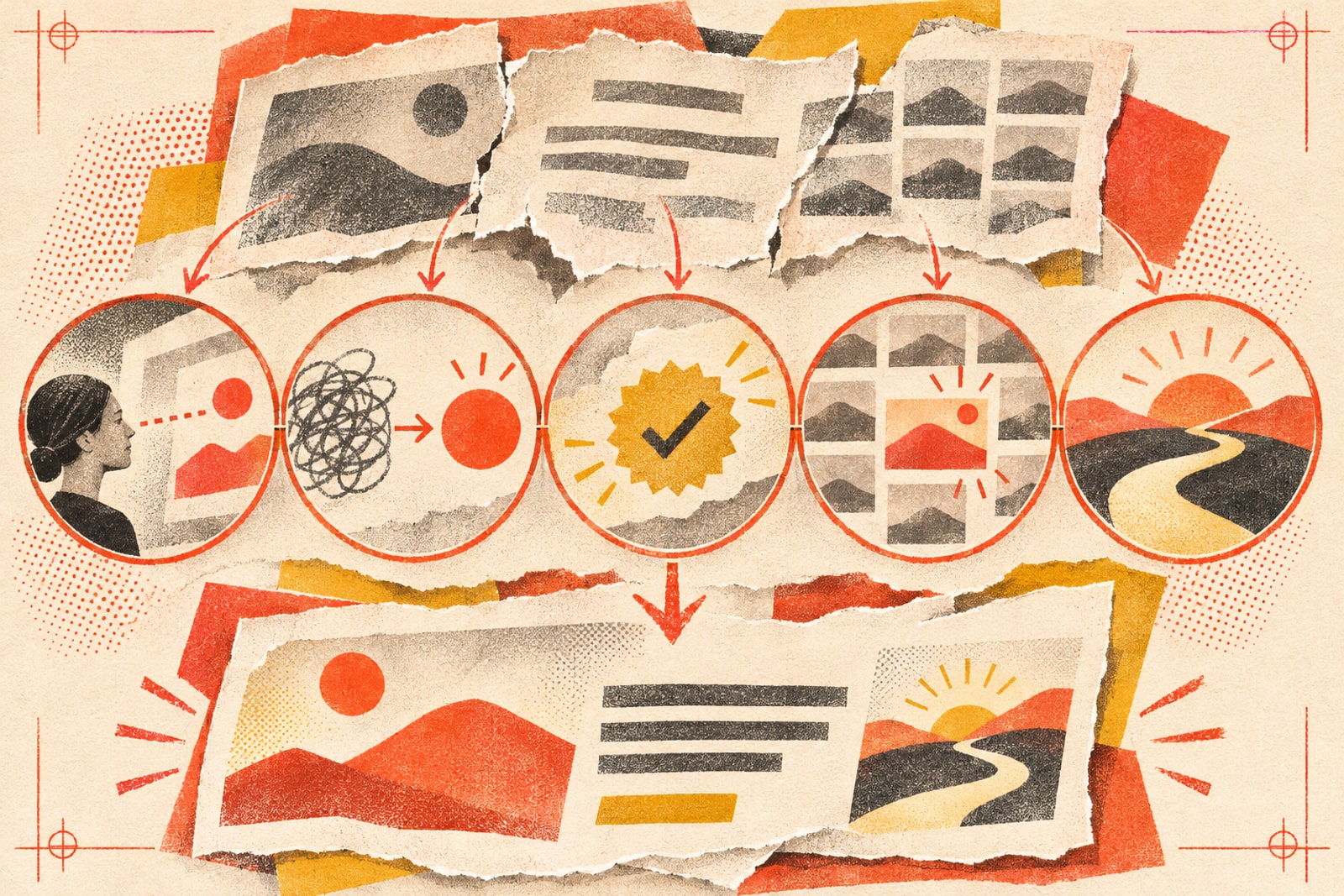
If you want to improve website content, start by diagnosing the page before rewriting it. Scope Design uses the five-part SUCKS Test below to find the weak link and fix that first. For the broader planning system—what belongs on the site, how pages work together, and how content supports the business—see our website content strategy guide.
What bad website content actually means
A business website is not a school essay. A page has a job.
A service page may need to help a buyer decide whether an offer fits. A homepage may need to orient several types of visitors and route them. A case study may need to reduce risk. An article may need to answer a question well enough that the reader can make the next decision.
Content gets weak when the page stops doing that job. You can usually see the failure in one of five places: the page does not fit the visitor’s situation, the value is hard to understand, the claims lack proof, the business sounds interchangeable, or the next step makes no sense.
Notice what is not on that list: “The page is 1,200 words instead of 1,800” or “The publish date is six months old.” Google’s current people-first content guidance says there is no preferred word count, and it specifically warns against changing dates or adding and removing content merely to make a site appear fresh. A page should be as long as its job requires and updated when something meaningful changes—not because the calendar made you nervous.
Run the Scope Design SUCKS Test
The SUCKS Test is our page-level triage framework. It is not marketing scripture handed down from a mountain. It is a practical way to turn “this content feels weak” into five questions you can actually answer.
S — Situation fit: does the page match why the visitor arrived?
Start with the visitor’s situation, not your company history.
Someone searching “emergency furnace repair” arrives with a different level of urgency than someone comparing HVAC maintenance plans. A referral who already trusts you needs different context than a cold visitor who has never heard your name. A buyer trying to compare two services does not need the same opening as someone trying to understand the problem for the first time.
Ask: What did this person come here to understand, decide, or do? Then look at the first screenful of content. Does it meet that situation, or does it launch into “Welcome to Acme Solutions, where we have proudly served…”?
A page that tries to serve every audience, awareness level, and buying stage usually serves none of them particularly well. Define the page job and its likely arrival intent first. Everything else gets easier after that.
U — Understandable value: can the visitor explain what you do and why it matters?
Clear content does not require tiny sentences or kindergarten vocabulary. It requires a coherent argument.
After a quick scan, the right visitor should be able to explain what you offer, who it is for, what problem or outcome it addresses, and why the page deserves another minute of attention. If the answer is buried under “innovative solutions,” “customer-centric excellence,” and “industry-leading service,” the content is making the visitor decode your positioning for you.
This is where a strong brand message earns its keep. The language should sound like something a customer could repeat after leaving the page—not something a committee approved because nobody objected to it.
A useful test: hide your logo and company name. Could a qualified visitor still tell what business this is, what it helps with, and why the offer matters? If not, you may have polished copy without a useful message.
C — Credible proof: did you support the claims where doubt appears?
“We deliver exceptional results” is not proof. It is a claim wearing a tie.
Credible content shows the reader why a statement deserves belief. Depending on the page, proof might include a relevant case study, a specific example, a review, a screenshot, a process explanation, a demonstration, a credential, a comparison, a documented result, or a clear limitation that shows you understand where the offer does not fit.
Placement matters. If a visitor is likely to doubt a claim about turnaround time, put the supporting process or evidence near that claim. If price creates risk, put the explanation, scope, guarantee, comparison, or expectation-setting near the price discussion. Do not make the reader remember a logo carousel from 14 scrolls ago and perform their own trust archaeology.
Our brand authority framework goes deeper on building a body of proof instead of decorating pages with authority signals.
K — Key difference: is there a meaningful reason to choose you?
“Trusted.” “Full service.” “Results-driven.” “Personalized.” “Innovative.”
They may all be true. They also appear on enough business websites to qualify as corporate oatmeal.
A useful difference is meaningful to the buyer, credible for the business, and comparative enough to change a decision. It could come from who you serve, what you refuse to do, the way you diagnose a problem, the trade-offs you optimize for, your delivery model, your expertise, your process, your proof, or a combination competitors have not made easy to copy.
Do not invent a fake “unique selling proposition” because a worksheet demanded one. Find the difference that changes the buyer’s choice and explain it plainly. Our guide to brand differentiation covers that work in detail.
S — Sensible next step: does the action match the visitor’s readiness?
The old version of this article said every page and every post needed a compelling call to action. That sounds tidy. It is also too crude.
Every useful page should help the visitor know what comes next, but “next” does not always mean “book a sales call.” It might mean read a comparison, view a case study, check pricing, use a calculator, understand the process, see related services, contact support, request an estimate—or simply leave with the answer they came for.
The action should continue the buyer’s work. A strong educational answer followed by an unrelated “SCHEDULE A DEMO NOW” button is not a conversion strategy. It is a jump scare.
Match the commitment to the visitor’s situation and the page’s job. If the reader has enough information to take a commercial step, make that path obvious. If they need one more decision first, help them make that one.
What not to fix first
Once someone decides “the content is bad,” it is tempting to reach for the most visible tactic. That is how businesses spend money polishing the symptom.
Do not start with freshness theater
Update content when the facts, offer, proof, customer questions, competitive context, or page job have changed—or when performance evidence shows a section no longer does its job. Do not change the date, swap three adjectives, and call the page fresh.
Do not add words because a competitor has more
More copy can help when the reader needs more explanation, evidence, comparison, or objection handling. More copy can also make a weak page longer. Word count is not a strategy.
Do not copy the competitor’s structure by reflex
Competitor research is useful for understanding category language, common claims, missing proof, and buyer expectations. It is not an instruction sheet. If five competitors use the same vague headline and three-card feature row, building a sixth version does not create differentiation.
Do not assume a redesign will fix a content problem
Design changes hierarchy, attention, comprehension, credibility, and friction. It matters. But stronger visual treatment cannot manufacture a clear offer, evidence, or point of view that does not exist. If you are deciding where the real problem lives, our web design vs. content guide separates the two without pretending either works alone.
How to improve website content in the right order
You do not need to rewrite the entire site to make progress. Pick one important page and fix the decision path in order.
- Confirm the page can be measured. Make sure the page loads, forms and key interactions work, analytics are collecting what matters, and you are not diagnosing from a broken instrument panel.
- Define the page job. Write one sentence: “This page helps [specific visitor] decide/do [specific job].” If you cannot finish the sentence, do not start rewriting paragraphs.
- Match the arrival situation. Identify how the visitor likely found the page and what they already know. Adjust the opening so it meets that context.
- Clarify the argument. State the problem or desired outcome, what you offer, who it fits, and why it matters in language the buyer uses.
- Add proof where doubt appears. Support the claims most likely to trigger skepticism. Remove unsupported precision and empty superlatives.
- Sharpen the meaningful difference. Explain the part of your approach, expertise, fit, or trade-off that can actually change a buying decision.
- Fit the next action. Give the reader a logical path that matches their readiness instead of forcing the same sales CTA onto every page.
- Connect useful paths. Add internal links when another page genuinely answers the reader’s next question. Google recommends descriptive, relevant anchor text because link context helps people and search systems understand the relationship between pages.
- Measure the last meaningful outcome the page can control. That might be a qualified click to pricing, a completed form, a product view, a comparison-page visit, or another behavior tied to the page’s job—not whatever metric looks happiest in the dashboard.
If the page is primarily intended to earn organic visibility, the deeper mechanics belong in our SEO content writing guide. Do the content job first; then optimize how search systems discover and understand it.
What if content is not the constraint?
This is the part most “fix your website copy” articles skip.
Sometimes the content is fine enough and the real problem is somewhere else.
In one anonymized Scope Design project for a specialty-auction business, the surface request looked like a redesign problem. Deeper discovery found broken forms, disconnected data, manual handoffs, and legacy systems creating larger constraints. A prettier homepage would have preserved those failures underneath it.
The same logic applies to content. Before you blame the copy, check the system around it:
- Measurement and technical integrity: Are forms, tracking, pages, and integrations working?
- Relevant traffic volume: Is enough of the right audience reaching the page to judge it?
- Traffic quality and acquisition fit: Are ads, search queries, referrals, social posts, and email promises sending people whose intent matches the page?
- UX friction: Can visitors find, scan, compare, and act without fighting the interface?
- Offer and positioning: Is the underlying offer compelling and appropriately priced, scoped, and differentiated?
- Sales and operational follow-through: Do inquiries get qualified, routed, answered, and followed up well?
If one of those is the real constraint, a rewrite may still improve the page. It just may not improve the business result you care about.
A 20-minute website content audit
Do this on one important page—not the entire site. The goal is to find the first meaningful failure, not to create a 73-tab audit spreadsheet nobody wants to open again.
- Minute 1–3: Situation. Write the likely visitor, arrival source, awareness level, and page job in one sentence.
- Minute 4–7: Understandable value. Read only the headline, subhead, headings, and first sentence of each section. Can you explain the offer and argument without filling gaps from your own company knowledge?
- Minute 8–11: Credible proof. Circle every important claim. Mark which claims have evidence nearby and which are asking for faith.
- Minute 12–14: Key difference. Highlight phrases a direct competitor could copy without changing a word. If most of the page survives the test, your differentiation is probably hiding.
- Minute 15–17: Sensible next step. Trace what the visitor can do after each major decision point. Remove dead ends and aggressive jumps.
- Minute 18–20: Constraint check. Ask whether traffic quality, technical problems, UX, the offer, or follow-up could explain the result better than the copy.
When you finish, you should have a short repair list tied to actual decisions: rewrite the opening for a specific visitor; add proof beside a high-risk claim; replace generic category language; change the next step; fix a broken form; or leave the page alone because it is not the constraint.
That is much more useful than “make the copy punchier.”
Frequently asked questions about bad website content
Does bad website content hurt SEO?
Weak content can make a page less relevant, less useful, less differentiated, and less worthy of links or citations, but rankings can also be limited by technical access, competition, authority, search intent, internal linking, and other factors. Do not treat “SEO problem” as a synonym for “write more copy.” Diagnose which constraint is actually limiting the page.
How often should website content be updated?
Update it when something meaningful changes: the facts, offer, pricing, proof, audience, regulations, competitive context, customer questions, search intent, or decision path. Also update when performance evidence shows the page no longer does its job. Do not revise solely to make the date look newer.
Should I rewrite my entire website at once?
Usually not. Start with pages closest to meaningful business outcomes or pages with enough relevant traffic to produce useful evidence. Fix one decision path, learn from it, and carry the lessons into the next page. A site-wide rewrite can be appropriate when the underlying positioning or offer changed, but “everything feels a little stale” is not much of a brief.
Is website content strategy the same as copywriting?
No. Copywriting is the language that persuades, explains, and moves the reader. Content strategy decides what information is needed, where it belongs, which audience and decision it serves, how pages connect, what evidence supports them, and how the content is maintained and measured. Strong copy can improve a bad strategy, but it cannot quietly replace one.
Should design or content come first?
Neither should be designed in isolation. Content determines what must be communicated; design creates hierarchy, comprehension, credibility, and interaction around that communication. In practice, both should evolve from the page job, visitor situation, evidence, and desired action. If one is obviously broken, fix the constraint rather than defending a philosophical order of operations.
Can AI fix bad website content?
AI can help summarize interviews, reorganize evidence, test alternate explanations, draft sections, critique clarity, and produce variations. It cannot manufacture a defensible market position, genuine customer evidence, first-hand expertise, or a business decision you have not made. Generic inputs still produce generic output faster.
Fix the reason the content sucks
The useful question is not, “How do we make this page sound better?”
It is, “What decision is this page supposed to help the right visitor make, and what is getting in the way?”
Run the SUCKS Test. Fix the first real failure. Measure what the page can actually influence. If the content passes and the result is still weak, keep diagnosing instead of ordering another rewrite out of habit.
If several parts of the test fail across important pages, that is usually a strategy problem wearing a copy problem’s name tag. Scope Design can help you diagnose the website, messaging, content, conversion path, and surrounding system before deciding what deserves to be rebuilt.