Tag: Lead Generation

  • Webinars vs. Advertising: Pros and Cons

    Webinars vs. Advertising: Pros and Cons

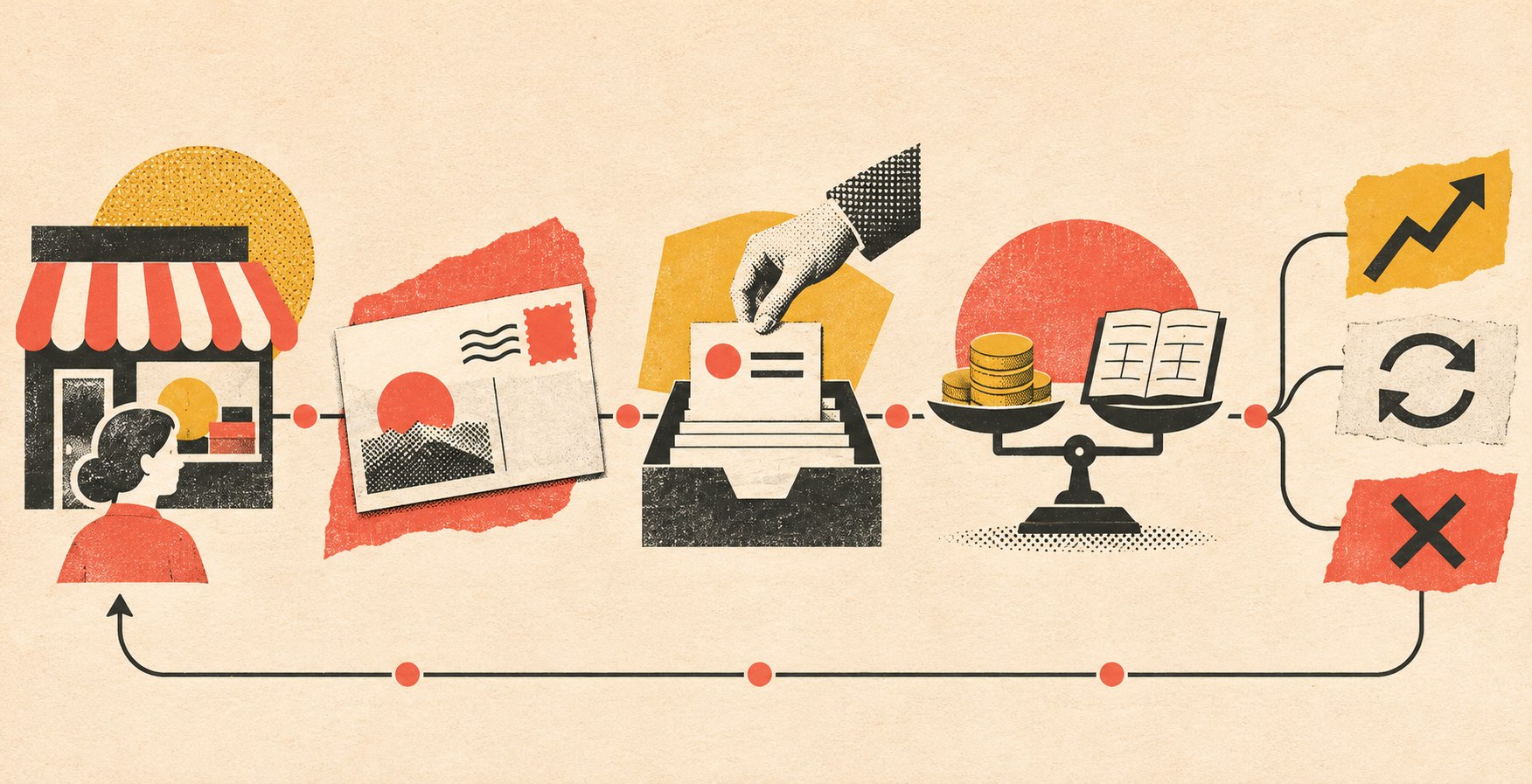
    Webinars and advertising solve different marketing problems. Advertising buys reach: it can put a proven offer in front of more people quickly. Webinars create depth: they give prospects time to learn, ask questions, see expertise in action, and decide whether a more complex offer is worth considering. If your problem is not enough qualified attention, paid advertising may be the better next move. If prospects know you exist but do not yet understand or trust the offer, a webinar may be more useful. If the offer, landing page, proof, or follow-up process is weak, neither channel is the right first investment.

    That is the core of Scope Design’s Reach–Depth Test: diagnose the bottleneck before choosing the tactic.

    Webinars vs. advertising: the short answer

    • Choose paid advertising when you need faster reach, have a defined audience, and already have an offer and destination that convert well enough to justify buying more traffic.
    • Choose a webinar when the sale requires education, trust, demonstration, or objection handling before a qualified prospect is ready for a conversation.
    • Choose both when you have a useful webinar but not enough qualified people know about it. Paid media can distribute the event; the webinar can deepen the relationship and create reusable content.
    • Choose neither yet when the real constraint is a confusing offer, weak proof, a poor landing page, or inconsistent follow-up.

    The useful comparison is not “which channel has the better benchmark?” It is “which channel fixes the problem that is keeping this marketing system from producing qualified opportunities?” That distinction also separates this article from broader advertising, marketing, and branding definitions. Here, we are comparing two possible investments for the next stage of demand generation.

    Use the Reach–Depth Test before you spend

    Most webinar-versus-advertising decisions become simpler when you identify one of three gaps.

    1. Reach Gap: the right people are not seeing the offer

    A Reach Gap exists when the offer is understandable, the destination works, and the business can handle more demand, but too few qualified prospects are arriving. Paid search, paid social, sponsorships, retargeting, and other advertising can help because they purchase distribution. The advantage is speed: you can test audiences, messages, and offers without waiting months for organic reach to grow.

    Advertising is especially useful when buyers already have intent. A person actively searching for a service or solution may not need a 45-minute educational event before taking the next step. In that case, adding a webinar can create unnecessary friction.

    2. Depth Gap: people see the offer but do not understand or trust it yet

    A Depth Gap appears when prospects need more context before they can make a serious decision. This is common with professional services, technical products, unfamiliar solutions, expensive purchases, and anything that requires a buyer to believe your judgment before they buy your work.

    That is where webinars can outperform a short ad interaction. A strong webinar gives the prospect enough time to see how you think, understand the problem, hear useful examples, and ask questions. It can build the kind of evidence that supports real brand authority rather than merely repeating promotional claims.

    3. System Gap: the traffic and attention have nowhere useful to go

    A System Gap is the expensive one to ignore. If the offer is vague, the landing page is confusing, the proof is thin, the sales handoff is inconsistent, or leads receive weak follow-up, adding more traffic simply scales the leak. A webinar can also fail here: registrations are not valuable if the presentation is disconnected from the buyer’s problem or nobody follows up with engaged attendees.

    When the System Gap is the constraint, fix the offer, destination, proof, measurement, and follow-up before spending heavily on either tactic. Our broader small-business marketing strategy guide explains why paid attention works best when the rest of the marketing system can use it.

    Webinars vs. advertising at a glance

    Decision factor Webinar Paid advertising
    Primary strength Education, trust, qualification Reach, demand capture, scale
    Best fit Complex or high-consideration sale Proven offer with a clear conversion path
    Speed Slower to plan and promote Can launch and learn quickly
    Depth of interaction High when the topic and audience fit Usually brief before the click
    Scalability Limited by event, audience, and follow-up capacity Can scale while economics remain healthy
    Reusable asset value High: recording, clips, answers, sales material Creative can be reused, but the interaction itself is usually not an owned knowledge asset
    Main failure mode Registrations without qualified attendance or follow-up Clicks and leads without profitable customers
    Most useful outcome metric Qualified opportunities and revenue influenced by the event Customer acquisition cost and qualified pipeline per dollar spent

    When webinars are the better investment

    Webinars are strongest when the buyer needs to learn before buying. That does not mean every business needs a recurring webinar program. It means the format can be valuable when a live or on-demand educational experience reduces uncertainty that a short ad cannot.

    You sell something that requires explanation

    If prospects regularly ask the same detailed questions before they are comfortable moving forward, a webinar can turn those questions into a structured educational experience. The event can demonstrate expertise, explain tradeoffs, and show how the decision should be made without forcing a sales representative to start from zero every time.

    Trust is a bigger bottleneck than awareness

    A person can see ten ads and still know very little about how you work. A useful webinar gives the buyer more evidence. The speaker can explain a framework, show examples, acknowledge limitations, and answer objections in context. That makes webinars particularly useful for expert-led services and other offers where judgment is part of what the customer is buying.

    You want first-party engagement signals

    A webinar can produce richer signals than a click alone: registration details, attendance, questions, poll responses, resource downloads, CTA activity, and follow-up requests. Those signals are useful only if your CRM and follow-up process actually use them. A long attendee list sitting in a spreadsheet is not a qualification system.

    The session can become more than one asset

    A good webinar can become an on-demand recording, an edited guide, short demonstrations, FAQ answers, email follow-up, sales enablement, and social clips. That is genuine content repurposing when each derivative is rebuilt for a useful job instead of merely reposting the same material everywhere.

    Current vendor benchmark data also shows why marketers value the format’s potential depth. ON24’s 2026 webinar benchmark summary, based on its 2025 platform data, reported a 60% registration-to-attendee rate and 49 minutes of average webinar engagement. Those figures are useful context, not a promise for your business: topic quality, audience fit, promotion, speaker quality, and follow-up can produce very different results. Review ON24’s webinar benchmark guide.

    What are the disadvantages of webinars?

    The main disadvantages are time, production effort, attendance uncertainty, speaker dependence, and limited scale. You need a strong topic, promotion plan, reliable technology, a useful presentation, and a follow-up process. Founder or subject-matter-expert time also belongs in the cost calculation. A webinar is not “free marketing” simply because the media spend is low.

    When paid advertising is the better investment

    Paid advertising is strongest when the business already knows what it wants more of. If the offer converts, the audience is identifiable, the unit economics work, and the business can fulfill additional demand, paid media can create reach faster than most owned channels.

    You can capture existing intent

    Search advertising can be especially efficient when buyers are already looking for the problem you solve. Rather than asking them to attend an event first, the ad can route them directly to the next appropriate action: a quote, consultation, trial, assessment, product page, or other conversion path.

    You need faster market feedback

    Advertising can test messages and audiences quickly. That does not make every result conclusive, but it can expose whether people respond to an offer before the business invests in a larger campaign or content program. The speed advantage is real, as long as you are measuring something closer to business value than impressions alone.

    You know the economics well enough to scale

    The critical advertising question is not “What is a good click-through rate?” It is “What can we afford to pay for a qualified customer?” Work backward from gross profit, acceptable customer acquisition cost, and your lead-to-customer conversion rate. Google Ads’ own ROI guidance emphasizes connecting advertising to conversions and business value rather than judging campaigns on clicks alone. See Google’s ROI guidance.

    What are the disadvantages of paid advertising?

    The largest risk is that paid media can scale the wrong thing. A weak offer, poor targeting, bad creative, a confusing landing page, low lead quality, or broken attribution can consume budget quickly. Ad costs and competition also change over time, and a campaign that works at one spend level may not scale indefinitely. Paid advertising is a distribution system, not proof that the underlying business proposition is good.

    When the best answer is both

    Webinars and advertising are not natural enemies. In many cases, the strongest system uses each for the job it does best:

    1. Create a webinar around a specific buyer problem, not a disguised product pitch.
    2. Invite existing customers, prospects, partners, email subscribers, and relevant organic audiences first.
    3. Use targeted paid advertising to reach additional people who match the ideal customer profile.
    4. Use attendance and engagement to segment follow-up rather than treating every registrant as equally qualified.
    5. Turn the session into on-demand and derivative assets that support later sales and marketing.
    6. Retarget or nurture people based on what they actually did, not merely the fact that they entered an email address.

    This combined model closes both a Reach Gap and a Depth Gap: advertising creates qualified exposure, while the webinar gives that attention somewhere useful to deepen.

    How to measure webinars and ads without lying to yourself

    Both channels create attractive vanity metrics. Webinar registrations can look impressive. So can ad impressions, clicks, and inexpensive leads. None of those metrics tells you whether the activity created profitable customers.

    Use the same downstream measurement chain for both:

    Spend and staff time → leads or registrants → qualified leads → opportunities → customers → gross profit.

    For advertising, add channel metrics such as impressions, reach, click-through rate, cost per click, landing-page conversion rate, cost per qualified lead, and customer acquisition cost. For webinars, add registration rate, attendance rate, engagement, CTA activity, attendee-to-qualified-lead rate, opportunity rate, and revenue influenced by attendees.

    The final comparison should be business-specific: which system creates acceptable customer quality and sustainable acquisition economics? Generic industry averages can provide context, but they should not become your forecast.

    What our audit of this exact page taught us

    We applied the same measurement rule to this revision. For the 12 complete months from August 20, 2025 through August 19, 2026, this URL recorded only five GA4 landing sessions: four Direct and one Organic Search. One session was engaged and the page recorded zero configured key events. The sample is far too small to treat those numbers as proof that webinars, advertising, or this topic does or does not work.

    Google Search Console returned no query rows for the exact URL and currently reports it as “Crawled – currently not indexed.” Indexing is allowed, the page fetch succeeded, robots are allowed, and both Google’s canonical and the user-declared canonical are the established URL. Bing’s saved page baseline was also tiny: zero clicks and three impressions. Ubersuggest found no ranking keywords and no backlinks for the exact page.

    That evidence does not justify a URL change. It supports a more useful editorial decision: preserve the established address, remove unsupported legacy statistics, clarify the article’s comparison job, and give the page a defensible framework that readers can actually use.

    Frequently asked questions

    Are webinars still effective in 2026?

    They can be, especially when the buyer needs education, trust, demonstration, or live objection handling. Effectiveness depends on the audience, topic, offer, promotion, speaker, and follow-up. A webinar is not automatically effective because current benchmark reports show strong aggregate engagement.

    Which is more cost-effective: webinars or advertising?

    There is no universal winner. Count media spend, platform fees, creative work, staff time, speaker time, sales follow-up, and the resulting customers. Compare cost per qualified opportunity and customer acquisition cost, not cost per click versus cost per registration.

    How much does a webinar cost?

    The software can range from free or inexpensive tools to enterprise platforms, but software is only one part of the cost. Planning, subject-matter-expert time, design, rehearsal, promotion, moderation, editing, and follow-up often matter more than the platform fee. Calculate the full cost for your business instead of relying on a generic average.

    How long should a webinar be?

    Long enough to solve the promised problem and no longer. A focused 25-minute session can be better than a padded hour. If audience questions create value, reserve time for Q&A rather than stretching the presentation to hit an arbitrary benchmark.

    Can a small business use paid ads to promote a webinar?

    Yes. That is often the most useful hybrid: use paid media to reach a specific audience, then use the webinar to educate and qualify the people who need more context. Optimize for qualified attendance and downstream opportunities, not the cheapest possible registration.

    What is the biggest webinar marketing mistake?

    Treating registrations as the finish line. The event needs a specific audience, a useful promise, credible content, a commercially relevant next step, and follow-up that reflects what attendees actually did. Without that system, a large registration number can hide a weak business result.

    Choose the bottleneck, then choose the channel

    If you remember one thing from this webinars vs. advertising comparison, make it this: advertising buys reach; webinars create depth. Paid media is powerful when you already have something worth scaling. Webinars are powerful when prospects need education and trust before they can make a serious decision. When the underlying marketing system is broken, neither tactic deserves more budget yet.

    If you are unsure which gap is holding your marketing back, Scope Design can help diagnose the system before you commit more money or staff time to a channel. The goal is not to force webinars or ads into the plan. It is to choose the next investment that fixes the real constraint.


  • Complete Digital Marketing Guide for Local Home Improvement Contractors

    Complete Digital Marketing Guide for Local Home Improvement Contractors

    The best digital marketing for contractors is not a pile of channels. It is a lead system. For a local home improvement contractor, the useful order is: decide which jobs and service areas you actually want, make tracking and the estimate path reliable, build local proof, capture demand, follow up consistently, and learn which sources produce qualified estimates and won work.

    That sequence matters because more traffic cannot repair an upstream failure. If a campaign sends the wrong homeowner, the website hides the next step, reviews do not support the promise, or inquiries sit unanswered, spending more on distribution mostly makes the weak stage busier. This is the same system-first idea behind our small business marketing strategy: fix the marketing system before buying more attention.

    This guide to digital marketing for contractors applies that principle specifically to remodelers, roofers, window and door installers, painters, flooring companies, landscapers, electricians, plumbers, HVAC companies, and other local home improvement contractors. It does not assume every contractor needs every platform. The goal is to find the earliest weak stage and improve that first.

    Digital marketing for contractors: what should you fix first?

    Start with the first stage in your lead path that is failing. A contractor with strong local visibility but a confusing estimate form has a conversion-path problem. A contractor getting inquiries from towns it does not serve has a targeting problem. A contractor generating good leads that nobody calls back has a handoff problem. Those businesses do not need the same marketing prescription.

    Before choosing SEO, Google Ads, Local Services Ads, Facebook, email, or content, answer seven questions in order:

    1. Service + Territory: Which jobs, customers, and locations are actually worth pursuing?
    2. Measurement: Can you connect an inquiry to a source and later to a qualified estimate or won job?
    3. Estimate Path: Can the right homeowner quickly understand fit, trust the business, and request the next step?
    4. Proof + Local Discovery: Can nearby buyers find you and see credible evidence?
    5. Demand Capture: Which channel matches an active buying moment?
    6. Handoff + Follow-Up: Do leads reach a person and receive a useful response?
    7. Won-Job Learning: Which sources create good work, not just more forms?

    The Contractor Marketing Dependency Chain

    A red path links contractor planning, homeowner conversations, completed projects, and local community trust.
    Fix the earliest weak stage before you add more traffic.

    The chain is a diagnostic, not a scientific score. Its value is the order. Each later stage depends on earlier information being good enough to trust. If service-area definitions are wrong, campaign targeting can be wrong. If tracking is incomplete, a landing-page test can look better or worse than it is. If the estimate path is weak, paid traffic can increase cost without fixing the customer experience.

    What you see Likely first weakness Fix first Useful measure
    Too many out-of-area or low-fit inquiries Service + Territory Clarify services, geography, qualification, and targeting Qualified lead share
    Relevant traffic but few estimate requests Estimate Path Improve message, proof, mobile usability, and next step Qualified estimate-request rate
    Good inquiries but slow or inconsistent contact Handoff + Follow-Up Fix routing, ownership, response, and follow-up Contact and appointment rate
    Plenty of estimates but weak close rate Offer, proof, sales, or fit Review scoping, expectations, evidence, and sales process Estimate-to-win rate
    Leads and jobs exist, but the work is not attractive Won-Job Learning Compare source with job quality and economics Acquisition cost and job value/margin when available

    1. Define the jobs and territory you actually want

    Local contractor marketing begins with an operating decision, not a keyword. Write down the services you want more of, the services you do not want, the real towns or radius you can serve well, the project sizes that make sense, and any capacity constraints that should limit demand.

    This prevents a common failure: advertising a broad promise to a broad geography and then blaming the channel for low-quality leads. A roofing company trying to fill one crew in a 25-mile service radius has a different market than a multi-location home-services company. A remodeling firm that wants kitchens and additions should not evaluate marketing by the number of handyman inquiries it can generate.

    Use geographic targeting only where geography changes the buying decision or your ability to serve the job. Our guide to targeting local customers with geolocation marketing goes deeper on matching service boundaries, destination pages, proof, and next steps. The key rule here is simple: make the marketing map match the real operating map.

    2. Fix measurement before buying more traffic

    A form submission is not the business outcome. Neither is a click, call, or booked estimate by itself. For a contractor, the useful measurement chain usually looks more like source → inquiry → qualified lead → estimate → won job. If job value or contribution margin is available, connect that too.

    You do not need a complicated attribution model to start. You do need consistent source labels, working forms and calls, and a way for the sales or office team to record what happened next. A simple CRM field is better than a sophisticated dashboard nobody updates.

    Measurement should also distinguish channel failure from process failure. If search ads produce qualified inquiries that are not contacted, the ad platform is not the first problem. If a landing page gets traffic from outside the service area, targeting or service-area definitions may be wrong. If inquiries become estimates but estimates rarely become jobs, look at fit, proof, offer, scoping, and sales before you buy more clicks. Our broader digital marketing strategy guide explains the same principle across channels.

    3. Build a website path that turns interest into estimate requests

    Your website has a specific job in contractor marketing: help the right homeowner decide whether you are a plausible fit and make the next step obvious. It does not need to answer every question, but it should reduce the uncertainty that blocks an estimate request.

    At minimum, make these easy to verify:

    • what services you provide and which projects are a fit;
    • where you actually work;
    • real project photos, case evidence, reviews, credentials, or process details;
    • how estimates or consultations work;
    • a clear phone, form, or booking action that works on mobile;
    • what happens after the homeowner submits the request.

    Service pages should help a buyer understand the work, not exist merely to repeat a location keyword. Location pages should reflect real service-area differences, proof, projects, or customer questions. Thin combinations of every service and every nearby town are not a substitute for useful local information.

    4. Win local discovery with Google Business Profile, local SEO, and reviews

    For many home improvement contractors, local search is a core discovery layer because the homeowner can describe a service, problem, and location. Google says local results are mainly based on relevance, distance, and prominence, and its guidance recommends keeping business information complete and accurate, verifying the profile, responding to reviews, and adding photos and videos. See Google’s local ranking guidance.

    That makes Google Business Profile important, but not magical. Keep the name, phone, website, business type, hours, and service information accurate. Add real project photos. Ask satisfied customers for honest reviews without scripting a fake story. Respond professionally. Make sure the website and profile tell the same truth about what you do and where you work.

    Local SEO extends beyond the profile. The website needs crawlable service information, useful location context, strong internal links, and enough proof for a homeowner to trust the next step. Our local marketing strategy guide covers the surrounding local system without turning this contractor page into a duplicate local-SEO tutorial.

    5. Capture existing demand with search and paid channels

    Once the offer, measurement, destination, proof, and handoff are reliable enough to trust, add channels based on the buying moment.

    SEO and local search

    SEO fits when people are already searching for a service, problem, location, comparison, or answer you can credibly own. Build pages around real services and useful customer questions. Treat rankings as discovery evidence, not the final outcome. The business still needs qualified leads, estimates, and wins.

    Google Ads

    Paid search can be useful when you want controlled demand capture around specific services or markets and you can measure what happens after the click. Start narrower than your ego wants: one meaningful service, a defensible geography, a destination built for that intent, and explicit stop or scale rules. Our guide to online advertising for small business covers the broader paid-media decisions.

    Google Local Services Ads

    Local Services Ads can generate phone or message leads for eligible local service businesses, but they are not available to every category in every market. Google currently lists many contractor categories, including general contractors and several home-service specialties, and says advertisers choose service categories and service areas. Check current eligibility for your category and location rather than treating LSA as universal. Google’s Local Services Ads help page explains the current mechanics.

    The choice between SEO, paid search, and LSA is not philosophical. Ask what constraint you are solving. If qualified local buyers cannot find you, discovery may be the problem. If organic visibility exists but you need a controlled test around one profitable service, paid search may be useful. If you are eligible for LSA and can answer leads reliably, it may deserve a test. If the website or handoff is broken, fix that before adding demand.

    6. Turn completed work into proof, content, social, and referrals

    A contractor creates marketing material every time a real project produces a useful lesson, before-and-after contrast, customer question, installation challenge, material choice, timeline explanation, or result. The mistake is waiting for a blank content calendar and then inventing generic topics.

    Start with field evidence. With permission, capture photos, the problem, the constraints, the decision, and what changed. One good project record can support a case study, a service-page proof block, a Google Business Profile update, a social post, a sales follow-up, a referral request, and a future FAQ. Our guide to content marketing types for local businesses can help choose the right format after the evidence exists.

    Social media is useful when it has a job. Project proof can reinforce trust. Short explanations can reduce uncertainty. Community content can show local presence. Paid social can distribute a useful message to a defined audience. None of that makes social a mandatory primary lead source for every contractor. Use the channel because it solves a problem, not because a platform is popular.

    Referrals deserve the same discipline. Make it easy for a satisfied customer or trade partner to remember what you do, who is a good fit, and how to introduce you. A referral system is stronger when the referred homeowner lands on the same clear services, proof, and next step as every other lead.

    7. Make lead response and follow-up part of marketing

    Marketing does not end when a form is submitted. The lead still has to reach the right person, be qualified, receive a useful response, and know what happens next. If that handoff is inconsistent, campaign reporting can punish good channels for an internal process problem.

    Define ownership. Decide who receives each lead type, what information they need, how unanswered calls are handled, how estimates are scheduled, and when follow-up stops. Use automation for routing and reminders where it reduces dropped work, but keep the message human and relevant.

    Email can support estimate reminders, education, seasonal maintenance, referral prompts, and long-consideration projects when the customer has a legitimate reason to hear from you. The local business email marketing roadmap goes deeper on building that channel. For this contractor system, the important measure is whether follow-up improves qualified progression, not whether the software can send more messages.

    How much should a contractor spend on digital marketing?

    There is no universal percentage that makes a contractor marketing budget correct. A fixed share of revenue ignores capacity, job economics, close rate, seasonality, cash flow, market competition, and whether the lead path is working.

    Build the budget from your own operating numbers instead:

    1. Decide how many additional won jobs you can realistically fulfill in the test period.
    2. Use your own history to estimate how many qualified leads or estimates are usually required to produce those wins.
    3. Choose a maximum acquisition cost per won job that your economics and cash position can support.
    4. Set a bounded test budget and a time window large enough to observe the lead path.
    5. Define stop, fix, and scale rules before the campaign starts.

    A simple planning formula is test budget ceiling = desired incremental won jobs × your chosen maximum acquisition cost per won job. That is not an industry benchmark. It is a way to stop a media budget from floating free of capacity and job economics.

    For example, suppose a contractor has room for four additional jobs during a test and chooses a maximum acquisition cost based on its own margins and cash constraints. The budget should be tied to those four potential wins and the actual lead-to-estimate-to-win history, not to a generic percentage found in a marketing article. If the tracking cannot connect spend to qualified progress, solve measurement before increasing the ceiling.

    A practical 90-day contractor marketing plan

    Days 1-14: make the system measurable

    • Choose priority services, project fit, service territory, and capacity.
    • Test every phone, form, booking, and estimate-request path on mobile.
    • Standardize source and lead-status fields.
    • Inventory real proof: reviews, project photos, credentials, case evidence, and common customer questions.

    Days 15-30: improve local trust and conversion

    • Correct Google Business Profile information and service details.
    • Improve the main service and estimate pages before creating dozens of new pages.
    • Add proof near the claims it supports.
    • Create a consistent process for requesting honest reviews from satisfied customers.

    Days 31-60: test one demand channel deliberately

    • Choose one service and market where capacity exists.
    • Use SEO work, paid search, or eligible LSA based on the actual discovery problem.
    • Send the demand to a relevant destination, not automatically to the homepage.
    • Publish real project proof and answer customer questions that support the same service.

    Days 61-90: review the whole lead chain

    • Compare source, inquiry quality, estimates, wins, and job value where available.
    • Find the earliest weak stage instead of optimizing the loudest metric.
    • Fix the stage, run the next bounded test, and document what changed.
    • Scale only when the business can absorb more of the same kind of work.

    This keeps digital marketing for contractors tied to capacity and qualified outcomes instead of channel activity. If you need a wider view of the surrounding channels, use our local marketing strategies as the map. Keep this contractor plan as the operating sequence.

    What auditing this exact article changed

    Before revising this page on August 21, 2026, Scope Design checked the exact URL in Google Analytics 4, Google Search Console, Bing Webmaster Tools, Ubersuggest, and a live Google results-page analysis. The point was not to manufacture a success story. It was to decide what evidence deserved protection and what should be rebuilt.

    • GA4: the exact page recorded six Direct landing sessions, zero engaged sessions, and zero configured key events in the current 12 complete months. There was no prior-period row. That sample is too small to judge conversion performance.
    • Google Search Console: there were no exact-page query/page rows in either 12-month comparison window, and URL Inspection reported the URL as unknown to Google at the time of research.
    • Bing Webmaster Tools: Bing recognized the exact URL and had crawl history, but reported zero clicks and zero impressions.
    • Ubersuggest: the exact page returned no ranking-keyword data and no backlink rows; the cleaner commercial query opportunity was “digital marketing for contractors.”
    • Live Google SERP: the category was already summarized as a mix of local search, ads, project proof, mobile website experience, Google Business Profile, reviews, and follow-up. That made another generic channel list a weak editorial choice.

    Those findings led to two decisions. First, preserve the established URL because changing it offered little editorial benefit and would create avoidable migration risk. Second, remove unsupported legacy percentages and rebuild the article around a contractor-specific dependency chain, better internal ownership, and traceable claims.

    Contractor digital marketing FAQs

    What is the best digital marketing strategy for a contractor?

    The best strategy is the one that fixes the earliest weak stage in your contractor lead system. Define profitable services and service area, make measurement and the estimate path reliable, build local proof, then choose demand channels and follow-up based on the actual constraint. Do not assume every contractor needs the same channel mix.

    How do I market myself as a contractor?

    Make it easy for the right local customer to understand what work you do, where you work, why they should trust you, and what to do next. Keep Google Business Profile accurate, show real project proof, build useful service pages, earn honest reviews, capture active search demand, ask for referrals, and follow up consistently. Choose channels only after those basics match the jobs you actually want.

    Should a contractor use SEO, Google Ads, or Local Services Ads?

    They solve different jobs. SEO helps build discoverability around services, problems, locations, and questions you can credibly answer. Google Ads can create a controlled paid search test around a specific service and market. Local Services Ads can generate calls or messages for eligible categories and locations. Use the channel that matches the constraint, and make sure the destination and lead response are ready first.

    How much should a home improvement contractor spend on marketing?

    Use your own capacity and job economics instead of a universal percentage. Decide how many additional wins you can fulfill, work backward through your own close rates, choose a maximum acquisition cost the business can support, and run a bounded test with stop and scale rules.

    Is Facebook the best platform for contractor marketing?

    Not universally. Facebook and other social platforms can distribute project proof, education, community content, and paid messages, but search, maps, referrals, email, or another channel may be closer to the buying moment for a particular service. Give each channel a job instead of declaring one platform the winner for every contractor.

    How should contractors measure marketing results?

    Track beyond clicks and form fills. A useful chain is source → inquiry → qualified lead → estimate → won job, with job value or margin when the business can record it reliably. That lets you see whether a problem belongs to targeting, the website, lead handling, sales, or the economics of the work itself. It also keeps digital marketing for contractors tied to business outcomes instead of platform dashboards.

    Need help finding the first weak stage?

    If your contractor marketing has traffic, leads, and tools but no clear explanation for what is working, Scope Design can help diagnose the system before you add another tactic. Contact Scope Design to start with the constraint that matters most.

    Sources and methodology

    Editorial note: Legacy percentage claims about contractor search behavior, review thresholds, video conversion multipliers, platform dominance, and fixed marketing-budget percentages were removed when the revision could not support them with appropriate evidence. The framework above is Scope Design’s practical diagnostic, not an industry benchmark or scientific model.

  • Essential Service Business Website Design: Convert More Visitors Into Customers

    Essential Service Business Website Design: Convert More Visitors Into Customers

    Service business website design converts when it does five jobs well: help the right visitor recognize that you solve their problem, prove you can be trusted, reduce the uncertainty that blocks a decision, make the next step obvious, and hand the inquiry to a person or system that will actually respond. The goal is not more form fills. It is more qualified calls, bookings, and estimate requests from work you can actually serve.

    That distinction matters for plumbers, HVAC companies, electricians, roofers, landscapers, cleaners, contractors, consultants, and other service businesses. A visitor is not buying a box from a shelf. They are judging fit, risk, timing, expertise, and what will happen after they contact you. Your website has to help them make that decision without creating a scavenger hunt.

    And no, the answer is not automatically “shorter copy, fewer form fields, bigger buttons.” Those can help in the right situation. They can also remove useful qualification, flood your team with junk, or polish a page when the real problem is traffic quality, the offer, or follow-up.

    TL;DR: What makes service business website design convert?

    • Make fit obvious: say what you do, who it is for, and where you actually work.
    • Put proof where doubt appears: relevant reviews, project evidence, credentials, photos, guarantees, or process details beat a generic wall of logos.
    • Reduce uncertainty: explain what happens next, what affects price and timing, and what makes someone a good or bad fit.
    • Match the CTA to intent: urgent service may need click-to-call; considered work may need an estimate request, consultation, or booking path.
    • Keep useful qualification: a form field that filters impossible service areas or wrong job types is not automatically “friction to remove.”
    • Measure qualified progress: track calls and forms, but judge the website by whether those inquiries become usable next steps.

    A service business website is a decision interface, not a digital brochure

    A brochure describes the company. A useful service website helps a prospective customer decide.

    That means the first design question is not “What should the homepage look like?” It is “What business job should this page help complete?” Scope Design’s broader service business website strategy covers the whole system from local intent through operational handoff and booked work. This guide owns the narrower design problem: what has to happen on the website once a relevant visitor arrives.

    Start with the constraint. If relevant people are not reaching the site, a prettier homepage will not manufacture demand. If they arrive but cannot tell whether you handle their problem, that is recognition friction. If they understand the service but do not believe the promise, that is trust friction. If good inquiries arrive and nobody answers them, the website may not be the main bottleneck at all.

    This is the same constraint-first rule Scope uses in website strategy: diagnose the first meaningful break before choosing a tactic. A redesign request proves dissatisfaction. It does not prove design is the constraint.

    Use the Five-Friction Service Website Audit

    The Five-Friction Service Website Audit is a Scope Design diagnostic for page-level conversion. Work through it in order. The point is not to make every page frictionless. The point is to remove bad friction while keeping the information and qualification that help both sides make a better decision.

    A continuous path connects service fit, proof, clear expectations, action, and a useful human handoff.

    1. Recognition friction: “Is this actually for me?”

    A visitor should not have to decode your clever tagline before learning what you do. Make the service, problem, customer type, and location relationship clear enough that the right person can recognize fit quickly.

    For a local service company, that can mean a headline such as “Commercial HVAC Repair for Restaurants in the Southern Tier” rather than “Comfort Without Compromise.” The second line may be brand language. The first helps a buyer decide whether the service fits.

    Dedicated service pages can help when the services represent genuinely different problems or buying decisions. Location pages can help when they represent places you really serve and contain useful local context. Do not create dozens of near-duplicate city pages just because someone sold you an SEO template. Your site should make service and location fit clear, but it does not control geography.

    2. Trust friction: “Why should I believe you?”

    Service businesses sell a promise before the work exists. That makes proof part of the interface, not decoration.

    Use proof that answers the doubt in front of the visitor: reviews about the same kind of job, before-and-after work when visuals matter, real team photos, license or insurance information where applicable, warranties you actually honor, process details, recognizable certifications you really hold, or case evidence from similar customers.

    Placement matters. A testimonial about emergency response is more persuasive beside an emergency-service decision than buried on a page called “Testimonials.” A gallery is useful when workmanship is visual. A wall of generic five-star quotes can become wallpaper if none of it helps the visitor judge their specific risk.

    3. Uncertainty friction: “What happens, what affects price, and am I a fit?”

    Uncertainty kills good inquiries quietly. The visitor may like you and still leave because they cannot tell what happens next, whether you travel to their location, whether their project is too small, or whether the price is remotely plausible.

    Show enough pricing information to help a qualified buyer judge fit when your business model allows it. That might be an exact price, a starting price, a typical range, a minimum engagement, a diagnostic fee, or a plain-English explanation of what determines scope. If the work really requires diagnosis, say that and explain the estimating process. Our deeper guide to selling services online covers pricing and qualification in more depth.

    Useful uncertainty reducers can also include response-time expectations, service-area boundaries, scheduling windows, financing availability, what is included, what is not, and a short “what happens next” sequence.

    This is where useful friction earns its keep. If you only serve commercial properties, asking “Residential or commercial?” can prevent a bad handoff. If a ZIP code determines eligibility, asking for it can save everyone time. The goal is not the fewest fields. It is the least effort required to create a usable next step.

    4. Action friction: “What should I do now?”

    A call to action should match the visitor’s urgency and commitment level. “Contact Us” is not evil, but it often tells the visitor less than “Call for Same-Day Service,” “Request an Estimate,” “Check Availability,” or “Book a Consultation.”

    Urgent home-service work may justify a persistent mobile call action. A high-ticket commercial project may need a brief qualification form before anyone schedules discovery. A consultant may need calendar booking. A company that cannot support instant scheduling should not install a booking widget just because a competitor has one.

    Also stop treating “above the fold” as a religion. Put a clear next step early when the visitor may already be ready, then repeat or change the CTA where a later section resolves a new objection. The right CTA architecture follows the decision, not a page-template superstition.

    5. Handoff friction: “Did my request actually go somewhere useful?”

    The button is not the finish line. Test what happens after the click.

    • Does the form submit successfully on mobile and desktop?
    • Does the phone number call the correct line?
    • Does the request reach a monitored inbox, CRM, dispatcher, or scheduling system?
    • Does the visitor get a useful confirmation and realistic response expectation?
    • Can the business distinguish a qualified inquiry from a raw submission?

    If the website produces good-fit inquiries but follow-up falls apart, that is a customer lifecycle and handoff problem, not a reason to keep rearranging the hero section.

    The pages a service business website actually needs

    There is no sacred page count. Build the smallest architecture that answers real buying questions and gives each important intent a useful destination.

    Page type Its real job
    Homepage Establish fit, route major intents, show enough proof, and make the primary next step obvious.
    Core service pages Answer one meaningful service/problem decision with relevant proof, expectations, and CTA.
    Service-area information Clarify where you actually work. Create separate location pages only when they provide real value rather than duplicated SEO filler.
    Proof / About Reduce risk with real people, experience, credentials, work, process, and reasons to believe.
    Contact / request page Collect the information required for a useful response and explain what happens next.
    Pricing / process / FAQ content Resolve recurring fit, cost, timing, and process objections when those questions materially affect the sale.

    The technical foundation still matters underneath that architecture. If forms break, pages shift while loading, or the mobile interface is painful to operate, strong messaging cannot rescue the experience. Scope’s guide to a reliable website development foundation covers that layer more deeply.

    Mobile service business website design: responsive is not enough

    “Responsive” only means the layout adapts. A useful mobile experience also has to be readable, operable, stable, and fast enough that the visitor can complete the task.

    • Make important controls easy to hit. WCAG 2.2 Success Criterion 2.5.8 sets a minimum pointer-target size of 24 by 24 CSS pixels, with defined exceptions and spacing rules. Important phone, booking, menu, and form controls can reasonably be larger.
    • Keep calls actionable. If phone contact is a meaningful conversion path, use a working tel: link and test it on real devices.
    • Reduce layout instability. Do not let late-loading banners, review widgets, or images shove the CTA around while someone is trying to tap it.
    • Use field data when performance matters. web.dev’s current “good” Core Web Vitals thresholds are LCP at or below 2.5 seconds, INP at or below 200 milliseconds, and CLS at or below 0.1 at the 75th percentile. Treat those as experience diagnostics, not as a magical conversion formula.
    • Test the whole path. Open the service page on a phone, tap the CTA, complete the form or call path, and verify the confirmation. A score cannot prove that workflow works.

    That last point is important. “Your site must load in under three seconds or nobody converts” is not a useful universal rule. Performance matters. So do relevance, message clarity, trust, intent, and the visitor’s actual job.

    What should you measure after a service website redesign?

    Measure according to the decision you need to make. Traffic and clicks help diagnose the system. They are not automatically the business outcome.

    Signal What it can tell you What it cannot prove by itself
    Sessions, impressions, rankings Whether relevant demand is reaching the site That the site creates good customers
    CTA clicks, form starts, phone clicks Where intent appears or page friction may begin That the lead was qualified
    Calls and form submissions Raw inquiry volume That the inquiry became a usable opportunity
    Qualified inquiries / booked appointments Whether the site creates usable next steps That sales or operations handled them well
    Attended appointments, approved work, revenue Whether lead quality holds up downstream That the website alone caused the result

    Google’s current local lead-generation guidance says conversion tracking is important and makes a useful distinction: a click shows engagement, not that someone is ready to buy. It also describes local leads arriving through phone, email, text, or booking. For a deeper measurement ladder, use our guide to turning a website into a lead-generating system.

    For many local service businesses, the most defensible website-accountable outcome is a tracked phone inquiry that meets service criteria or a booked-and-attended appointment. For a considered B2B service, it may be a qualified opportunity. Pick the last meaningful outcome the website and connected systems can reliably influence, then evaluate the design against that.

    What not to optimize blindly

    Most “conversion best practices” are hypotheses with conditions attached. Use them when they solve the diagnosed problem—not because a listicle said everyone should.

    • Fewer form fields: remove questions nobody uses. Keep fields that qualify geography, service type, property type, urgency, budget, or another real constraint.
    • Shorter copy: remove repetition and filler. Keep the detail a high-consideration buyer needs to reduce risk.
    • More testimonials: add relevant proof at points of doubt, not an endless quote wall.
    • Hide pricing: secrecy is not strategy. Show an exact number, range, starting point, minimum, or pricing logic when it helps the right buyer judge fit.
    • Add a chatbot or popup: only if the business can support the experience and the interruption solves a real problem.
    • Redesign the whole site: do it when structure, messaging, usability, technology, or maintainability is actually limiting performance—not because the homepage feels old.

    A page with relevant traffic and weak fit recognition needs different work than a page with clear messaging and broken form delivery. Fix the constraint, not the fashionable symptom.

    Run this 15-minute service website audit

    Open one important service page on your phone and answer these questions without giving yourself credit for information the visitor has to hunt down:

    1. Can I tell the service, customer/problem, and service-area fit in the first screen or two?
    2. Is there proof relevant to this exact decision?
    3. Can I tell what happens after I contact the company?
    4. Can I judge basic fit around geography, job type, timing, and price expectations where those matter?
    5. Is the next step obvious and appropriate to the visitor’s urgency?
    6. Can I tap the CTA easily and complete the action on mobile?
    7. Does the form or phone path actually reach the correct destination?
    8. Do we know whether the resulting inquiries are qualified?

    The first honest “no” is where I would investigate before changing colors, adding animation, or rebuilding the navigation.

    Frequently asked questions about service business website design

    What is the best website design for a service business?

    The best service business website design makes fit, trust, uncertainty, action, and handoff clear for the specific customer journey. It should state the service and service area plainly, use relevant proof, explain the next step, make contact easy, and keep enough qualification to produce usable inquiries. There is no single template that is best for every service business.

    What should a service business website include?

    Most need a useful homepage, dedicated pages for major services, clear service-area information, proof about the company and its work, and a contact or request path that explains what happens next. Pricing, process, FAQs, financing, project galleries, emergency contact, and online booking belong when they answer real buying questions or support the operating model.

    Should a service business show prices on its website?

    Show enough pricing information to help a qualified buyer judge fit when you can do so honestly. That may be an exact price, starting price, range, minimum engagement, diagnostic fee, or explanation of what determines scope. If diagnosis is required before pricing, explain that process instead of pretending price is unknowable.

    How many fields should a service-business lead form have?

    As few as necessary to create a useful next step—not as few as possible. Remove fields nobody uses. Keep fields that prevent predictable bad fits or give the team information required to respond properly. Judge the form by qualified inquiry completion and downstream lead quality, not by field count alone.

    Does every service business need online booking?

    No. Online booking is useful when the business can honor the available times and the service can be scheduled without additional qualification. Urgent work may be better served by phone. Complex projects may need an estimate or discovery step first. The interface should reflect how the business can actually deliver the service.

    How much should a service business website cost?

    Cost depends on scope, content, integrations, ecommerce or booking needs, custom functionality, accessibility, migration, SEO requirements, and the level of strategy/design involved. A cheap brochure and a site connected to a real lead-routing and measurement system are not the same deliverable. Compare proposals against the business job the website must perform, not page count alone.

    Design for qualified action, not applause

    A service business website does not need to win a design award. It needs to help the right person make a confident next decision and help your team receive a request it can actually use.

    Use the Five-Friction Service Website Audit in order: recognition, trust, uncertainty, action, handoff. If the first four are strong but leads still die after submission, stop redesigning the page and fix the handoff. If traffic is irrelevant, fix acquisition. If the offer is wrong, no button color is coming to save you.

    If your site is getting relevant visitors but good-fit buyers still hesitate, Scope Design can help diagnose the constraint and rebuild the experience around qualified action instead of decoration.

    Sources and methodology

    Editorial note: Several unsupported legacy statistics and guaranteed outcome claims were removed during this workflow instead of being repeated as facts.

  • How to Promote Your Door Installation Business Online: 10 Proven Digital Marketing Strategies

    How to Promote Your Door Installation Business Online: 10 Proven Digital Marketing Strategies

    Door installer marketing works best when you stop treating Google, your website, reviews, ads, social media, and follow-up as separate projects. Build one system that captures local demand, sends people to a convincing next step, assigns every inquiry to a person, and tracks which leads become estimates and booked jobs.

    That distinction matters because ten marketing channels can become ten places to waste money. A door installation company does not need to be everywhere. It needs to be easy to find when the right homeowner is looking, credible enough to make the shortlist, responsive enough to earn the estimate, and disciplined enough to know what produced the job.

    This guide gives you ten practical digital marketing strategies for a door installation business, but the tactics are ordered around a single operating idea: build the path from demand to booked work before you add more traffic.

    The DOOR Lead Loop: a better filter for door installer marketing

    Most marketing lists tell you what channels exist. That is not the same as having a strategy. As we explain in our guide to building an online marketing strategy, tactics get expensive when nobody has defined the buyer trigger, destination, owner, and business result first.

    For a door company, use the DOOR Lead Loop before a channel earns more time or budget:

    • D — Demand: Does this tactic reach a real buyer trigger, such as a homeowner searching for door replacement, comparing entry-door options, or asking a trusted local partner for a recommendation?
    • O — Offer + proof: Does the destination explain the right service, where you work, what happens next, and why someone should trust you?
    • O — Ownership: Who answers the call or form, qualifies the project, schedules the estimate, and follows up if the homeowner is not ready today?
    • R — Revenue evidence: Can you connect the channel to an estimate, a sold job, and enough gross profit to justify doing more of it?
    A coral path links a homeowner search, a door installation, a satisfied customer, and a local referral.
    The DOOR Lead Loop: capture demand, make a credible offer, assign lead ownership, and measure booked work.

    If a channel fails one of those four tests, fix the leak before you add another channel. That is the same constraint-first thinking behind our broader Business Strategy playbook: make the next useful bet, not the biggest-looking one.

    1. Make your Google Business Profile your local front door

    For many door installers, the first useful marketing job is not posting more often. It is making sure Google has an accurate picture of the business that already exists.

    Google’s Search Central guidance on establishing business details says verified owners can provide or edit address, contact information, business type, and photos so local business information can appear across Search and Maps. That makes profile hygiene boring but important.

    • Use the real-world business name rather than stuffing services or cities into it.
    • Choose the most specific categories that truthfully describe the business.
    • Keep hours, phone, website, and service information current.
    • Add recent photos of finished entry doors, patio doors, storm doors, interior doors, commercial doors, or garage doors you actually install.
    • Keep the website’s core business information consistent with the profile.
    • Use the correct address/service-area setup for the way the company operates.

    Door companies that travel to the customer’s property are often service-area businesses. Follow Google’s current Business Profile rules for real-world identity, address or service area, and categories. If customers do not visit the business address, configure the profile as a service-area business rather than presenting the location like a public showroom. Google changes interface details, so verify current profile settings before copying an old checklist.

    2. Build service and service-area pages around real door jobs

    Your Google Business Profile can introduce the business. Your website has to explain the job.

    Start with pages that reflect how customers actually buy your services. Depending on the company, that might mean separate pages for entry-door replacement, storm doors, patio or sliding doors, interior doors, commercial doors, garage doors, or door repair. A useful service page should answer four things quickly: what you install, where you install it, what makes your process credible, and how to request the next step.

    Then create service-area pages only where you can add local usefulness. Do not clone the same paragraph for 40 towns and swap the city name. Google’s spam policies explicitly describe substantially similar regional pages that funnel users to the same destination as potential doorway abuse.

    A legitimate location page can include local project examples, service boundaries, building-stock considerations, permit or code resources where relevant, travel/appointment expectations, testimonials from that area, and the services you actually provide there. If there is nothing meaningfully different to say, one strong service-area explanation is better than a pile of thin pages.

    Where appropriate, add accurate LocalBusiness structured data so search systems have standardized business information to interpret. Schema is a supporting signal, not a substitute for a useful page.

    3. Turn the website into an estimate path, not a digital brochure

    A pretty site cannot rescue a vague offer. The homepage and service pages need to help a homeowner move from “can you do this?” to “I should ask these people for an estimate.” If you are still deciding what the website needs to accomplish, our guide on why a small business needs a website goes deeper into the business case.

    For a door installation company, the core conversion path usually needs:

    • a clear statement of door types and service area near the top of the page;
    • real project photos rather than a wall of manufacturer stock photography;
    • proof that matches the promise: reviews, credentials, warranty/process information, and examples of completed work;
    • a prominent phone option for people ready to talk;
    • a short estimate form that asks only what your team will actually use;
    • a clear expectation for what happens after the form is submitted;
    • mobile layouts that make calls, photos, forms, and service information easy to use.

    Do not make the contact form do the estimator’s entire job. Ask enough to route the lead—project type, location, basic timing, and useful contact information—then let a human conversation qualify the details that actually require judgment.

    4. Build an ethical review and proof engine

    Reviews are not a decorative widget. They are part of how a homeowner reduces risk before letting a contractor change a visible, functional part of the house.

    Build review requests into the completion process. After a finished job, ask the customer for an honest review, provide a direct link to the appropriate platform, and make responding to reviews someone’s responsibility. Then reuse genuine proof where it helps a buyer decide: service pages, project case studies, estimate follow-up, and social posts. Our guides to how customer reviews influence buying decisions and using testimonials without making things up cover that proof layer in more depth.

    There is also a compliance reason to keep the process honest. The FTC’s Consumer Reviews and Testimonials Rule has been in effect since October 21, 2024 and prohibits businesses from conditioning review incentives on positive or negative sentiment. FTC guidance also warns against asking only the customers you expect will leave positive reviews. Ask real customers for real feedback; do not manufacture a five-star conveyor belt.

    5. Buy high-intent demand with Google Ads—and verify LSA eligibility first

    Paid search makes sense when the business can handle additional demand and knows what a qualified lead is worth. It is especially useful for specific, local queries with obvious hiring intent: “door installation near me,” “front door replacement [city],” or a precise service such as commercial door installation.

    The ad should land on a page that matches the query. Someone searching for front-door replacement should not be dropped on a generic homepage and asked to find the relevant service. Use tight location targeting, negative keywords to filter DIY/research traffic where appropriate, and conversion tracking that distinguishes a click from a meaningful inquiry.

    Do not assume every door installer can run Local Services Ads

    This is one place where the old version of this article was too confident. Google says Local Services Ads are available only for eligible service categories and areas. Its current U.S. Local Services Ads page explicitly lists garage door, general contractor, and handyman among eligible home services, but it does not list a generic standalone “door installer” category.

    If your business fits an eligible category, check your actual location and job-type eligibility before planning around LSAs. Google also says businesses must pass screening and verification to participate; the exact checks depend on the category and region. A garage-door company may have a clearer LSA path than a specialty entry-door installer. Treat eligibility as a fact to verify, not a badge you can switch on because a marketing article said so.

    6. Publish content for buying decisions, not for an arbitrary posting calendar

    Door installation content earns its keep when it reduces uncertainty around a purchase. Start with questions your estimator already answers every week.

    • Should I repair or replace this door?
    • What changes when I replace only the slab versus the whole prehung unit?
    • What should I expect during an entry-door replacement?
    • How do steel, fiberglass, wood, glass, storm, patio, and specialty doors differ?
    • What measurements or photos should I have before requesting an estimate?
    • When does a commercial or fire-rated door require a specialist?
    • What can affect installation time or price in older homes?
    • How should I compare two door-installation estimates?

    That content can support search, sales, and follow-up at the same time. A buyer guide can rank for a useful question, give your estimator something credible to send after a call, and become raw material for social posts or videos. One useful asset doing three jobs beats three filler posts created because the calendar had empty boxes.

    7. Use project photos and video as proof, then distribute them

    Door installation is unusually visual. The finished result is visible from the curb, the fit and hardware are easy to inspect, and the installation process can show craftsmanship that text cannot.

    Build a simple capture routine on the job:

    • before photo;
    • one or two installation/process photos;
    • finished exterior and interior views;
    • close-ups of hardware, trim, threshold, weather sealing, or details worth explaining;
    • a short customer quote or review when permission is appropriate;
    • a note about the project type and location you are allowed to publish.

    Then distribute the same evidence where it helps: the relevant service page, Google Business Profile photos, a case study, estimate follow-up, Facebook or Instagram, and your sales materials. Social media is useful here as a proof and distribution layer. It does not need to become a second full-time job.

    8. Build referral loops with customers and adjacent local businesses

    A completed door project can produce more than one job if the experience is worth talking about. Make referrals an operating process rather than a vague hope.

    Start with past customers. At the end of a successful project, explain what other door work you handle and make it easy to refer a neighbor or family member. If you offer a referral reward, keep the terms clear and do not tie it to a positive review.

    Then build a short partner list around businesses that encounter the same homeowner at a different moment: remodelers, builders, property managers, real estate professionals, hardware suppliers, glass companies, painters, security providers, or other trades that do not compete with your core work. The useful question is not “How many partners can I collect?” It is “Which partner regularly encounters a door problem they do not want to solve themselves?”

    9. Make lead ownership and follow-up part of marketing

    Marketing does not end when the form submits. If nobody owns the inquiry, the campaign bought an interruption instead of a lead.

    Define a simple lead-handling standard:

    • Who gets the call, text, or form notification?
    • What happens during business hours?
    • What happens after hours?
    • What information qualifies a project for an estimate?
    • What happens when a prospect does not answer?
    • How many follow-up attempts are reasonable for your sales cycle?
    • Where is the outcome recorded?

    You do not need an elaborate CRM to start. You do need one source of truth. A shared pipeline, a lightweight CRM, or a disciplined job-management system can work if every lead has a source, status, owner, next action, and outcome. Automation can acknowledge an inquiry and remind the team, but it should support human follow-up rather than impersonate it.

    10. Track the path from channel to booked job

    Traffic, impressions, clicks, and followers can help diagnose a channel. They are not the finish line for a local installer.

    At minimum, track:

    • lead source or campaign;
    • project/service type;
    • qualified versus unqualified inquiry;
    • estimate or appointment set;
    • estimate completed;
    • job sold;
    • revenue and, where your records allow it, gross profit;
    • cost tied to that channel.

    This is the Revenue-evidence part of the DOOR Lead Loop. A channel with cheap leads but terrible booked-job economics can be worse than a more expensive channel that produces the right projects. Likewise, a channel may look weak because the website or follow-up process is leaking. Measurement tells you where to investigate before you declare the channel dead.

    If you need a broader structure for connecting channels and measurement, our complete internet marketing plan shows how to turn individual tactics into one operating plan.

    Which door installation marketing strategies should you do first?

    Do not launch all ten at once. Use this order unless your own evidence gives you a better reason:

    Stage Priority What must be true before you scale
    Foundation GBP, service pages, estimate path, review process, lead ownership A local prospect can find accurate information, see proof, contact you, and get a reliable response.
    Capture Google Ads and eligible Local Services Ads You know which services/areas you want, what a qualified lead is worth, and how the landing page and follow-up work.
    Expand Decision content, project photos/video, referrals, selective social distribution The foundation converts well enough that additional awareness has somewhere useful to go.
    Scale Increase spend or production on proven channels You can connect source → estimate → booked job and the economics fit your capacity.

    A practical 30-day rollout for a small door company

    1. Week 1: Audit GBP, service-area settings, website business information, phone/forms, service-page coverage, and current reviews.
    2. Week 2: Fix the highest-intent service page and estimate path; add real project proof; define who owns every lead and where outcomes are recorded.
    3. Week 3: Implement the review request process and capture a reusable set of jobsite photos/video from current projects.
    4. Week 4: If the foundation is working, test one demand channel or one content/referral experiment. Set the success metric before launch.

    That sequence is deliberately smaller than the typical “post every day, launch ads, start a newsletter, make videos, do SEO” checklist. The business should be able to operate the marketing it buys.

    What auditing this exact article changed

    The previous version of this page made a long list of precise percentage claims about home-service growth, profile clicks, LSA conversion rates, PPC conversion rates, review behavior, video, social media, referrals, and call performance. Those numbers looked authoritative, but the article did not provide evidence strong enough to justify them. We removed them.

    We also checked this exact URL before rewriting it. For the 12 complete months ending August 19, 2026, Scope Design’s GA4 property returned no Organic Search landing rows for this path and only four Direct sessions, with no key events recorded. Search Console returned no exact-page performance rows and reported the URL as Discovered – currently not indexed. Bing Webmaster reported zero clicks and zero impressions. Ubersuggest returned no ranking-keyword data and no URL backlink rows.

    That does not prove the topic has no demand. DataForSEO’s U.S. keyword snapshot on August 21, 2026 showed the business-owner phrase “door installer marketing” at only about 10 monthly searches, while customer-intent phrases such as “door installation near me” and “door replacement near me” were orders of magnitude larger. The job of this article is therefore not to chase a huge marketing keyword. It is to help a door installer build a better system for capturing the much larger demand that exists on the customer side.

    We kept the established URL anyway. It is already part of Scope Design’s site history, sitemap, and internal link graph. A long slug or imperfect keyword match is not permission to create a migration when the article can be made clearer in place.

    Door installer marketing FAQ

    What is the best first marketing channel for a door installation company?

    For many local installers, start with Google Business Profile accuracy, the highest-intent service page, visible project/review proof, and a reliable estimate/contact process. That foundation improves what happens when demand arrives from search, referrals, ads, or social media. If you already have that foundation, the next priority depends on lead capacity and economics.

    Are Google Local Services Ads available for door installers?

    Not automatically. Google’s current U.S. LSA list includes garage door services, general contractors, and handymen among eligible categories, but not a generic standalone door-installer category. Eligibility also varies by location and job type. Check Google’s current eligibility flow before building a plan around LSAs.

    Should a door installer focus on local SEO or Google Ads first?

    Local SEO and Google Ads solve different timing problems. Local SEO builds owned visibility and relevance over time; paid search can test or capture demand sooner but charges for traffic. If the website and follow-up are weak, fix those first. Then use paid search when you can define a qualified lead and measure the path to booked work while continuing to improve local organic visibility.

    How many service-area pages should a door company create?

    Create only as many as you can make genuinely useful. A location page should contain meaningful local information, proof, service details, and a real reason to exist. Do not generate dozens of near-duplicate city pages just to swap place names; Google’s spam guidance explicitly warns about doorway-style regional pages.

    What marketing metric matters most?

    For most door installation businesses, the most useful top-level metric is not traffic or raw leads. It is profitable booked work by source. Work backward from sold jobs to estimates, qualified leads, and the channel that created the opportunity. That view lets you see whether the real problem is demand, the offer, follow-up, sales, or economics.

    Build the lead system before you add more channels

    The best door installer marketing plan is not the one with the longest tool list. It is the one your team can run consistently and measure honestly.

    Start with local identity, useful service pages, proof, and a clean estimate path. Add paid demand only when you know what happens after the click. Turn completed projects into reviews, content, social proof, and referrals. Give every lead an owner. Then move budget toward the channels that produce the right booked jobs.

    If you want help finding the biggest leak in that path, Scope Design can audit the website, local visibility, content, paid traffic, and handoff between marketing and follow-up—then help you fix the constraint that is actually costing you opportunities.

  • 7 Powerful Ways to Transform Your New York Window Installation Website for Maximum Lead Generation

    7 Powerful Ways to Transform Your New York Window Installation Website for Maximum Lead Generation

    If you run a window replacement or installation company in New York, your website has a more important job than looking current. A strong window installation website should help the right homeowner decide, quickly, whether you handle the right kind of project, serve the right area, have credible proof, and offer a sensible next step. That is how an owned website contributes to better window replacement leads—not by collecting the highest possible number of form fills, but by creating more qualified conversations.

    That distinction matters because the search results for “window replacement leads” are crowded with companies selling shared or exclusive contacts. Buying leads can be one acquisition channel, but it is rented access to demand. Your website is the conversion surface you control. If you want the broader channel mix, our guide to marketing a door installation business online covers that territory. This article stays focused on the website itself.

    Use the FRAME Website Lead Test before you redesign your window installation website

    At Scope Design, we think a contractor website should frame the buying decision before it asks for a form fill. We use five checks to keep that decision practical:

    • Fit: Can the visitor tell whether you handle their project and location?
    • Reassurance: Can they see honest proof that reduces the risk of contacting you?
    • Action: Is the next step obvious, easy, and appropriate for the stage they are in?
    • Measurement: Can you tell which inquiries become qualified opportunities, appointments, quotes, and won work?
    • Engine: Is the mobile, performance, crawlability, and tracking foundation strong enough to support the other four?
    A continuous scene connects homeowner fit, visible craftsmanship, a clear estimate conversation, and reliable follow-through.

    The point is not to add five more things to a redesign checklist. It is to diagnose where a qualified homeowner is getting stuck. That follows the same principle as our broader lead-generating website framework: a website is a system that moves relevant attention toward an appropriate next step, not a brochure that wins by having more pages.

    1. Define the jobs and service areas you actually want

    Before changing colors, layouts, or calls to action, define what a good lead means for your business. A New York window contractor that wants whole-home replacement projects in a three-county territory needs a different site from a company that also takes small repairs, commercial work, new construction, or projects across several regions.

    Write the fit rules down. At minimum, clarify the project types you want, the customer types you serve, the geography your crews can support, and any practical constraints that routinely make an inquiry a poor fit. This is a business-strategy decision before it is a web-design decision. Our business growth and market-intelligence playbook makes the same case: better execution starts with a better bet about where you will focus.

    Then make your website match the real operating area. Google’s Business Profile API documentation describes service-area businesses as companies that provide service at the customer’s location and represents the area through places the business serves. That technical model reinforces a practical point: geography should be explicit and truthful. Your website does not need to mirror a Business Profile field-by-field, but both should tell the same real story about where you work.

    Practical change: replace vague language such as “serving all of New York” with the actual region you want to sell and service. If you work statewide, explain how coverage works. If you do not, do not make the homeowner guess.

    2. Make the first screen answer “Are you a fit?” before it tries to sell

    The top of the homepage has one high-value job: orient the visitor. A useful first screen usually needs four things—a clear description of what you install, the market or service area, a credible proof cue, and an obvious next step.

    For example, “Replacement windows for homeowners across the Finger Lakes” says more than “Quality You Can Trust.” A supporting line can narrow the fit further: the kinds of projects you handle, whether consultations are in-home or virtual, or what a homeowner should have ready before requesting an estimate. A nearby project photo, review excerpt, credential, or warranty statement can reduce uncertainty without turning the hero into a wall of badges.

    On mobile, the test is even simpler: can someone understand the offer and either call or start an estimate without hunting through a menu? Do not bury the action under a rotating slider, promotional pop-up, or a long brand story. Good website conversion design removes friction from a real decision instead of adding decoration around it.

    3. Turn real New York projects, reviews, and process into proof

    Window replacement is a high-consideration home project. A generic five-star badge does not answer the questions a homeowner actually has: Have you worked on a house like mine? What did the project involve? What did the finished work look like? How did the process go?

    Build a proof stack from real work. A strong project example can name the town or region, project type, number or style of windows when useful, the homeowner’s goal, one meaningful challenge, and the result. Pair that with original photos and, when you have permission, a short customer quote. The more specific the evidence, the less the visitor has to rely on marketing adjectives.

    Reviews matter because they reduce perceived risk, but they also need to be handled honestly. The FTC’s Consumer Reviews and Testimonials Rule guidance addresses fake, false, and deceptive review practices and has been in effect since October 21, 2024. Do not fabricate testimonials, imply an experience that did not happen, or make a curated review section look more independent than it is. For a deeper look at the decision psychology, see our guide to how customer reviews influence buying decisions.

    Video can help here, but treat it as proof rather than a tactic by itself. A 45-second walkthrough of an actual completed project with the installer explaining what changed can be more useful than a polished brand montage with no project detail.

    4. Build useful service-area pages instead of city-name clones

    Local pages can help a window contractor explain where it works and make the site more relevant to location-specific searches. They fail when the only difference is swapping one town name for another.

    A useful service-area page should answer something genuinely local and operational: which communities you cover from that region, which window services are available there, relevant project examples, how estimates are handled, realistic scheduling or travel considerations when they differ, and questions customers in that market frequently ask. If permitting, incentives, historic-district rules, or product requirements vary by location, include them only when you have verified the details and can keep them current.

    This is also where local search and real-world operations should stay aligned. A page cannot rewrite geography, but it can make your services and evidence more understandable. That is very different from generating dozens of thin pages that claim local expertise you cannot demonstrate.

    Practical change: start with the handful of markets where you have the strongest combination of capacity, customer value, and real project proof. Earn the right to expand the page set by making those pages useful first.

    5. Make the estimate path easy to start and smart enough to qualify

    A form should not feel like an application for a mortgage. Ask only for information you will actually use to respond or route the inquiry. For many window contractors, that can mean contact information, project location, project type, an approximate window count or scope, and a timing question. If photos materially improve the first conversation, make upload easy—especially from a phone.

    The qualification should work in both directions. The homeowner is deciding whether you are worth contacting while you are deciding whether the project is worth pursuing. That is why a short explanation next to the form can outperform a bare “Submit” button: tell people what happens after they reach out, who will contact them, and the response window you can consistently honor.

    Also give people another path when a form is not the right interaction. A click-to-call option during staffed hours, a simple scheduling option when your sales process supports it, or a clear “not sure what you need?” route can prevent a rigid form from becoming a dead end. The goal is not fewer questions at any cost; it is the least friction required to begin a useful conversation.

    6. Strengthen the technical engine underneath the lead path

    Fit, proof, and a strong call to action cannot compensate for a site that is slow, unstable, hard to use on a phone, blocked from crawling, or unable to record what visitors do. Treat technical quality as the engine, not the headline.

    Start with the basics: responsive images, restrained third-party scripts, accessible form labels and error messages, tap-friendly phone and CTA controls, HTTPS, crawlable service pages, intentional canonical URLs, and analytics that fire on the actions you care about. Then measure real-user performance. Google’s Core Web Vitals documentation describes loading, responsiveness, and visual stability through LCP, INP, and CLS, with “good” guidance of LCP within 2.5 seconds, INP under 200 milliseconds, and CLS under 0.1.

    Do not turn those thresholds into a redesign religion. They are diagnostics. If the homepage loads quickly but the estimate form fails on iPhones, the form is the problem. If a gallery is a little heavy but produces useful project proof, optimize the media before deleting the evidence. Technical decisions should support the lead path.

    7. Measure qualified-lead yield, not traffic or form fills

    The easiest website report to celebrate is traffic. The second easiest is total leads. Neither tells you whether the site is helping the business if the inquiries are outside your service area, looking for work you do not offer, impossible to reach, or never becoming appointments.

    Define a small funnel that matches your sales process. A practical version is: relevant website visit → inquiry → qualified lead → appointment → quote → won job. Google Analytics’ recommended event guidance distinguishes an initial generate_lead event from close_convert_lead when a qualified lead becomes a customer. Your CRM or quoting system may use different labels, but the principle is the same: keep the initial response separate from the later business outcome.

    Then review ratios that can diagnose a specific bottleneck:

    • Qualified leads ÷ inquiries: is the site attracting and filtering for fit?
    • Appointments ÷ qualified leads: is the response and scheduling process working?
    • Quotes ÷ appointments: are conversations reaching a real sales opportunity?
    • Won jobs ÷ quotes: is the offer, pricing, sales process, and project fit competitive?

    This changes what “improve the website” means. If qualified-lead rate is low, fix fit and messaging. If qualified leads are healthy but appointments are weak, the handoff after the form may be the real issue. If conversion is strong but lead volume is low, that is when broader acquisition work deserves more attention.

    Run the seven changes through FRAME, not a redesign wish list

    You do not need to rebuild everything at once. Start with the first break in the customer path. Can the right homeowner recognize fit? Is there enough local proof to trust you? Is the next step obvious? Can you see what happens after an inquiry? Is the technical engine supporting those answers?

    • If Fit is weak, tighten project and service-area language.
    • If Reassurance is weak, publish better project evidence and authentic customer proof.
    • If Action is weak, simplify the estimate path and set clear response expectations.
    • If Measurement is weak, connect inquiries to qualified leads, appointments, quotes, and wins.
    • If the Engine is weak, fix the mobile, performance, crawlability, accessibility, and data problems that block the path.

    That is the difference between “we need a new website” and “we need more qualified window replacement leads from the website we own.” The second statement gives you something you can diagnose, prioritize, and improve.

    If your New York window company is deciding where to start, Scope Design can help you identify the highest-friction step in that path and turn it into a focused website, SEO, or conversion project. The useful first question is not “What should we redesign?” It is “Where are the right prospects getting stuck?”

  • 8 Essential Reasons Why Your Small Business Needs a Website

    8 Essential Reasons Why Your Small Business Needs a Website

    Most established small businesses benefit from having a website, but not because a website is a magic credibility badge or a guaranteed growth engine. A small business needs a website when the site has useful jobs to own: giving customers a dependable destination for the offer and proof, creating crawlable pages for search, improving marketing handoffs, supporting routine self-service, qualifying demand, measuring meaningful behavior, and connecting marketing to operations.

    That does not mean every new business needs a large custom build on day one. A solo operator validating demand may be fine with referrals and a Google Business Profile for a while. If you are still deciding whether a website is the right tactic at all, our guide on when a business actually needs a website owns that deeper decision.

    Why a small business needs a website: the jobs that matter

    At Scope Design, website work starts as business strategy and market intelligence, not a sitemap. We use a constraint-first sequence: Objective → Constraint → Positioning → Strategy → Tactics → Measurement. A requested website is evidence that something feels wrong; it is not automatically the diagnosis. The site earns its place when it has a defined job, serves a real buyer-intent moment, supplies proof where doubt appears, creates a useful next step, integrates with the business, and can be measured against an outcome it can actually influence.

    • What customer moment does this website own? Discovery, comparison, qualification, booking, buying, support, or something else?
    • What must the visitor learn, believe, or do? The answer determines the content and functionality.
    • What evidence would show the site is helping? Use a qualified inquiry, booking, purchase, application, support deflection, or another meaningful outcome.
    A small business website connects discovery, trust, customer service, measurement, and operations

    1. Own the destination customers can return to

    A website gives your business one durable address for your offer, services, products, policies, proof, FAQs, and next steps. Instead of scattering important information across social profiles, directory listings, PDFs, and inbox threads, you can decide how the canonical destination is organized and what action comes next.

    “Owned” does not mean independent of every vendor. Domains, hosting, software, and connected services still require governance. The advantage is that your business controls the destination and can evolve it as the customer journey changes.

    2. Put proof where buyers can inspect it

    A professional-looking site does not automatically make a business trustworthy. The useful job is reducing uncertainty. Depending on the decision, that can mean relevant work, testimonials, credentials, service areas, process details, policies, pricing context, FAQs, or a clear explanation of what happens after someone contacts you.

    The buyer can inspect that evidence on their schedule and revisit it without asking your team to resend the same material. For a considered purchase, that makes a website more useful than a thin “we exist” profile.

    3. Create crawlable source material for search and Google’s AI features

    A website can create public pages that search engines are able to discover, crawl, and index. Google’s technical requirements say a page can be eligible for indexing when Googlebot is not blocked, the page works, and it contains indexable content. Google also makes the important caveat that eligibility does not guarantee indexing or rankings.

    Google’s 2026 generative-AI Search guidance says its AI features build on the same Search crawling and indexing systems. A website therefore gives you source material that can be eligible for discovery, but it does not guarantee that Google—or any other system—will rank, cite, or recommend it.

    4. Give every marketing channel a better handoff

    Search, social media, email, paid ads, referrals, QR codes, print, events, and word of mouth create attention. A website can turn that attention into a more useful next step: explain the service, show proof, answer the next objection, and present the action that fits the visitor’s intent.

    The handoff should be intentional. Sending every channel to a generic homepage can be as unhelpful as having no destination. Our guide to online marketing channels for small business goes deeper on assigning each channel a specific job.

    5. Let customers handle routine actions without waiting for you

    A website can reduce repetitive handoffs by giving customers self-service paths for tasks that should not require a phone call or custom email. Depending on the business, that can include contact forms, scheduling, purchasing, quote intake, downloads, resource libraries, applications, registrations, account access, or support information.

    The benefit is not that a static page becomes a “24/7 salesperson.” It is that useful information and functioning tools remain available while your team is busy or unavailable, so some customer needs can move forward without synchronous staff time.

    6. Qualify inquiries and route the next step

    More traffic is not always the constraint. Sometimes the wrong people inquire, good prospects do not understand the offer, or every lead arrives with too little context. Clear fit criteria, service areas, process details, budget context where appropriate, FAQs, examples, and a specific call to action can help visitors decide whether to proceed.

    If lead generation is the website’s primary job, build and measure around that job rather than treating the site as a general branding project. Our guide to turning a website into a lead-generating system covers that deeper conversion work.

    7. Measure actions that matter—if tracking is configured

    A website can support strong measurement, but only when the plan is implemented correctly. Google Analytics 4 events measure user interactions on a website or app, and important events can be marked as key events for business reporting.

    At Scope Design, we prefer to measure a website against the last meaningful outcome it can control. For a service business, that may be a qualified inquiry or booked consultation. For ecommerce, it may be a purchase. Rankings, sessions, and engagement can help diagnose the path, but they are not automatically the business result.

    8. Connect marketing to the rest of the business

    The highest-value website jobs are often operational. The site can connect the public customer journey to booking systems, ecommerce, CRM records, email automation, onboarding, payments, support workflows, inventory, member areas, or internal processes.

    That does not mean every small business should automate everything. It means the website can become part of the operating system when a real handoff problem exists. If the broader problem is a fragmented digital stack rather than the website itself, use a small-business digital transformation priority check before buying more technology.

    When a website may not be your first priority

    No, every small business does not need a complex website immediately. A lightweight profile or landing page may be enough while you validate an offer. A marketplace-first seller or referral-only consultant may intentionally keep the buying path somewhere else. And if the business already has more qualified demand than it can serve, fixing capacity or follow-through may matter more than adding acquisition infrastructure.

    Google provides a useful reality check: a verified Google Business Profile can help customers find a business on Search and Maps. So “you cannot exist online without a website” is too absolute. The tradeoff is control and depth: once you need richer proof, broader indexable content, owned lead capture, integrations, or better measurement, the website starts earning a clearer job.

    How much website does a small business need?

    The number of pages is not the decision. The jobs are. A compact service business might need a clear home page, focused service information, proof, and a contact path. A lead-generation site may need distinct pages for services or buyer questions. Ecommerce and client portals have different jobs again.

    Right-size the site to the business constraint instead of buying complexity because “serious companies have big websites.” A small site with a precise job is more strategic than a large site whose pages exist only to fill a sitemap.

    Frequently asked questions

    Does every small business need a website?

    No. Many established businesses benefit from one, but some early-stage, marketplace-first, referral-only, or profile-first businesses can operate without a full website for a period. Decide based on the job the site would own.

    Is a Google Business Profile enough without a website?

    It can be enough for some local businesses to establish a basic Search/Maps presence and contact path. It becomes limiting when you need deeper proof, richer service information, your own lead capture, broader indexable content, custom functionality, or integrations.

    Can social media replace a business website?

    Social media can be the primary discovery or community channel, especially early on. It is not identical to an owned website because the platform controls the interface, feature set, distribution, and rules. A practical setup gives social a clear channel job and uses the website when the buyer needs more context or a more controlled next step. See our guide to making a small business stand out online.

    Will a website help my business rank on Google?

    A website creates pages that can be eligible for crawling and indexing when Google’s technical requirements are met. That is useful infrastructure for organic search, but a website by itself does not guarantee indexing, rankings, traffic, or leads.

    What should I measure after launching a website?

    Start with the last meaningful outcome the site can influence: a qualified inquiry, booked appointment, sale, application, registration, or another business-specific action. Then use visibility, visits, engagement, form starts, clicks, and other diagnostic metrics to understand why that outcome is or is not happening.

    What our audit of this exact article changed

    For the 12 complete months from August 21, 2025 through August 20, 2026, Scope Design’s active GA4 property recorded only 2 landing sessions for this exact URL, both Direct, with 0 engaged sessions and 0 configured key events. The prior comparison returned no exact-page row. Search Console returned no exact-page query rows in either period and currently reports the page as “Crawled – currently not indexed” while crawling, indexing directives, and the established canonical are technically allowed. Bing reports 0 clicks and 0 impressions for the exact URL. Ubersuggest returned no ranking-keyword data and no exact-URL backlinks.

    That tiny sample does not prove the topic is worthless or that this revision will rank. It supports a narrower decision: the old page had no demonstrated search or conversion equity strong enough to justify keeping unsupported statistics. We preserved the established URL, removed claims we could not reproduce, narrowed the article to one defensible job, and rebuilt it around current first-party and authoritative evidence.

    The rule is simple: do not buy a website because a list says you should. Give it a real job, build only what that job requires, and measure the outcome that job can control.

  • Offline Lead Generation for Small Business: ROI-Driven Strategies That Convert

    Offline Lead Generation for Small Business: ROI-Driven Strategies That Convert

    Offline lead generation works when the real-world touchpoint has a measurable next step. A referral, postcard, event conversation, sign, workshop, sponsorship, or local partnership is not automatically “high ROI” because it happens offline. It earns more budget when you can connect the response to a qualified lead, follow-up, customer, and business outcome.

    For a small business, that changes the question from “Which offline tactic is best?” to “Which channel reaches the right buyer, gives them a trackable way to respond, and produces acceptable economics?” That is the approach in this guide.

    Measurement is the hard part. Nielsen’s 2025 Annual Marketing Report found that only 32% of surveyed global marketers said they measured media spending holistically across digital and traditional channels. The opportunity is not to pretend offline attribution is perfect. It is to build a trustworthy handoff and measure as close to revenue as your systems can support.

    What Is Offline Lead Generation?

    Offline lead generation is the process of creating potential customer inquiries through real-world channels rather than starting with a digital ad, search result, email, or social post. Common examples include referrals, direct mail, print materials, networking, trade shows, workshops, local partnerships, signage, vehicle graphics, sponsorships, and selected local media.

    The important word is lead. A logo on a banner may create awareness. A postcard may create recognition. A chamber membership may create relationships. Those activities become lead generation when they give the right person a reason and a path to take a measurable next step.

    Offline touchpointTrackable responseUseful downstream outcome
    ReferralReferral source or partner codeQualified introduction or booked appointment
    Direct mailCampaign URL, QR destination, phone number, offer codeQualified inquiry or purchase
    Event or workshopEvent-specific form, code, QR destinationQualified follow-up or sales opportunity
    Signage or vehicle graphicsShort campaign URL, QR code, call-tracking numberTracked call, visit, booking, or inquiry
    Local partnershipPartner source field or referral identifierPartner-sourced qualified lead

    The Scope Design Offline ROI Loop

    Before spending on a channel, run it through five steps: Fit → Tag → Capture → Value → Decide. This keeps offline marketing from turning into a collection of unconnected tactics.

    1. Fit: Start With the Buyer and Trigger

    Choose the audience and situation before the medium. A home-service company may have a strong reason to reach nearby homeowners after completing a visible job. A B2B consultant may get more value from a narrow industry event or complementary referral partner. A retailer may benefit from location-based signage when foot traffic is the constraint.

    This is the same discipline behind a good online advertising strategy: pick a channel after you understand the demand, audience, offer, and economics—not because the channel appears on a “best tactics” list.

    2. Tag: Give the Campaign One Identifiable Response Path

    A physical campaign can still create digital attribution evidence. Give each meaningful test its own campaign URL, QR destination, phone number, offer code, referral identifier, or event source. When the response lands on your website, Google Analytics documents manual UTM tagging with parameters such as utm_source, utm_medium, and utm_campaign for identifying traffic sources and campaigns.

    The goal is not to decorate every business card with a different code. Use identifiers where the distinction will change a decision. If you are comparing two mail routes, two partners, or two events, separate them. If the distinction will never influence budget or follow-up, do not create reporting complexity for its own sake.

    3. Capture: Record Source, Quality, and Follow-Up

    A tracked response is only the start. Your CRM, estimate system, intake form, or even a disciplined spreadsheet should record the source, whether the lead meets your service criteria, the next follow-up, and the eventual sales stage. A phone call that cannot become a customer is not equivalent to a qualified opportunity just because both count as “leads.”

    If your website is part of the handoff, make the destination do its job. Our guide to a lead-generating website explains why qualified inquiries, booked-and-attended appointments, opportunities, and close rate are more useful than raw form volume alone. A campaign-specific page should also follow basic landing page optimization: one clear promise, one relevant action, and enough proof to support the decision.

    4. Value: Connect the Lead to Business Economics

    Count the fully loaded campaign cost, not only postage, booth rent, printing, or sponsorship fees. Include creative, list work, landing-page changes, tracking, sales labor, event time, follow-up, and other directly attributable costs when they are meaningful.

    Then move the measurement boundary downstream. Cost per response can diagnose a campaign. Cost per qualified lead is better. Customer acquisition cost and attributed gross profit are usually closer to the business decision. If you cannot trace a campaign to revenue yet, use the deepest trustworthy stage and improve the handoff instead of inventing precision.

    5. Decide: Scale, Revise, or Stop

    Do not reward a channel for generating activity. Scale when the audience fit, lead quality, follow-up capacity, and economics hold up. Revise when the channel reaches the right people but the offer, response path, qualification, or follow-up is weak. Stop when the test is producing the wrong audience or the economics remain unacceptable after a fair, bounded attempt.

    Five-step illustration: choose a buyer fit, tag the campaign, capture and qualify a lead, measure its business value, then decide whether to scale, revise, or stop.

    Offline Lead Generation Strategies That Are Worth Testing

    There is no universal highest-ROI offline channel. The useful comparison is the condition each tactic needs in order to work and the outcome you can measure. The strategies below are strong starting points for many local and service businesses because each can be bounded, tracked, and evaluated.

    1. Structured Referrals and Warm Introductions

    Referrals are strongest when trust transfer matters and you already have customers, partners, vendors, or community contacts who understand the work. Do not rely on “tell your friends” as a system. Choose the moment to ask, define the type of introduction you want, make the next step easy, and record the source.

    A simple program might ask after a successful project, a repeat purchase, a positive review, or another clear satisfaction signal. If an incentive is involved, confirm that the reward still makes sense after close rate and margin. Our guide to referral marketing versus affiliate marketing goes deeper into when each model fits.

    There is also a compliance boundary. When a rewarded referral becomes a public endorsement or testimonial, the FTC Endorsement Guides say material connections that could affect credibility and are not reasonably expected by the audience should be disclosed clearly and conspicuously. Build disclosure into the program rather than treating it as an afterthought.

    2. Complementary Local Partnerships

    Partnerships work when another trusted business encounters your ideal customer before, during, or after the problem you solve. A realtor and handyman, property manager and HVAC company, accountant and business attorney, wedding venue and photographer, or landscaper and pressure-washing company can create relevant introductions without sharing the same core offer.

    The mistake is collecting business cards without designing the handoff. Give the partner a clear description of the right customer, one frictionless referral path, and a way to identify partner-sourced leads. Review lead quality and closed business by partner. Ten weak “referrals” are not automatically better than two introductions that become profitable customers.

    3. Targeted Direct Mail and Local Print

    Direct mail is worth testing when geography matters, you can define a plausible audience, and the offer is easy to understand from a physical piece. It is especially useful when the buying trigger can be tied to a neighborhood, property, life stage, seasonal need, or known customer profile.

    Targeting can be more disciplined than “mail the whole ZIP code.” The USPS Every Door Direct Mail tool, for example, lets advertisers search routes and neighborhoods and filter route audiences using demographic information such as age, household size, and income. That does not guarantee response; it makes the test boundary clearer.

    Use one offer, one next action, and one campaign identifier. If the piece sends people to a website, use a dedicated landing page or campaign URL instead of the homepage when the offer needs context. Test enough volume to learn something, but keep the downside survivable. There is no evidence-based reason every small business should reserve a fixed percentage of its budget for direct mail.

    4. Events, Workshops, Trade Shows, and Demonstrations

    In-person events work when expertise, trust, demonstration, or concentrated access to a narrow audience matters. A home-maintenance workshop, “ask the expert” session, industry association meeting, local demonstration, or specialized trade show can create conversations that would be expensive to manufacture one at a time.

    Judge the event by qualified conversations and downstream opportunities, not badge scans. Prepare the offer and lead-capture path before the event. Record why a person is relevant, what they need, and what happens next. Follow-up should reference the actual conversation or session instead of dropping everyone into a generic sequence.

    5. Signage, Vehicle Graphics, and Useful Leave-Behinds

    Physical visibility can create demand close to the place or moment of need. Storefront signage can help a retail buyer act. A service vehicle can create neighborhood awareness while crews are visibly working. A maintenance checklist, referral card, magnet, or project leave-behind can remain useful after the transaction.

    The design still needs a job. Our retail signage strategy guide explains how signage functions as a system rather than isolated decoration. For lead generation, add a memorable next step where it makes sense: a short URL, trackable number, QR destination, or simple offer tied to the physical context.

    6. Sponsorships and Selective Local Media

    Sponsorships, community publications, local radio, and other traditional media can make sense when they reach a concentrated audience you cannot reach efficiently another way. They are weaker when you buy them mainly because “people will see our name.”

    Define the job before committing: awareness in a service area, event attendance, a specific offer, referral-partner access, or direct inquiries. Negotiate response opportunities when possible—an event booth, campaign code, speaking slot, dedicated URL, or trackable call path. If the only available metric is “logo exposure,” treat that as an awareness investment rather than pretending it has a precise lead-generation ROI.

    How to Track Offline Marketing Without Pretending Attribution Is Perfect

    Offline attribution is usually a chain of evidence, not a single magic field. One person may see a vehicle, hear your name from a neighbor, search your brand later, and finally submit a website form. Another may scan a postcard QR code and call after visiting three pages. The job is to preserve enough signal to make better decisions without claiming certainty you do not have.

    • Use distinct campaign identifiers when the distinction matters. Campaign URLs, UTMs, phone numbers, QR destinations, offer codes, referral sources, partner IDs, and event IDs can preserve the first measurable handoff.
    • Ask for source information, but do not rely on memory alone. “How did you hear about us?” is useful qualitative evidence; it is not a perfect attribution system.
    • Record qualification. A raw inquiry count hides whether the lead is in your service area, can afford the offer, needs the service, and is ready for the next step.
    • Connect sales outcomes back to the source. Track appointments, proposals, wins, losses, revenue or gross profit where your systems permit.
    • Keep assisted influence visible. Google Analytics explains that attribution models assign credit differently across touchpoints. Your own reporting should be equally explicit about whether it is first-touch, last-touch, source-reported, or another method.

    If your CRM does not yet support perfect source-to-revenue reporting, do not wait for perfection. Start with a consistent source field plus qualification and outcome fields. The measurement system can mature over time.

    How to Calculate Offline Lead Generation ROI

    Marketing ROI is not a universal channel leaderboard. Our broader guide to which marketing channels deserve more budget explains why margins, time horizon, attribution, lead quality, saturation, and the current business constraint can change the winner.

    For an offline test, define the denominator consistently and use the deepest outcome you can verify:

    • Cost per qualified lead = fully loaded campaign cost ÷ qualified leads
    • Test customer acquisition cost = attributable sales and marketing cost ÷ new customers from the test
    • Simple marketing ROI = (attributed gross profit − marketing cost) ÷ marketing cost

    These are management formulas, not universal attribution truth. Define what is included, use the same method from test to test, and keep uncertainty visible.

    A Simple Illustrative Example

    Suppose a local service business runs a hypothetical $1,200 neighborhood campaign after including creative, printing, tracking, and directly attributable setup work. It produces 12 inquiries. Six meet the business’s qualification criteria. Three become new customers, and those first jobs generate $3,000 in attributed gross profit.

    • Cost per qualified lead = $1,200 ÷ 6 = $200
    • Test CAC = $1,200 ÷ 3 = $400
    • Simple ROI = ($3,000 − $1,200) ÷ $1,200 = 150%

    Those numbers are arithmetic, not a benchmark or promise. The test becomes more useful when the business compares the result with its gross profit per customer, capacity, repeat business, close rate, alternative channels, and confidence in attribution.

    How Much Should a Small Business Spend on Offline Lead Generation?

    There is no responsible universal percentage. Budget enough to buy a useful decision while keeping the cost of being wrong survivable. A small test should be large enough to reach a meaningful slice of the intended audience or generate enough relevant opportunities to judge the offer, but it should not become a six-month commitment just because a salesperson sold a package.

    Work backward from your economics:

    • What gross profit does a new customer contribute?
    • What qualification and close rates do you actually see?
    • How much acquisition cost can the offer support?
    • What total cost will the test require, including labor and follow-up?
    • How many qualified outcomes would make the test informative?
    • What result would make you scale, revise, or stop?

    If you cannot answer the economics yet, use the first campaign to improve measurement rather than pretending a borrowed benchmark is your budget strategy.

    A Practical First-Test Checklist

    • Name one audience and one trigger. “Homeowners within our service area after a visible storm” is more useful than “local people.”
    • Give the channel one job. Generate estimates, appointments, store visits, partner introductions, or another measurable action.
    • Choose one clear offer. Do not make the prospect decode a catalog of services.
    • Create one trackable response path. Use a dedicated URL/UTM, QR destination, phone number, source field, or partner/event identifier.
    • Define qualification before launch. Decide what makes an inquiry usable.
    • Assign follow-up ownership. A campaign cannot overcome slow or inconsistent response.
    • Set the cost boundary. Include the significant work required to create and operate the test.
    • Choose the decision rule. Decide what evidence would justify scaling, revision, or stopping.

    Offline Lead Generation FAQ

    What are examples of offline marketing for a small business?

    Examples include referrals, direct mail, print materials, local partnerships, workshops, trade shows, community events, sponsorships, signage, vehicle graphics, leave-behinds, local publications, and selected radio or out-of-home placements. For lead generation, the best examples are the ones that include a measurable response path and a clear business outcome.

    What is the best offline lead generation strategy?

    There is no single best channel for every business. Referrals can be strong when trust transfer matters. Direct mail can fit geographically concentrated demand. Events can work when expertise or demonstrations matter. Partnerships can work when another trusted business reaches the same customer at a complementary stage. The best strategy is the one that produces qualified business outcomes at an acceptable fully loaded cost in your situation.

    Is direct mail worth it for small businesses?

    It can be, especially when you can define a useful geographic audience, present a clear offer, and track the response. Direct mail should be tested against your own lead quality and economics rather than justified with a universal ROI percentage.

    How do I track leads from offline marketing?

    Use campaign URLs with UTMs, QR destinations, call-tracking numbers, referral codes, partner IDs, event codes, CRM source fields, and customer-reported source information where appropriate. Then connect the source to qualification, follow-up, sales stage, and revenue or gross profit as far downstream as your systems reliably permit.

    Should offline and online lead generation be combined?

    Often, yes—but they should not be combined merely to sound “omnichannel.” Offline touchpoints can create trust, visibility, or a local trigger; digital destinations can provide detail, proof, booking, analytics, and follow-up. Combine them when the handoff improves the customer decision and measurement, not because every campaign needs more channels.

    How can I increase sales offline without wasting money?

    Start with a specific buyer and buying trigger, choose one channel that plausibly reaches them, define a measurable offer, track the response, qualify the lead, and connect the outcome to business economics. Avoid committing to multiple channels until one test gives you a useful decision.

    Make Offline Lead Generation Earn Its Next Dollar

    Offline lead generation does not need to compete with digital marketing as an ideology. A referral can become a CRM opportunity. A postcard can send a buyer to a tagged landing page. A workshop can create a qualified follow-up. A sign can create a tracked call. The medium starts the interaction; the measurement system tells you whether it deserves to continue.

    If your offline campaigns produce activity but you cannot tell which ones create qualified customers, talk with Scope Design. We can help connect the audience, offer, website, tracking, and follow-up into a lead-generation system you can actually evaluate.

  • 12 Proven Small Business Growth Strategies That Actually Work

    12 Proven Small Business Growth Strategies That Actually Work

    The best small business growth strategies are not the ones on the longest checklist. They are the ones that fix the constraint holding your business back right now. If qualified prospects cannot find you, demand generation may be the next move. If people already arrive but do not act, fix the offer and conversion path. If customers buy once and disappear, work on retention and referrals. If demand is strong but delivery is strained, adding more marketing can make the problem worse.

    This guide gives you 12 practical growth levers and, more importantly, a way to choose among them. Scope Design calls that decision process the Bottleneck-to-Bet Growth Loop: diagnose the constraint, match one lever, define the business signal, run a bounded test, then scale or stop based on evidence.

    If what you need is a broader framework for goals, audience, channels, and measurement, start with our small business marketing strategy guide. If you are deciding whether the business is ready to expand into new markets, offers, or capacity, use our separate strategic business growth and expansion guide. This article owns the practical middle: what growth move should you test next?

    Why Small Business Growth Strategies Fail as a Checklist

    Small businesses usually have less time, cash, and management capacity than large companies. That makes prioritization part of the strategy. Running email, paid ads, social media, SEO, partnerships, referral campaigns, video, and automation at the same time can create activity without making the real bottleneck easier to see.

    Start with the business situation. The U.S. Small Business Administration’s market-research guidance recommends understanding demand, market size, customer location, competitive saturation, pricing, and direct customer feedback. Those questions are useful because a tactic only makes sense after you know what problem it is supposed to solve.

    • Not enough qualified demand? Create or capture more relevant attention.
    • Enough traffic, weak response? Improve the offer, proof, page, or follow-up.
    • One-time buyers? Improve onboarding, retention, reactivation, and referrals.
    • Demand exceeds delivery capacity? Fix process and fulfillment before pouring in more leads.
    • You cannot tell what works? Simplify the experiment and repair measurement first.

    The Bottleneck-to-Bet Growth Loop

    Use this five-step loop whenever a new growth idea appears:

    1. Diagnose: Name the constraint in plain language.
    2. Match: Choose one primary lever that directly addresses it.
    3. Define: Pick a leading signal and a business outcome before starting.
    4. Test: Run a bounded experiment long enough to cover a realistic buying cycle.
    5. Scale or stop: Expand what produces qualified, economically useful results; change or stop what does not.
    Editorial diagram of the Bottleneck-to-Bet Growth Loop: diagnose a constraint, choose one lever, define a signal, run a bounded test, and scale, iterate, or stop.
    The Bottleneck-to-Bet Growth Loop: choose the next growth move from the constraint, not from a list of popular tactics.
    Current constraintLikely next betBusiness signal to watch
    Not enough qualified demandLocal/search demand, proof-rich content, partnershipsQualified inquiries from the right audience
    Traffic arrives but few people actOffer clarity, conversion path, lead follow-upQualified-action rate and close rate
    Customers buy once and disappearRetention, reactivation, referralsRepeat customers, referrals, customer value
    Demand is strong but delivery strainsAutomation and process before more promotionResponse time, backlog, quality, margin
    You cannot tell what is workingOne-variable tests and business-event measurementQualified leads or revenue tied to the experiment

    The stop rule matters as much as the growth rule: if capacity or measurement is the binding constraint, adding more attention is not the first move.

    12 Small Business Growth Strategies, Matched to the Bottleneck

    1. Fix the Offer and Conversion Path Before Buying More Traffic

    Use this when: people already visit, inquire, or request information, but too few become qualified leads or customers.

    More traffic magnifies whatever is already happening. If the offer is confusing, proof is weak, the form is frustrating, pricing expectations are unclear, or leads sit unanswered, more visitors can simply create more waste.

    • State who the offer is for, what problem it solves, and what the next step is.
    • Match landing pages to the intent that brought the visitor there.
    • Remove unnecessary form, checkout, or scheduling friction.
    • Put relevant proof near the decision point.
    • Test the full lead journey, including what happens after the form is submitted.

    For a deeper website-specific process, see how to turn a website into a lead-generating system. Measure qualified inquiries, booked calls or purchases, and close rate—not just clicks.

    2. Retain and Reactivate Customers Before Replacing Them

    Use this when: customers are generally satisfied, but repeat business is inconsistent or past customers rarely hear from you.

    Retention is not a coupon program. Start by making the purchased experience better, following up, and giving customers a useful reason to return. A simple reactivation system can include post-purchase check-ins, service reminders, replenishment messages, helpful education, new-use ideas, or a personal note to inactive customers.

    • Identify customers who should logically buy again but have not.
    • Ask what made the first experience useful—and what nearly made it fail.
    • Create a small number of follow-up moments tied to actual customer needs.
    • Track repeat customers, time between purchases, renewal/rebooking, and revenue from reactivated accounts.

    Our guide to building value by investing in customers goes deeper on the customer side of growth.

    3. Build a Referral and Review Engine Around Successful Moments

    Use this when: customers are happy, the outcome is visible, and word of mouth already happens informally.

    Do not wait for referrals to appear by accident. Choose the moment when the customer has clearly received value, ask directly, and make the next action easy. That might mean a referral introduction, an honest review, a testimonial, a case study, or permission to share the result.

    Keep review programs honest. The FTC’s Consumer Reviews and Testimonials Rule Q&A explains that incentives cannot be conditioned on a positive or negative sentiment, and material incentives may need disclosure. Paying specifically for a 5-star review is not a legitimate shortcut.

    Measure: review-request completion, referral introductions, referred leads, close rate of referred leads, and repeat business from the same customer base.

    4. Capture High-Intent Local and Search Demand

    Use this when: prospects already search for the service, product, problem, or location you serve, but your business is hard to find or your search presence does not answer the buying question.

    • Make core service and location pages specific enough to answer real buying questions.
    • Keep business information accurate and consistent where customers discover you.
    • Publish answers to high-intent questions: cost factors, process, timing, fit, alternatives, and what to expect.
    • Build proof around the markets and services you actually want more of.

    For location-driven businesses, our local marketing strategies guide covers the execution layer in more detail. Measure qualified calls, forms, directions/bookings where relevant, and sales—not ranking screenshots by themselves.

    5. Build an Email Follow-Up System That Helps People Decide

    Use this when: you already collect leads or customer contact information, but follow-up depends on memory or one-off campaigns.

    Email is most useful when it has a job. Build short sequences around the moments where a prospect or customer needs help moving forward: new inquiry, quote follow-up, onboarding, education before a purchase, rebooking, replenishment, or reactivation.

    • Give each sequence one purpose and one primary next action.
    • Use the questions people actually ask sales and service staff.
    • Segment only when the difference changes the message or next step.
    • Track replies, qualified actions, booked calls, purchases, and reactivations.

    Do not automate a weak message just because the software allows it. A small, relevant sequence that solves a decision problem is usually more useful than a giant automation map nobody can maintain.

    6. Publish Proof-Rich Content That Helps a Buyer Make a Decision

    Use this when: customers research before buying, your team answers the same questions repeatedly, or prospects need evidence before they trust the offer.

    Good growth content reduces uncertainty. Start with the questions closest to a real decision: what does it cost, who is it for, what can go wrong, how does the process work, what is different about your approach, and what result should a reasonable customer expect?

    Google’s people-first content guidance explicitly asks whether content adds original information, analysis, or substantial value rather than merely rewriting other sources. That is also a useful business test. Your best content should contain evidence, examples, process knowledge, customer questions, or decisions that a generic summary cannot provide.

    Our content marketing guide covers the larger system. For growth purposes, measure qualified traffic, assisted conversions, inquiries, sales conversations influenced by the content, and whether the article reduces repeated sales friction.

    7. Use Social Media as Distribution and Conversation, Not an Obligation

    Use this when: your customers are active on a platform, your business has proof or useful material worth distributing, and someone can consistently respond to conversations that matter.

    You do not need to win every platform. Choose the smallest social footprint that reaches the right audience and can be operated consistently. Repurpose customer questions, before-and-after work, short explanations, case-study lessons, events, and useful content instead of inventing a separate content universe for social media.

    Go deeper with our social media marketing strategy guide. Measure meaningful conversations, qualified visits, inquiries, saves/shares when they indicate buying relevance, and assisted conversions. Followers alone are not a growth outcome.

    8. Add Paid Acquisition When the Funnel Is Ready for More Volume

    Use this when: you have a defined offer, a relevant audience, a working landing/conversion path, reliable follow-up, measurable outcomes, and enough capacity to serve additional customers.

    Paid search and paid social can buy learning and reach quickly, but they can also accelerate a broken funnel. Start with a bounded budget, a narrow audience or query set, and one clear conversion goal. Measure through the sale whenever possible.

    • Define what a qualified lead or sale is worth before spending.
    • Separate acquisition cost from lead volume; cheap leads can still be poor customers.
    • Review the entire path from ad to landing page to follow-up to closed business.
    • Increase spend only when performance remains acceptable as volume rises.

    Hold off when leads are already sitting unanswered, sales cannot qualify them, margins are unclear, or fulfillment is strained.

    9. Form Partnerships With Businesses That Already Reach Your Customer

    Use this when: another credible business serves the same audience without directly replacing what you sell.

    A partnership can borrow distribution instead of buying it. Useful formats include reciprocal referrals, bundled offers, co-created resources, webinars or events, integrations, community partnerships, shared research, and introductions between complementary providers.

    • Start with one customer problem the partnership can solve better together.
    • Define what each party contributes and how leads/customers are handled.
    • Make the value to the customer clearer than the value to the partners.
    • Track referred customers, partner-sourced revenue, quality, retention, and effort required.

    If the partnership only produces vague visibility, it is networking—not yet a growth system.

    10. Automate Repetitive Work With AI—After the Process Makes Sense

    Use this when: a repetitive task is understood, has clear inputs and outputs, and consumes time that could be spent on customer work, selling, or higher-value decisions.

    Good candidates include first-draft follow-up, call summaries, lead routing, appointment reminders, recurring reports, FAQ triage, content repurposing, and internal checklists. Keep human review where the work affects promises, pricing, customer relationships, legal/compliance questions, or brand-critical communication.

    Do not automate confusion. Document the process first, remove unnecessary steps, then automate the stable parts. Measure hours saved, response time, error rate, backlog, and whether quality stays acceptable.

    11. Remove Mobile, Speed, and Response-Time Friction

    Use this when: customers try to act on a phone, key pages are slow or unstable, forms are awkward, contact options are hard to use, or inquiries wait too long for a response.

    Technical optimization should support the customer action, not become a score-chasing project. Google describes Core Web Vitals as real-world measures of loading performance, interaction responsiveness, and visual stability. Those are useful signals, but the growth question is simpler: can the customer understand the offer and complete the next step without unnecessary friction?

    • Test the important journey on an actual phone.
    • Make tap targets, forms, checkout, calling, and scheduling easy to use.
    • Compress oversized media and remove scripts that do not earn their cost.
    • Measure response time after an inquiry, not just website performance before it.

    12. Run Bounded Experiments and Measure Business Outcomes

    Use this always. A growth strategy becomes a system only when you can tell whether it produced a useful result.

    Define the experiment before you launch it. Write down the constraint, the change you are making, the audience, the expected leading signal, the business outcome, the test window, and the condition that would make you scale, revise, or stop.

    Google Analytics calls an event that measures an action particularly important to business success a key event. The same principle works outside analytics: prioritize qualified inquiries, bookings, purchases, renewals, revenue, or another business-relevant action over activity for activity’s sake.

    • Leading signal: did the right people respond?
    • Business signal: did that response become qualified pipeline, customers, revenue, or retained value?
    • Quality signal: were the customers a good fit?
    • Capacity signal: could the business deliver without degrading service or margin?

    How to Choose Your Next Small Business Growth Strategy

    If several strategies look useful, do not choose the one that sounds most exciting. Use these questions in order:

    1. Where is the leak? Demand, conversion, follow-up, retention, capacity, or measurement?
    2. What evidence says that is the leak? Customer conversations, pipeline data, sales notes, service backlog, analytics, or direct observation?
    3. What is the smallest lever that directly addresses it?
    4. Can we operate it consistently for one realistic buying cycle?
    5. What business result would justify more investment?
    6. What would make us stop?

    This is the difference between a growth plan and a marketing to-do list. Consistency matters after you choose the right constraint. Before that, consistent execution can simply make the wrong tactic more expensive.

    A Practical 30/60/90-Day Growth Plan

    Days 1–30: Establish the Baseline and Fix Obvious Friction

    • Define the primary growth constraint and one desired business outcome.
    • Talk with recent customers, lost prospects, or front-line staff to test the diagnosis.
    • Verify that important inquiries, bookings, purchases, or other business actions are measurable.
    • Fix obvious broken forms, slow follow-up, unclear offers, missing proof, or delivery bottlenecks before launching a bigger campaign.

    Days 31–60: Run One Primary Growth Bet

    • Choose one strategy from the 12 above that directly matches the constraint.
    • Keep the audience, offer, and success metric narrow enough to understand.
    • Review leading signals weekly, but avoid changing the test every time a daily metric moves.
    • Collect qualitative evidence too: lead quality, customer questions, sales objections, and delivery issues.

    Days 61–90: Scale, Iterate, or Replace the Bet

    • Scale if the experiment produces qualified business results and the economics/capacity remain healthy.
    • Iterate if the signal is promising but one identifiable part of the path is weak.
    • Replace the bet if the test does not move the constraint or if the customers it attracts are poor fits.
    • Document what worked so the next cycle starts with evidence instead of memory.

    Small Business Growth Strategy FAQs

    What are examples of small business growth strategies?

    Examples include improving conversion, retaining and reactivating customers, building referral/review systems, capturing local or search demand, email follow-up, content marketing, social distribution, paid acquisition, partnerships, automation, mobile/response improvements, and structured experimentation. The right example depends on the constraint you are trying to change.

    Which growth strategy should a small business try first?

    Try the strategy that most directly addresses the current bottleneck. If demand is low, work on qualified reach. If demand exists but response is weak, fix conversion and follow-up. If customers are happy but do not return, focus on retention/referrals. If demand exceeds capacity, improve operations before promotion.

    Should I get more traffic or improve conversions first?

    If current traffic is relevant and sufficient to reveal obvious friction, improve the offer, page, proof, follow-up, or sales process before paying for more of the same traffic. If the conversion path works and you simply lack enough qualified prospects, then adding traffic may be the better test. Diagnose traffic quality and the full customer path before choosing.

    How long should I test a growth strategy?

    Long enough to cover a realistic customer buying cycle and generate enough meaningful observations to make a decision. A walk-in retail offer may reveal signal quickly; a high-consideration B2B service may need much longer. Set the review date before the experiment and avoid declaring victory from one unusually good day.

    What are the stages of small business growth?

    Stage models can help describe how leadership, cash, capacity, and systems change as a business grows, but they answer a different question from this article. If you are deciding whether the business is ready to scale or expand, use our growth and expansion readiness guide. Use this page when you need to choose the next practical growth lever.

    Growth Is a Sequence of Better Decisions

    You do not need all 12 strategies. You need the next useful one.

    Find the bottleneck. Choose the smallest lever that can change it. Define the business signal before you start. Run the test long enough to learn. Then scale what works, fix what is close, and stop what does not create qualified value.

    That approach is less exciting than chasing every new channel, but it gives a small business something more useful: a growth system that can explain why the next investment deserves time and money.

  • How to Convert Social Media Followers Into Customers: The BRIDGE Method

    How to Convert Social Media Followers Into Customers: The BRIDGE Method

    To convert social media followers into customers, stop treating follower growth as the finish line. Give social activity a business job, recognize real intent, invite one sensible next step, preserve context when a prospect moves between channels, guide the decision with useful proof, and measure whether qualified people actually become customers.

    The missing piece is usually not another posting formula. It is the handoff between “this person paid attention” and “someone in the business knows what should happen next.” Scope Design’s BRIDGE Conversion Chain makes those handoffs visible so you can fix the leak instead of feeding it more traffic.

    TL;DR: followers are attention; conversion is a managed handoff

    • Give social a business job. Decide whether the content should attract, qualify, prove, invite, support, or retain.
    • Recognize intent. A follow is not the same signal as a specific pricing question, booking request, or product inquiry.
    • Invite the smallest useful next step. The right move could be a reply, DM, product page, calculator, booking page, email, or phone call.
    • Protect the handoff. Carry the source, problem, promise, context, owner, and next action with the person.
    • Guide the decision. Use clear scope, pricing context, examples, testimonials, objections, and fit criteria to reduce uncertainty.
    • Measure business outcomes. Track progression into direct conversations, qualified leads, purchases or won opportunities, and downstream customer value—not applause.

    How do you convert social media followers into customers?

    You convert social media followers into customers by designing a path that matches buyer intent and by assigning ownership to every meaningful handoff. Social content earns attention. The conversion system turns the right attention into a direct conversation, qualified opportunity, purchase, or another business outcome.

    That sounds obvious until you audit what actually happens. A business posts useful content, gets comments and DMs, sends everyone to a generic homepage, asks them to fill out a form with no context, and then wonders why “social does not convert.” A contact form is not a sales process wearing a tiny hat.

    If your main problem is campaign traffic, landing pages, or channel-level optimization, our guide to social media conversion tactics owns that job. This guide focuses on what happens to a person after social media creates attention or intent.

    Why followers do not automatically become customers

    A follower count combines people with very different reasons for being there. Some like the topic. Some know the owner. Some are competitors, vendors, students, past customers, future buyers, accidental followers, or people who simply enjoyed one post. Treating all of them as a sales pipeline creates bad expectations and annoying marketing.

    Likes, reach, profile visits, saves, and follows can be useful signals. They tell you something about attention and resonance. They do not, by themselves, tell you that the person has a problem you solve, budget, authority, timing, geographic fit, product need, or willingness to buy.

    The practical question is not “How do we monetize every follower?” It is “When a follower shows relevant intent, can our business recognize it and make the next step easy?” That is a much more useful system to build.

    The BRIDGE Conversion Chain

    The BRIDGE Conversion Chain is Scope Design’s six-part model for moving from social attention to a customer outcome without pretending every buyer follows a straight line:

    Six connected scenes show the BRIDGE chain from business purpose and intent through invitation, handoff, proof, and measured outcome
    BRIDGE stepBusiness questionUseful evidence
    B — Business jobWhat outcome should this social effort support?Audience, offer, content job, desired next step
    R — Recognize intentWhat did this person actually signal?Specific questions, replies, DMs, clicks, repeat engagement, booking or product behavior
    I — Invite the next stepWhat is the smallest useful commitment now?Reply, DM, resource, product page, quote, booking, call
    D — Direct the handoffWhere does context go, and who owns it?Source, campaign, problem, promise, owner, timestamp, next action
    G — Guide the decisionWhat uncertainty prevents a good-fit buyer from deciding?Scope, price context, proof, objections, process, fit criteria
    E — Evaluate outcomesDid qualified attention create a business result?Qualified conversations, leads, opportunities, purchases, retention, customer value

    BRIDGE is an operating sequence for the business, not a claim that humans move through a neat diagram. A buyer can skip a step, pause for three months, buy inside a platform, ask a friend, visit your site from search later, or return through email. The point is to make ownership and evidence clear enough that the business can see what happened.

    B: Give every social effort a business job

    Before you worry about conversion rate, decide what the content is supposed to do. “Get engagement” is usually too vague. Better jobs include:

    • Attract: help a relevant buyer discover the business or problem.
    • Qualify: make clear who an offer is for, who it is not for, and what kind of problem it solves.
    • Prove: show work, expertise, customer evidence, a useful process, or a defensible point of view.
    • Invite: give a person with enough intent a natural next action.
    • Support: answer a question that prevents a current prospect or customer from moving forward.
    • Retain or expand: help existing customers get more value, discover another useful service, or stay engaged.

    A single post can do more than one thing, but it helps to choose a primary job. Otherwise every post ends with the same desperate “BOOK A CALL NOW” instruction whether the reader discovered you 12 seconds ago or has been comparing vendors for two weeks.

    R: Recognize intent before you pitch

    Intent exists on a spectrum. The mistake is treating every visible action as equal.

    Signal levelExamplesWhat it may justify
    AttentionFollow, like, view, profile visitContinue providing useful context; do not assume buying intent
    Problem interestSave, repeat visit, substantive reply, click to a relevant resourceOffer a deeper answer or a low-friction next step
    Commercial intentSpecific DM about fit, price, availability, scope, shipping, timeline, demo, quote, or bookingAnswer directly and route the person to a sales-capable owner or path
    Decision behaviorProposal request, checkout, booking completion, product selection, contract questionRemove decision friction and preserve the context already earned

    These are diagnostic categories, not universal platform rules. A save on one account may mean a lot; on another it may mean almost nothing. Use your own customer behavior to learn which signals tend to precede qualified conversations and purchases.

    I: Invite one sensible next step

    The best CTA is not the loudest one. It is the next action that fits the person’s current level of intent and the amount of friction in the purchase.

    • If someone is learning, offer a useful guide, comparison, calculator, example, or answer.
    • If someone asks a specific question, answer it before throwing a link at them.
    • If a service prospect shows real fit, a short qualification form or fit call may be appropriate.
    • If a product buyer is ready, a specific product or category page—or native checkout when it genuinely reduces friction—may be better than forcing an email signup.
    • If the sale depends on local availability, appointment timing, or a quick operational question, phone, text, directions, or booking may beat a long nurture sequence.

    Do not move people off a social platform just because someone told you that “owned audience” is always superior. Move the relationship when direct contact improves ownership, continuity, qualification, or customer experience. If the native platform gives the buyer the cleanest way to finish a low-friction purchase, let it do its job.

    D: Direct the handoff without losing context

    This is where good social attention often dies. The prospect explains a problem in a DM, gets told to “fill out the form,” and then has to explain the entire thing again to someone who has no idea where the lead came from.

    A useful handoff record does not need to be complicated. Preserve what matters:

    • where the person came from and, when relevant, which campaign or content prompted the action;
    • the problem, product, service, or question they expressed;
    • the promise or CTA they saw before the handoff;
    • known qualification details that are actually useful;
    • who owns the next action;
    • what response or follow-up was promised; and
    • when the handoff occurred.

    This is the same ownership problem we address in customer lifecycle handoffs between sales and customer success. Better marketing cannot compensate indefinitely for a system that loses context every time a person crosses a team, tool, or channel.

    G: Guide the decision with proof and clarity

    A warm follower can still be a long way from a decision. Good conversion content reduces uncertainty instead of applying random pressure.

    • Clarify the offer: what is included, what is not, and what problem it is designed to solve.
    • Give price context when it helps: exact price, starting price, range, or the variables that meaningfully change cost.
    • Show proof: examples, process evidence, case studies, customer outcomes, reviews, or relevant testimonials.
    • State fit: who tends to benefit and who should choose another option.
    • Address objections: timing, implementation, switching cost, support, risk, ownership, maintenance, or internal effort.
    • Make the next step obvious: the buyer should know what happens after they reply, book, request a quote, or purchase.

    If you sell expertise rather than a simple product, our guide to selling services online goes deeper on turning interest into a client decision. For proof specifically, see how to use customer testimonials without making shit up.

    E: Evaluate outcomes, not applause

    A follower-to-customer percentage can be calculated, but it is often too blunt to tell you what to fix. A business with 50,000 broad followers and 25 ideal buyers can look “bad” by that ratio while producing valuable opportunities. A niche business with 800 highly relevant followers may have a completely different baseline.

    Measure the chain close enough to the handoffs that you can diagnose leakage:

    StageUseful measuresQuestion it answers
    AttentionRelevant reach, profile visits, followsAre the right people noticing us?
    IntentSubstantive replies, DMs, relevant clicks, repeat actionsAre people showing a problem or buying signal?
    HandoffTracked site visits, owned contacts, booking starts, direct sales conversationsAre intent-bearing people crossing into a path we can continue?
    QualificationQualified leads or opportunitiesAre the handoffs actually a fit?
    DecisionPurchases, won opportunities, booked workAre qualified prospects becoming customers?
    Customer valueRepeat purchase, retained revenue, expansion, useful success measuresDid we acquire a customer worth acquiring and serving?

    After acquisition, connect the model to the customer success metrics somebody actually owns. Cheap acquisition is not a win if the customers churn, create unprofitable support load, or never reach the outcome that justified the offer.

    What should you measure in a social media conversion funnel?

    Use a social media conversion funnel as a measurement model, not a bedtime story about how buyers behave. Track movement between meaningful stages and compare the drop-offs. If lots of people show intent but almost nobody becomes a qualified lead, the problem is probably not top-of-funnel reach.

    Useful diagnostic ratios can include handoffs per intent-bearing interaction, qualified leads per handoff, customers per qualified lead, and customer value by source or campaign. Define the numerator and denominator before comparing periods; otherwise two dashboards can show different “conversion rates” and both technically be correct.

    When social traffic leaves the platform, use consistent campaign tagging when attribution matters. Google Analytics documents manual UTM tagging for source, medium, campaign, and other traffic-source information. See Google’s traffic-source dimensions guidance.

    UTMs are not magic truth serum. Platform attribution, browser privacy, cross-device behavior, forwarded links, dark social, offline conversations, and later direct visits can all muddy the path. Use campaign data as evidence, then connect it to CRM, booking, order, proposal, or other first-party business records when possible.

    How to use social proof without making claims you cannot support

    Social proof works best when it answers the buyer’s real uncertainty: “Has someone like me trusted this business for this kind of problem, and what happened?” A pile of generic praise is less useful than specific, truthful evidence with enough context to understand it.

    • Use real testimonials and reviews; do not manufacture a cleaner story than the customer gave you.
    • Keep outcome claims within what the evidence actually supports.
    • Ask permission for customer stories and user-generated material when your use requires it.
    • Make material connections clear when an endorsement, influencer relationship, incentive, or review involves one.
    • Do not present an exceptional result as though every customer should expect it.

    The U.S. Federal Trade Commission’s current endorsement, influencer, and review guidance addresses truthful endorsements and disclosure of material connections. This article is practical marketing guidance, not individualized legal advice.

    Common follower-to-customer conversion failures

    • Optimizing the wrong finish line. The team celebrates followers because no one owns qualified pipeline or customer outcomes.
    • Using one CTA for every intent level. New followers get the same sales pitch as people asking for a quote.
    • Sending everyone to the homepage. The prospect has to rediscover the exact thing that created interest.
    • Dropping context at the handoff. The sales or service owner receives a name and email but not the problem, promise, or conversation.
    • Hiding basic buying information. Scope, process, pricing context, fit, timing, and proof stay mysterious until the buyer agrees to a call.
    • Automating before the path works. A chatbot, DM sequence, or CRM can automate confusion with impressive consistency.
    • Over-crediting social. Every sale that touched Instagram, LinkedIn, Facebook, TikTok, or another channel is not automatically “caused” by that platform.
    • Using borrowed proof. Generic industry statistics and other companies’ success stories do not prove your offer works.
    • Ignoring the post-sale result. Acquisition looks great until retention, margin, support burden, or customer success tells a different story.

    A 30-day BRIDGE implementation plan

    Week 1: define the job and map the current path

    • Choose one offer, audience, and business outcome to study.
    • Map what currently happens from a relevant social interaction through purchase or sales disposition.
    • Name the owner at each handoff.
    • List the information that disappears between social, website, booking, inbox, CRM, sales, and fulfillment.
    • Write down your current baseline even if it is incomplete.

    Week 2: repair one or two handoffs

    • Create a next step for early interest and a separate path for high-intent questions.
    • Send prospects to a destination that continues the specific conversation instead of a generic homepage.
    • Preserve source, problem, owner, and promised next action.
    • Add consistent UTM naming to social-to-site links where campaign attribution matters.
    • Put useful proof and decision information where buyers actually hesitate.

    Week 3: create content around real intent

    • Publish answers to recurring objections and buying questions.
    • Show work, process, fit, tradeoffs, and customer evidence rather than only promotional claims.
    • Respond to meaningful comments and DMs like a human business, not an autoresponder with feelings.
    • Record the questions that repeatedly appear before a qualified buyer moves forward.

    Week 4: find the largest leak

    • Compare attention, intent, handoff, qualification, decision, and customer-value evidence.
    • Do not average away obvious failure points.
    • Choose the largest constraint you can realistically improve next month.
    • Keep the parts that produced better-fit movement; revise or stop the parts that produced activity without value.

    The goal of 30 days is not to “solve social media.” It is to learn where your current path breaks and prove that one repaired handoff can produce better business evidence before you add more complexity.

    Frequently asked questions

    How many followers do you need before you can make sales?

    There is no universal follower threshold that unlocks sales. A smaller audience with strong problem fit, trust, a clear offer, and a usable handoff can be more commercially useful than a much larger general audience. Measure qualified intent and customer outcomes against your own baseline.

    What is a good follower-to-customer conversion rate?

    There is no single benchmark that is meaningful across businesses because the denominator, offer, buying cycle, audience quality, price, platform, and definition of “customer” vary. Establish your own stage-level baseline first. If you need a benchmark, compare the same clearly defined stage over time rather than borrowing a tidy percentage from an unrelated business.

    Should I move followers off social media?

    Not automatically. Move the relationship when direct contact gives the buyer a better experience or gives the business needed continuity, ownership, qualification, or follow-up. For some low-friction purchases, native checkout or a platform conversation may be the right path. For consultative sales, email, phone, booking, CRM, or a useful website destination often matters more.

    Is the marketing funnel outdated?

    A perfectly linear buyer journey is a simplification. Funnels are still useful when you treat them as measurement stages and ownership checkpoints. Buyers can loop, skip stages, pause, change channels, and return later. BRIDGE focuses on preserving context and responsibility even when the path is messy.

    What kind of social media content converts followers into customers?

    No content format converts by itself. Useful conversion content tends to do one of a few jobs well: clarify a problem, demonstrate fit, answer a buying question, provide proof, reduce risk, or invite an appropriate next step. Choose the job before choosing the format.

    How do I track customers from social media?

    Use platform and website data for upstream evidence, consistent UTM tags for social-to-site campaigns when useful, and connect that evidence to the system that records the business outcome—such as a CRM, booking platform, ecommerce order, proposal system, or customer record. Expect some attribution uncertainty and avoid claiming precision you do not have.

    How often should I sell on social media?

    There is no magic posting ratio. A useful educational post should not be forced into a sales pitch, and a person asking for price and availability should not be sent through six more weeks of “nurture” because a content calendar says so. Match the invitation to intent and to the business job of the content.

    Can I use testimonials and influencer posts as social proof?

    Yes, when the proof is truthful, relevant, and used with appropriate permission and disclosure. Do not hide a material relationship, inflate what a customer experienced, or imply that an exceptional result is guaranteed. Use proof to reduce uncertainty, not manufacture certainty.

    Turn attention into a system you can own

    Social media can introduce you to the right person. It cannot fix a business that does not know what to do when that person raises a hand.

    Define the business job. Recognize intent. Invite the right next step. Carry context across the handoff. Give good-fit buyers the proof they need. Measure the outcome. Then fix the biggest leak before you decide the answer is “post more.”

    If your business has social attention but you cannot clearly explain what happens after a qualified person replies, clicks, messages, or asks for help, contact Scope Design. We can audit the handoffs, destinations, tracking, and decision friction so your social effort connects to a sales and customer system someone actually owns.

  • Content Promotion Strategies: 40+ Ways to Turn Content Into Qualified Leads

    Content Promotion Strategies: 40+ Ways to Turn Content Into Qualified Leads

    Content promotion is the work of moving a useful content asset into the places where the right buyers can discover it, understand why it matters, and take an appropriate next step. The goal is not to post everywhere. It is to create a reliable path from evidence to qualified business action.

    That distinction matters because distribution alone can create impressive-looking numbers without creating much value. A post can collect impressions, a paid campaign can buy clicks, and a lead magnet can collect email addresses while the actual sales team sees no improvement in fit. Promotion becomes useful when the source asset, route, destination, call to action, follow-up, and measurement all support the same buyer decision.

    At Scope Design, we treat this as a handoff-design problem. Our broader content marketing system starts with the business constraint and durable source asset. This guide owns the next part: how to move that asset through deliberate distribution routes and turn some of the resulting attention into qualified leads.

    The framework below is called BRIDGE: Buyer decision, Ready destination, Intent-matched routes, Deliberate adaptation, Good next step, and Evidence of qualified outcome. Under it, you will find more than 40 practical content promotion strategies—but every tactic has a job instead of becoming another item on a giant marketing checklist.

    What is content promotion?

    Content promotion is the deliberate distribution and amplification of an existing content asset so relevant people can discover it and move toward a useful next action. The asset might be an article, guide, video, case study, webinar, calculator, research finding, checklist, comparison, or another piece of evidence that helps a buyer make a decision.

    Content promotion is related to content distribution, but the useful definition is slightly broader. Distribution answers where does this asset go? Promotion also asks why should this audience care here, what version belongs in this context, what happens after the click, and how will we know whether the route produced anything valuable?

    It is also different from content strategy. Strategy decides which audience, problems, evidence, topics, source assets, and business outcomes deserve investment. Promotion starts after there is something worth promoting. If the source asset is thin, generic, or disconnected from a buyer decision, amplification usually scales the weakness.

    DecisionPrimary questionOwner
    Content strategyWhat should we create and why?Audience, evidence, source assets, editorial system
    Content promotionHow does the right buyer discover and use the asset?Routes, adaptation, handoff, next step, measurement
    Conversion optimizationWhy do interested visitors fail to act?Offer, proof, friction, experience, qualification
    Paid acquisitionWhen should we buy additional attention?Audience, bidding, creative, economics, bounded tests

    Those boundaries are useful because they prevent one article—or one marketing person—from trying to own everything. If the page receiving promoted traffic is confusing or cannot support the buyer’s next decision, fix the destination before buying more attention. Our constraint-first website strategy guide goes deeper on diagnosing that kind of weak link.

    The Scope Design BRIDGE Promotion System

    BRIDGE is a six-part operating system for content promotion. It is not a scientific law or a platform algorithm. It is a practical sequence we use to keep promotion tied to buyer intent and business consequence.

    BRIDGE: Buyer decision → Ready destination → Intent-matched routes → Deliberate adaptation → Good next step → Evidence of qualified outcome.

    B — Buyer decision

    Start with one decision the asset helps a specific buyer make. “Learn about our company” is not a strong decision. “Decide whether this service is a fit,” “understand the trade-off between two approaches,” “prepare for a project,” “estimate a realistic budget,” or “avoid a costly implementation mistake” is much clearer.

    This choice affects everything downstream. A pricing comparison can work well in search, sales follow-up, and retargeting because the reader is already evaluating options. A broad opinion piece may work better for discovery or authority. When the buyer decision is vague, teams tend to compensate by adding more channels.

    R — Ready destination

    Before promotion begins, inspect the page or experience that receives the attention. Does it answer the promised question? Is the proof visible? Is the next step obvious? Does the form ask for more information than the value exchange justifies? If a person is not ready to contact you, is there another useful action they can take?

    This is especially important for paid promotion. Buying traffic to a weak destination gives the business a faster way to learn that the destination is weak, but it does not fix it.

    I — Intent-matched routes

    Choose routes based on the buyer’s behavior and the job each channel can perform. Search captures active demand. Email reaches an audience you already know. Social can distribute proof and ideas where buyers discover them. Partner channels borrow relevant trust. Paid media can accelerate a message once the offer, destination, follow-up, capacity, and measurement are ready.

    For most small teams, one to three primary routes are enough for a bounded test. Our small business marketing strategy guide explains the larger channel-selection decision. More channels are not automatically more strategy.

    D — Deliberate adaptation

    Do not confuse repurposing with copying the same link and caption everywhere. Preserve the evidence, but adapt the entry point to the context. A search result needs a clear answer. An email needs a reason this reader should care now. A LinkedIn post may need a useful excerpt that stands on its own. A salesperson may need a one-paragraph explanation of when to send the asset.

    The content should feel native to the route without changing the underlying claim just to chase engagement.

    G — Good next step

    Match the ask to the buyer’s current confidence. A person reading an early educational article may not be ready to “Book a demo now.” A checklist, related comparison, email update, calculator, case study, or short consultation may be more proportionate. A high-intent visitor on a pricing or implementation page may be ready for a direct conversation.

    The point is not to make every call to action smaller. It is to make the next step believable.

    E — Evidence of qualified outcome

    Measure the chain, not only the first observable event. Did the route generate attention? Did people consume enough evidence to understand the point? Did they move into an owned relationship? Did they become leads? Were those leads qualified? Did sales work them? Did any become customers, applicants, donors, members, bookings, or another real business outcome?

    This is where many promotion programs stop too early. A form fill is useful data, but it is not the same thing as a qualified opportunity or revenue.

    Before you promote: make the handoff worth the click

    The fastest way to waste a promotion budget is to amplify content before the destination, follow-up, and measurement are ready. These first seven strategies are deliberately boring because they make the later tactics more useful.

    1. Name the buyer decision. Write one sentence: “This asset helps [specific buyer] decide [specific decision].” If that sentence is mushy, promotion will be mushy too.
    2. Define the qualified outcome. Decide what would count as a meaningful downstream result: a qualified consultation, completed application, sales opportunity, booked appointment, purchase, or another business-specific outcome.
    3. Confirm the source asset earns promotion. It should contain a clear answer, evidence, examples, trade-offs, or another reason someone would save, share, cite, or act on it. Promotion cannot manufacture substance.
    4. Inspect the destination on mobile and desktop. Check clarity, loading, proof, forms, navigation, accessibility, and whether the promised information is actually easy to find.
    5. Choose one primary next step. Secondary paths can exist, but the page should not make five equally loud demands. The next step should fit the buyer decision the asset supports.
    6. Assign follow-up ownership. If someone raises a hand, decide who receives it, how quickly the team should respond, what context gets passed forward, and what happens if no one acts.
    7. Build the measurement plan before launch. Agree on route names, UTM conventions, lead-stage definitions, CRM fields, self-reported attribution questions, and the review date before the campaign creates a pile of ambiguous traffic.

    If your team cannot answer those seven items, delay the amplification—not the diagnosis.

    Owned content promotion strategies: use the attention you already have

    Owned promotion is often the cheapest place to learn because you already control the destination, customer relationships, email list, website structure, or sales process. It also exposes whether the asset is useful before you pay to reach strangers.

    1. Add contextual internal links from relevant high-value pages. Link from pages where the reader naturally needs the new asset next. Google notes that crawlable links help it discover pages and also serve as relevance signals, but the reader benefit should come first. See Google’s link best practices.
    2. Feature the asset from a service, resource, or topic hub. Do this when the article resolves a common objection or prerequisite, not just because it is the newest post.
    3. Send it to a relevant email segment. Explain why this specific group should care. A segmented message tied to a real customer problem is usually more useful than a newsletter that simply announces “new blog post.”
    4. Put it into an existing nurture sequence. A strong comparison, case study, FAQ, or preparation guide can answer the question a prospect is likely to have at a specific point in the sequence.
    5. Give it to sales as a follow-up asset. Define the trigger: after which question, objection, discovery-call moment, or proposal should the salesperson send it?
    6. Use it in customer onboarding or support. Content that reduces confusion, explains setup, or teaches best practices can improve the customer experience while creating additional evidence of expertise.
    7. Link it from high-intent FAQs. Short answers can resolve the immediate question, while the deeper article handles nuance for readers who need it.
    8. Add it to proposal, estimate, or meeting follow-up templates. If the asset helps a buyer understand scope, process, risk, or expectations, make it easy for the team to send consistently.

    Commercial email does not become exempt from email law just because the link points to educational content. The FTC’s CAN-SPAM compliance guide specifically includes commercial email that promotes content on commercial websites. Other jurisdictions can impose different or stricter requirements, so permission-first list practices remain the safer operational standard.

    Social and repurposing strategies: distribute the evidence, not just the URL

    Social promotion works best when the post itself is useful. Treat the source asset as evidence you can re-express for different contexts, not as a link that needs to be shoved into every feed. Our social media authority guide covers the broader platform strategy.

    1. Publish a native excerpt with one useful idea. Give readers enough value to understand the point without requiring the click; the link is for the people who want the deeper evidence.
    2. Turn one framework into a visual carousel or diagram. A process, comparison, checklist, or decision tree often travels better than a generic article thumbnail.
    3. Record a short video that answers one question from the article. Lead with the answer, show the trade-off, and point to the source asset for details.
    4. Turn the article into a series of objection posts. Each post should answer one real buyer concern rather than chopping the introduction into arbitrary fragments.
    5. Give employees or subject-matter experts a usable share kit. Provide an optional caption, the core insight, a visual, and the correct URL; do not turn employees into copy-and-paste bots.
    6. Re-surface durable content when the context becomes relevant again. A timeless guide can return when a customer question, seasonal trigger, industry change, or sales conversation makes it useful.
    7. Build a content family from one evidence-rich source asset. Create derivative posts, videos, checklists, sales enablement, or email material while preserving the original evidence. Our content repurposing workflow explains how to do this without producing resize-and-repost sludge.
    8. Use comments and replies as distribution. When a discussion genuinely matches the article’s subject, answer the question in the thread first and link only if the deeper asset helps.
    9. Refresh the source asset before a major re-promotion. Check screenshots, platform instructions, prices, dates, examples, citations, and broken links. Re-promotion is a bad reason to send stale advice back into circulation.

    The rule is simple: adapt the doorway, not the evidence. If every platform version changes the claim just to chase reaction, the campaign is optimizing attention at the expense of trust.

    Earned, partner, and community content promotion

    Earned and partner routes can reach buyers through people or communities that already have relevance and trust. They work best when the asset gives the other party something useful to share, teach, reference, or discuss.

    1. Notify people who materially contributed to the asset. If you quoted, interviewed, or genuinely built on someone’s work, send the finished piece with no demand to share it.
    2. Build a co-marketing asset with a complementary business. A shared webinar, checklist, benchmark, or comparison can serve both audiences when the offers are compatible and the content is not a disguised lead swap.
    3. Arrange a relevant newsletter swap or contribution. Lead with a useful insight for the partner’s audience, not a bare “please link to our blog” request.
    4. Contribute to trade associations and professional communities. Offer a guide, checklist, training, or answer that solves a recurring member problem and follow the community’s promotional rules.
    5. Turn the article into a webinar, workshop, or podcast conversation. The live format can add examples and questions; the article becomes the durable reference afterward.
    6. Pitch the original evidence, not the existence of the post. Journalists, creators, and industry writers are more likely to care about a useful finding, expert explanation, dataset, framework, or case example than “we published a blog.”
    7. Answer high-intent community questions without link spam. Give a complete answer first. Use the link only when the source asset adds necessary depth or proof.
    8. Give customers and partners a practical enablement asset. A diagnostic, checklist, buyer guide, or implementation resource can be easier for them to forward internally than a sales brochure.
    9. Syndicate carefully. If you republish substantial content elsewhere, preserve a clear relationship to the original source, follow the destination’s canonical/indexing options where available, and make sure the syndication serves a real audience rather than multiplying duplicate copies.

    If a partner, creator, or influencer has a material connection to the business, disclosure matters. The FTC’s Endorsement Guides guidance says material connections should be disclosed clearly and conspicuously when the relationship is not otherwise obvious.

    Paid content promotion without buying useless traffic

    Paid promotion is a tool for buying additional distribution. It can accelerate learning and reach, but it does not transform a weak asset, broken offer, or slow follow-up process into a good system.

    1. Promote a message that already earned useful response. Organic performance is not a perfect predictor of paid performance, but an angle that consistently attracts the right people gives you a better hypothesis than random creative.
    2. Retarget people who consumed relevant evidence. A visitor who read a comparison, watched a substantial video, or returned to a key page may need a different next step than a completely cold audience.
    3. Sponsor a niche newsletter, community, or publication. Smaller relevant audiences can be valuable when you know the buyer fit and can track the handoff.
    4. Use paid social to amplify a specific buyer problem or proof point. The ad should connect logically to the destination; do not promise one thing in the creative and land people on a generic homepage.
    5. Use paid search when the asset matches active intent. Comparisons, pricing explanations, calculators, implementation guides, and high-intent educational assets can sometimes support search campaigns when the economics and landing experience make sense.
    6. Set a test budget and stop rule before launch. Define the decision you are trying to learn, the primary outcome, the guardrails, the observation window, and what result would make you continue, revise, or stop.
    7. Judge the campaign by downstream quality, not cheap clicks. A route with a higher click cost can still be better if it produces substantially better-fit opportunities; a cheap-traffic campaign can be expensive if the sales team wastes time on junk.

    If paid acquisition is a major part of the plan, use a dedicated paid-media framework rather than treating this section as campaign setup instructions. Our online advertising strategy guide covers readiness, economics, bounded tests, and channel mechanics in more depth.

    Turn promoted attention into qualified leads

    Lead generation begins at the handoff, not at the form. A content campaign can generate many contacts that never had the problem, authority, budget, timing, or fit required for the offer. That does not make the content worthless, but it means the business should not report every submission as if it were the same outcome.

    1. Match the call to action to the buyer’s current state. Early-stage readers may need another piece of evidence; later-stage readers may be ready for pricing, availability, a consultation, trial, application, or purchase.
    2. Ask only for qualification data you can use. A form field should either help route, qualify, personalize, or follow up. If no one uses the answer, reconsider whether the friction is justified.
    3. Route and respond while context is fresh. Carry the source asset, route, campaign, and relevant page context into the CRM or lead notification so the next person does not start the conversation blind.
    4. Close the loop with sales and service feedback. Review why leads were qualified, disqualified, stalled, closed, or retained. The promotion team needs downstream evidence to learn which routes and messages attract the right people.

    Google Analytics’ recommended-event documentation includes separate events for generate_lead, qualify_lead, disqualify_lead, working_lead, and close_convert_lead. That does not mean every business must implement those exact events tomorrow. It does reinforce the operational point: a generated lead and a qualified or converted lead are different stages. See Google’s recommended events.

    How to measure content promotion beyond clicks

    A useful content promotion dashboard keeps the handoffs visible. One route may be good at attracting attention but weak at creating owned relationships. Another may deliver fewer visits but a much stronger qualified-lead rate. If those stages are collapsed into “traffic,” the team cannot see what to fix.

    We use this measurement chain as a practical diagnostic: Distribution → Evidence consumption → Owned attention → Generated lead → Qualified action → Business result. Not every campaign needs every stage, and attribution will never be perfectly knowable. The value is preserving enough of the sequence to make better decisions.

    LayerUseful signalsQuestion to answer
    DistributionImpressions, sends, placements, routeDid the intended audience have a chance to see it?
    Evidence consumptionEngaged visits, scroll/depth, video completion, repeat visitsDid people consume enough evidence to understand the point?
    Owned attentionEmail opt-in, saved resource, account, direct returnDid any of the rented attention become an owned relationship?
    Generated leadForm, call, booking, inquiryDid someone raise a hand?
    Qualified actionQualified lead, accepted opportunity, completed applicationWas the action a real fit for the business?
    Business resultSale, enrollment, donation, retained customer, other outcomeDid the activity contribute to the consequence the business values?

    For route-level tracking, keep campaign naming boring and consistent. Google Analytics supports manual UTM tagging such as utm_source, utm_medium, and utm_campaign, which populate manual source, medium, and campaign dimensions in Analytics reporting. See Google’s Analytics dimensions and metrics reference. Add self-reported attribution when it can improve context, because people often encounter a business through more than one touchpoint.

    Use failure patterns to diagnose the broken layer

    A route scorecard becomes more useful when it leads to a decision. These patterns are not mathematical certainties; they are diagnostic starting points.

    • Attention without evidence consumption: investigate audience fit, headline/creative promise, placement context, or page experience.
    • Evidence consumption without a next step: investigate the handoff, missing proof, unclear offer, weak call to action, or mismatch between the asset and the destination.
    • Generated leads without qualification: investigate targeting, message promise, form/qualification design, lead magnet fit, or whether the content attracts people who want information but not the offer.
    • Qualified leads without progress: investigate response time, ownership, sales process, pricing/offer fit, capacity, or a missing piece of decision evidence.
    • Business results without clean source attribution: do not erase the result because the path was messy. Improve tracking, preserve self-reported context, and use multiple signals instead of forcing one-source certainty.

    This is the point where content promotion becomes management rather than activity. The team is no longer asking “What should we post next?” It is asking “Which handoff is limiting the outcome?”

    A 30-day content promotion operating rhythm

    You do not need a 12-month omnichannel calendar to learn whether a strong source asset can produce qualified action. A bounded 30-day cycle creates enough structure to learn without turning the plan into a permanent commitment.

    Days 1–5: prepare the handoff

    • Choose one source asset tied to a real buyer decision.
    • Define the qualified outcome and the primary next step.
    • Fix obvious destination, form, proof, mobile, and follow-up problems.
    • Set UTM naming, analytics events, CRM fields, and a review date.
    • Select one to three routes that match the audience and the job.

    Days 6–20: run the routes

    • Adapt the entry message to each route while preserving the underlying evidence.
    • Use owned distribution first where it gives you useful learning.
    • Add social, partner, community, or paid routes only when they have a clear job.
    • Record qualitative feedback from prospects, sales, customer service, comments, replies, and partner conversations.
    • Do not change five variables every two days because one graph moved.

    Days 21–30: inspect downstream quality

    • Compare route-level attention and evidence consumption.
    • Review owned actions, generated leads, qualification, active opportunities, and any business outcomes.
    • Read the actual disqualification and loss reasons where available.
    • Choose one response for each route: continue, revise, pause, or stop.
    • Document what the team learned so the next asset starts smarter.

    The purpose of the cycle is not to prove that content marketing “works.” It is to learn which combination of buyer decision, asset, route, destination, and handoff works well enough for this business to repeat.

    Frequently asked questions about content promotion

    What is the best content promotion strategy?

    The best strategy is the smallest set of routes that can reliably reach the right buyer, provide enough context for the asset, and produce a measurable next step. For a small business, that often means starting with owned channels plus one or two acquisition routes rather than trying to maintain every platform.

    Where should you promote content?

    Promote content where the intended buyer already searches, discovers ideas, participates, receives trusted recommendations, or interacts with your business. The correct answer might be search, email, LinkedIn, Facebook, YouTube, a trade association, a partner newsletter, sales follow-up, paid media, or an internal website route. Channel fit is more important than channel count.

    How do you promote content without posting everywhere?

    Choose one buyer decision, then select one to three routes that can reach that buyer with enough context. Reuse the underlying evidence across those routes, but adapt the entry point. Measure qualified downstream outcomes and add another route only when there is a reason to believe it solves a current constraint.

    How does content marketing generate leads?

    Content helps generate leads when it answers a real buyer question, creates enough confidence or relevance to justify a next step, and hands the person into a usable conversion path. The article, video, or guide is not the lead-generation system by itself; the destination, offer, qualification, follow-up, and measurement matter too.

    Should you use paid promotion for content?

    Use paid promotion when the asset, destination, offer, follow-up, capacity, economics, and measurement are ready enough to justify buying additional attention. Set a bounded test and judge the result by downstream quality, not impressions alone.

    How often should you re-promote or repurpose content?

    Use relevance and freshness instead of a universal calendar rule. Re-promote when the buyer question becomes timely again, a new route becomes useful, the asset has been meaningfully refreshed, or customer and sales conversations show renewed demand. Repurpose when the same evidence can help a different context without being stripped of meaning.

    How do you know whether a content lead is qualified?

    Define qualification with the people who own the next stage. Criteria may include problem fit, service fit, geography, budget, authority, timing, use case, eligibility, or another business-specific condition. The important point is that qualification is a defined downstream stage, not a flattering label applied to every form submission.

    What should you measure first?

    Start with the outcome that matters, then work backward. If the goal is qualified consultations, track the route, evidence consumption, inquiry, qualification, active follow-up, and outcome. Use clicks and engagement to diagnose the path, not to replace the outcome.

    Content promotion works when the handoffs work

    The internet does not owe a useful article distribution. Publishing creates an asset; promotion creates routes. The business result depends on what happens between those routes and the next meaningful decision.

    Use BRIDGE to keep the sequence visible: define the buyer decision, make the destination ready, choose intent-matched routes, adapt the message deliberately, offer a proportionate next step, and measure evidence of qualified outcome. Then expand what survives downstream scrutiny and stop maintaining channels that exist only because someone once made a social-media checklist.

    If your team is publishing useful content but distribution, landing pages, lead qualification, analytics, and follow-up are disconnected, Scope Design can help diagnose the weak handoff and build a more coherent system. The first question is not “Which channel should we add?” It is “Where is the current path breaking?”